Belarus has harvested more than 11.5 million tonnes of grain, a record haul that underscores how grain-producing countries are shaping food supply expectations even as the Black Sea region remains the bigger market risk.
Belarus reports record 11.5 million tonne grain harvest
The Agriculture and Food Ministry said agricultural organizations and peasant farms had threshed 11.515 million tonnes of grain, including rapeseed and corn, or more than 470,000 tonnes above a year ago. That makes Belarus one of the latest Eastern European producers to report a strong crop season, a welcome sign for domestic food security and livestock feed availability.
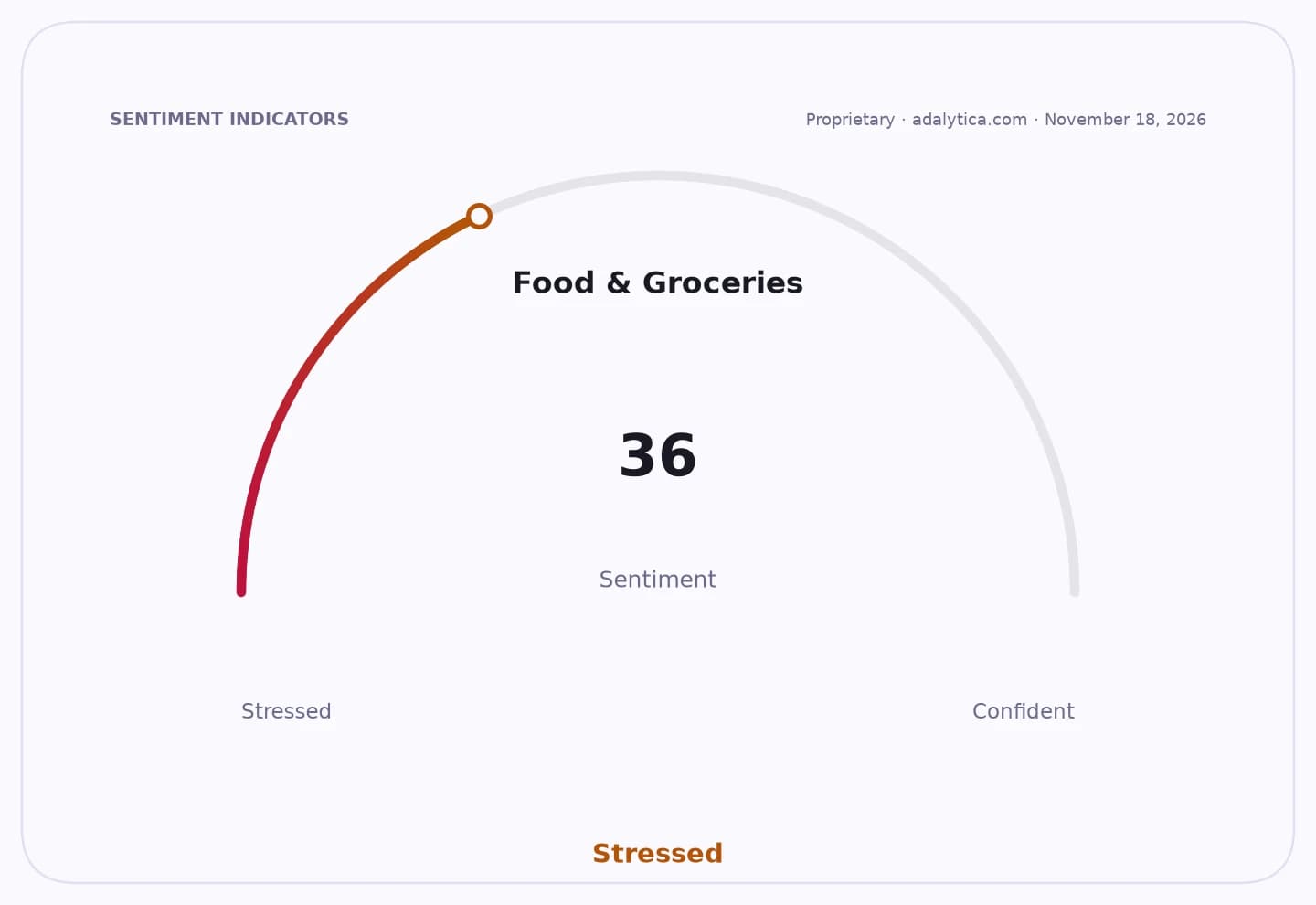
Sentiment Indicators
For investors, the bigger takeaway is not Belarus alone but the wider grain balance sheet. Ukraine’s harvest faces severe pressure from blocked export routes, with corn among the crops most exposed, while Russia says its own grain harvest has topped 141 million tonnes. In that context, every extra tonne from smaller producers helps soften supply shocks, but it does not fully offset the threat to global trade flows if Ukrainian exports stay constrained.
Corn and soy markets are still the most sensitive to that backdrop. Corn futures were last around $16.95 a bushel, below both the 50-day and 200-day moving averages, while Adalytica’s Corn Fear & Greed Index sat in neutral territory after a sharp weekly pullback in sentiment. Soybeans also traded under recent highs, with the ETF at $25.61 and still above its 200-day average, suggesting the market is pricing in plenty of supply but not yet a full-blown shortage.
Belarus’s own harvest details matter because they speak to crop quality and feed availability at home. The ministry said sugar beet output reached 5.597 million tonnes, while open-ground vegetables were nearly fully harvested and winter plowing was 89% complete. That points to a farm sector that is finishing the season in decent shape, with implications for local food prices, livestock producers and processors.
Still, this is not a story about Belarus changing world grain prices on its own. It is about resilience at the margins while the main risk remains logistics in the Black Sea. If Ukraine’s export disruption deepens, any record harvests elsewhere will be helpful but not decisive. For long-term investors, that argues for keeping an eye on agricultural markets, fertilizer names, farm equipment makers and diversified food producers rather than trying to trade every weather headline.
Belarus’s strong crop is a positive for domestic supply and a small cushion for a volatile global market, but the real investment question remains whether the region can move grain to buyers efficiently enough to turn harvest records into stable prices. That is worth watching, especially for investors who want to own the agricultural chain for the long haul.
| Entity | Gains | Losses |
|---|---|---|
| Belarus farmers | ▲Bigger harvest, stronger output | ▼Less scarcity-driven pricing power |
| Belarus consumers/livestock sector | ▲Better local supply | ▼None meaningful |
| Global grain buyers | ▲Small supply cushion | ▼Still exposed to Black Sea disruptions |
| Corn and soybean bulls | ▲No major lift from this report | ▼Near-term price upside capped |