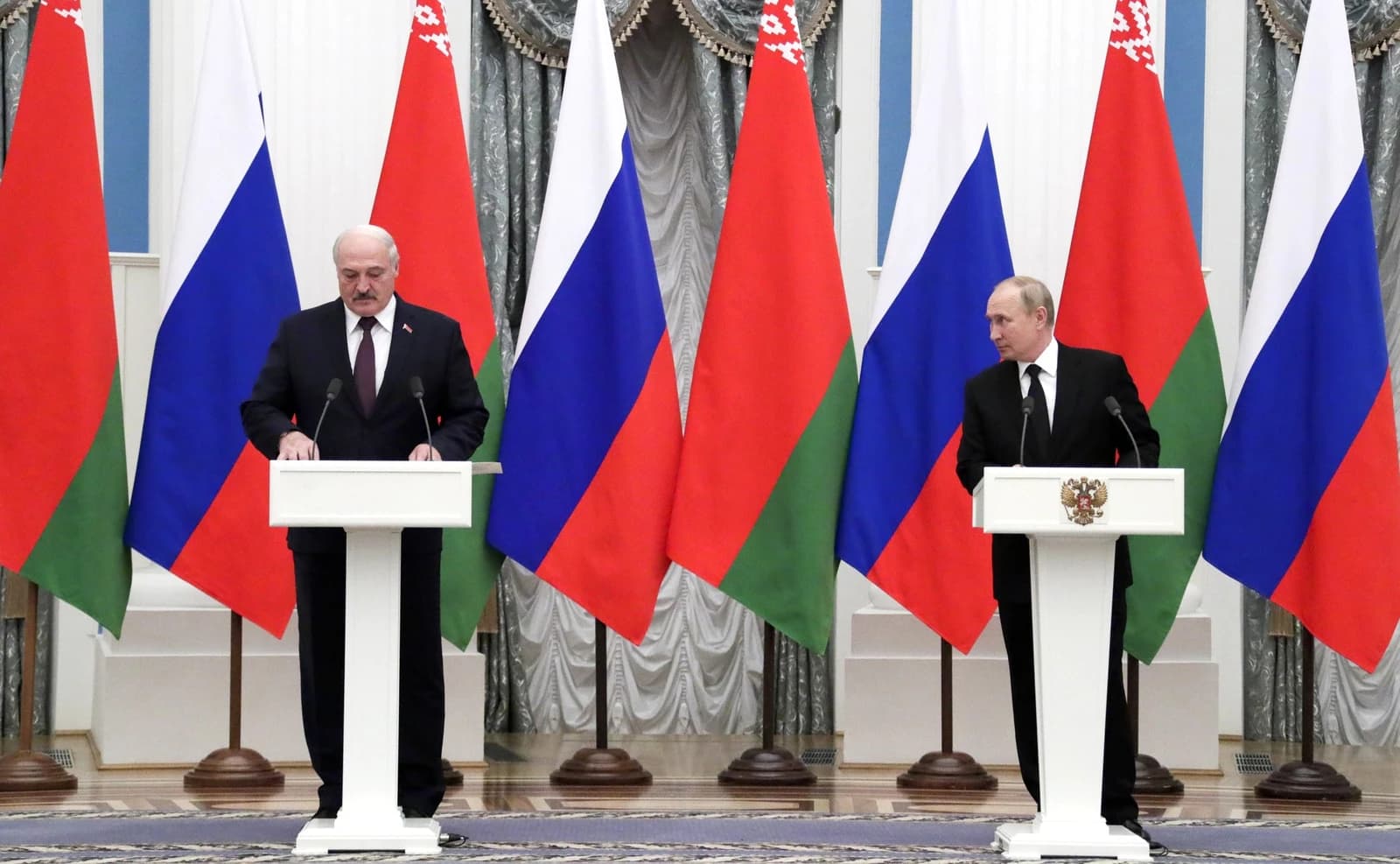
Alexander Lukashenko is pushing Russia and Belarus toward a more coordinated industrial model, arguing the two countries should stop building competing plants and instead use each other’s production to protect a shared market.
Belarus and Russia plan closer industrial coordination
That matters because the message goes beyond diplomacy. It points to a tighter economic integration between Moscow and Minsk at a time when both face Western sanctions, restricted trade routes and the need to squeeze more efficiency out of domestic supply chains. For investors, the key takeaway is that Belarus is signaling it wants to deepen industrial specialization with Russia rather than chase duplicate capacity, which could influence cross-border manufacturing, procurement and regional demand patterns.
Lukashenko said Belarus should supply Russian demand where it has an advantage, and Russia should do the same for Belarus, adding that the two countries need to focus on industrial cooperation. He said the goal is to “protect the common market” of Russia and Belarus, pointing to existing cooperation, including with Russia’s Omsk region, as a model.
The economic logic is straightforward. In a constrained geopolitical environment, duplicating factories can waste capital, fragment supply chains and leave both economies with excess capacity. Coordinated production, by contrast, can lift utilization rates, lower unit costs and help preserve industrial output despite sanctions. For Belarus, which relies heavily on access to the Russian market, the policy also helps reinforce its position as a supplier of machinery, components and other goods that fit into Russia’s import-substitution push.
For investors, the story is less about a single trade and more about the durability of the Russia-Belarus economic bloc. Any move toward deeper industrial coordination can support demand for domestic manufacturers, logistics providers and state-linked suppliers inside the two economies, while reducing room for Western competitors to regain market share. But it also reinforces the structural downside of sanctions: more inward-looking production, fewer external partners and a market that remains politically shaped rather than purely commercial.
The broader narrative is one of economic survival through integration. As Russia and Belarus lean harder on each other, they are trying to turn political alignment into industrial resilience. That may help keep factories running and regional trade flowing, but it also locks both countries further into a smaller, more closed economic system. For long-term investors, it is a reminder that in sanctioned markets, state strategy can matter as much as balance sheets.
| Entity | Gains | Losses |
|---|---|---|
| Russia-Belarus manufacturers | ▲More coordinated demand | ▼Duplicative investment |
| Belarus exporters | ▲Better access to Russian market | ▼Less room for diversification |
| Western suppliers | ▲— | ▼Market share in the region |
| State-backed industrial blocs | ▲Higher utilization | ▼Competitive private entrants |