Roscosmos is trying to redraw Russia’s space economy on its own terms: bring in private capital, but keep the state in control of launch, data and security. That matters because the model can expand capacity and cut costs in a sector where Russia badly needs faster, cheaper satellites, yet it also determines who owns sensitive Earth-observation data and who monetizes it.
Roscosmos Launches First Private Earth-Imaging Satellites
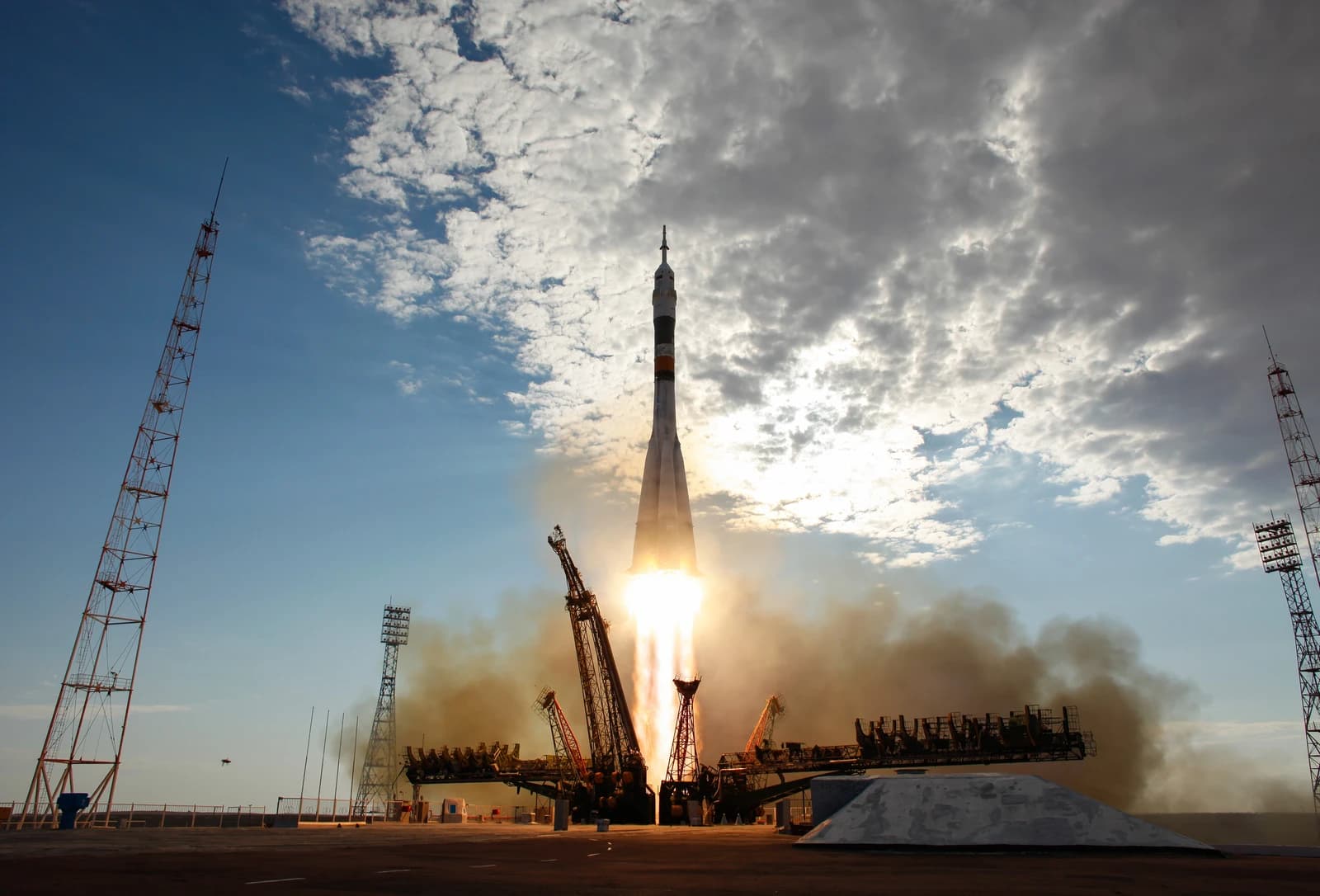
The immediate trigger is Russia’s first launch of privately built Earth-observation satellites, KOEN and KinoSputnik, on a Soyuz-2.1b from Vostochny. Roscosmos reportedly subsidized part of the launch cost, marking what it called a historic step toward a more commercial space industry. But the larger issue is not the launch itself — it is the governance model that follows.
The satellites are designed for high-resolution imaging, with KOEN offering 0.5-meter resolution and KinoSputnik about 0.8 meters. Their appeal is straightforward: lighter, cheaper spacecraft that can be produced faster than Russia’s older, heavier platforms. In a sector where persistent coverage matters for defense, intelligence and commercial customers, that kind of production shift is economically meaningful. It is also a response to a brutal reality: the state no longer has enough large, expensive satellites on orbit to provide continuous coverage on its own.
That is why the market and strategic implications go beyond one Soyuz launch. Private builders can improve efficiency and lower the barrier to entry, but they also create a new commercial layer around data sales, processing and satellite operations. For investors, that is the key tension in any space privatization story: the upside comes from scalable infrastructure and recurring data revenue, while the risk sits in regulation, export controls and state interference. In Russia’s case, the state is signaling it wants the upside without surrendering custody of the data.
That makes Roscosmos’ stance unusually important. The agency appears open to subsidizing launches and encouraging private manufacturing, but it does not want private firms to control sensitive imagery of Russian territory or sell raw data freely to the highest bidder. The preferred model, as described in the Russian commentary, is one in which the state owns or controls the satellites, manages the information flow and lets commercial buyers purchase processed imagery under rules the government sets. That would preserve security and give Roscosmos leverage over pricing, access and demand.
For the broader space industry, the message is clear: Russia is moving toward a hybrid model in which private enterprise is invited in, but only inside a tightly managed framework. That is similar in structure, if not in market depth, to the way governments elsewhere are using private suppliers to accelerate launch cadence, satellite production and downstream services. The difference is that in Russia, national security remains the first-order objective, not investor returns.
For Rocket Lab, Lockheed Martin and Boeing, the read-through is indirect but relevant. Rocket Lab has already built a business around cheaper, faster access to orbit, and its recent price action shows how volatile the market can be when investors start to price in growth, then question execution. Lockheed and Boeing remain tied to the larger defense and aerospace cycle, where government demand still dominates. Russia’s move reinforces a global theme: states want private-sector speed, but they also want sovereign control over space infrastructure and the data it produces.
The investable takeaway is simple: the next wave of space value will not come only from rockets. It will come from whoever owns the bottlenecks — launch capacity, imaging, data processing, and the rules that govern access. Russia’s model shows that privatization in space is not a free-market story. It is a control story. And in every control story, the biggest winners are the platforms the state cannot do without.
| Entity | Gains | Losses |
|---|---|---|
| Roscosmos | ▲more capacity, lower costs | ▼less direct monopoly power |
| Private satellite firms | ▲launch subsidies, market access | ▼raw-data control |
| Russian state/security agencies | ▲better domestic imaging access | ▼secrecy risk if control slips |
| Commercial buyers | ▲cheaper satellite imagery | ▼tighter state oversight |