Berkshire Hathaway is doing what investors want from a defensive stock: rising while the tech trade stumbles.
Berkshire Hathaway Rises as Tech Stocks Sell Off
As global bond markets sell off, oil prices firm and AI-heavy names get hit by a sharper risk-off move, Berkshire has climbed 16% over the past three months even as the State Street Technology Select Sector SPDR ETF has fallen 11%, underscoring a rotation into steadier balance sheets and cash-generating businesses. That divergence matters because it shows where investors are hiding when the market stops rewarding growth-at-any-price: not in cash alone, but in large, profitable franchises with less valuation risk and less exposure to the AI capex cycle.
Sentiment Indicators
For Berkshire, the appeal is straightforward. Even with Greg Abel now in the top job, the company still leans on the same core formula that made Warren Buffett’s playbook so durable: high-quality holdings, conservative capital allocation and a portfolio anchored by blue-chip names such as Apple, American Express and Coca-Cola. Those businesses do not depend on a hot funding environment or sustained multiple expansion to deliver returns. In a market where Nvidia, Anthropic-linked enthusiasm and the broader Nasdaq complex are being repriced lower, that kind of predictability is increasingly valuable.
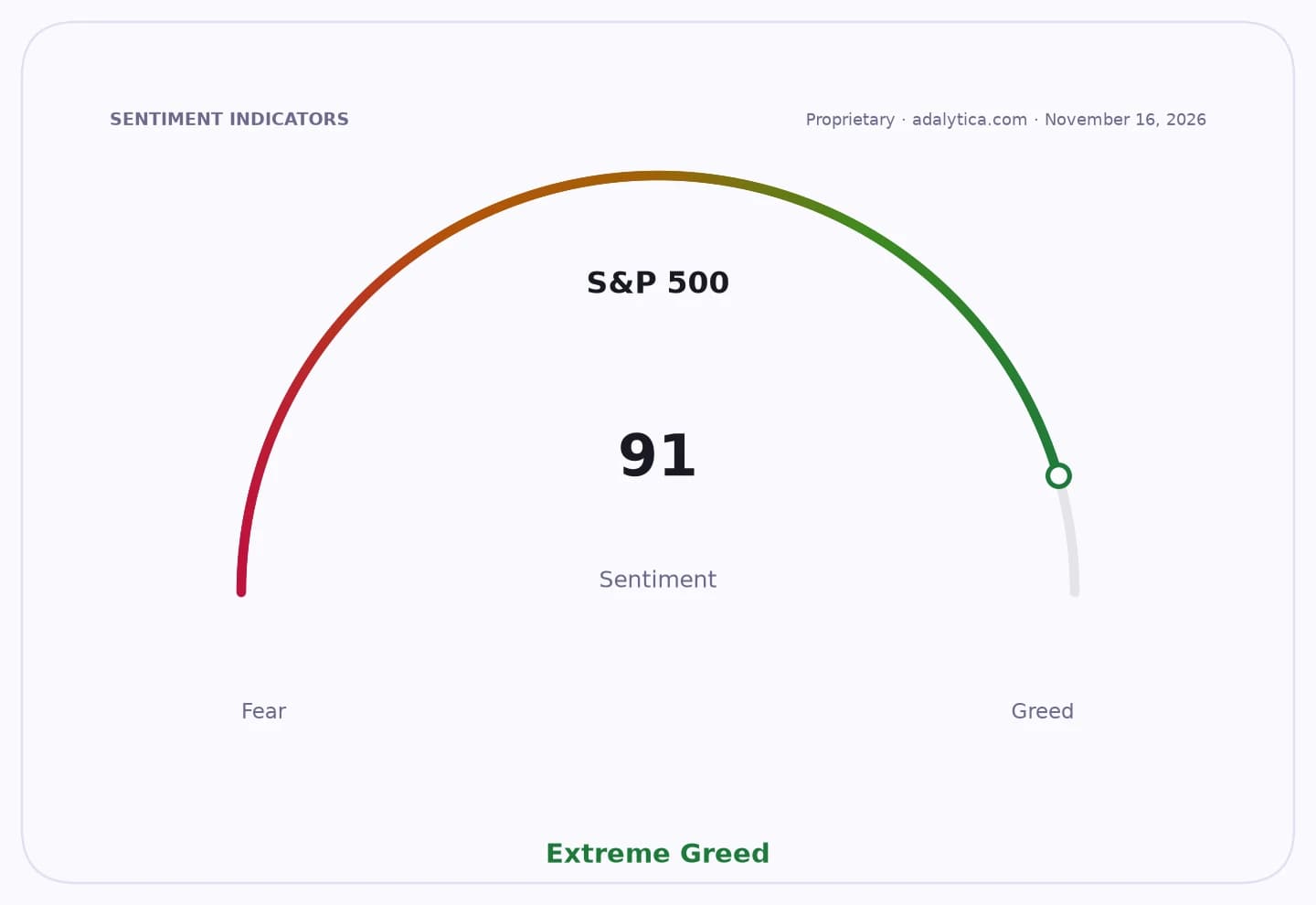
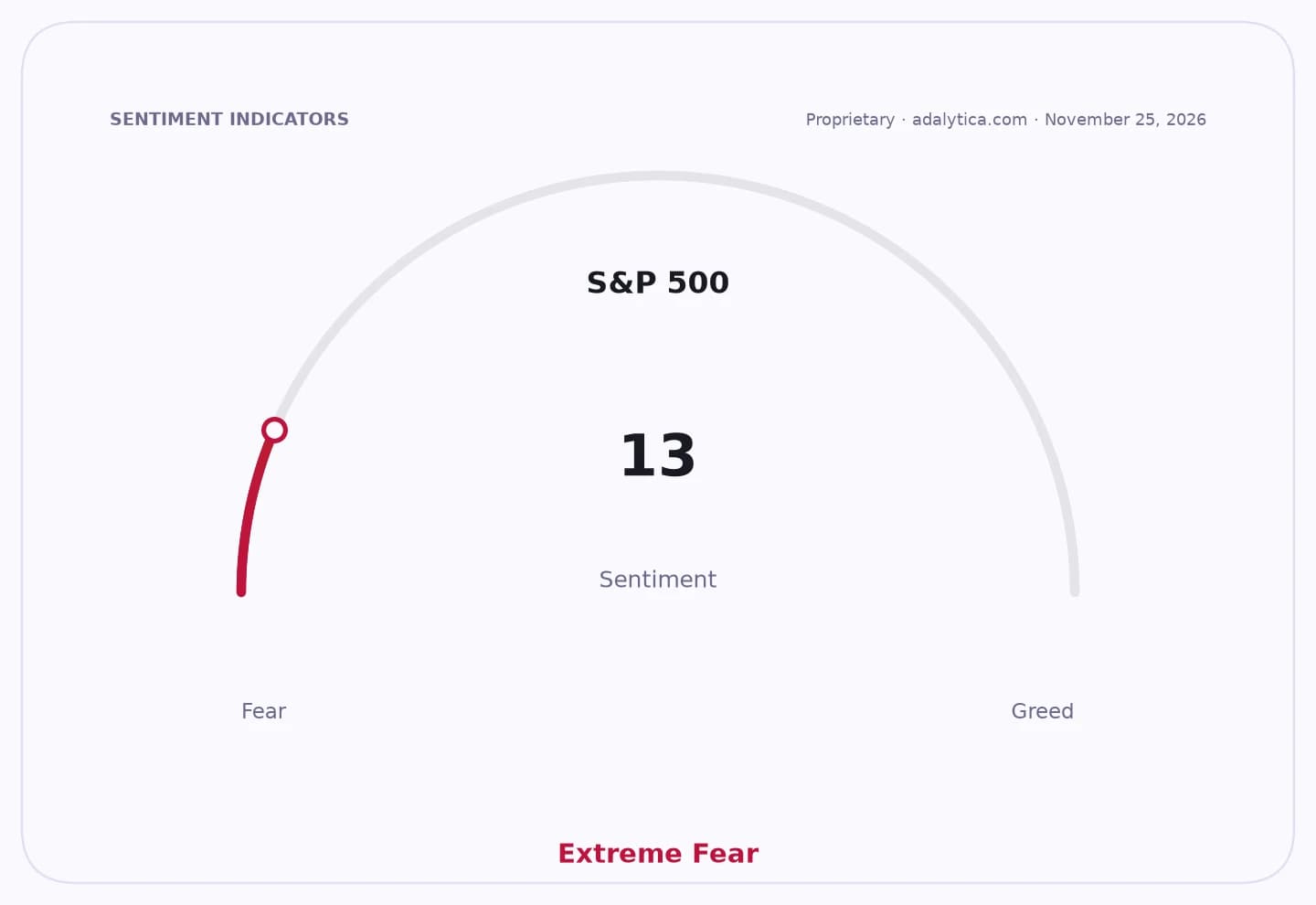
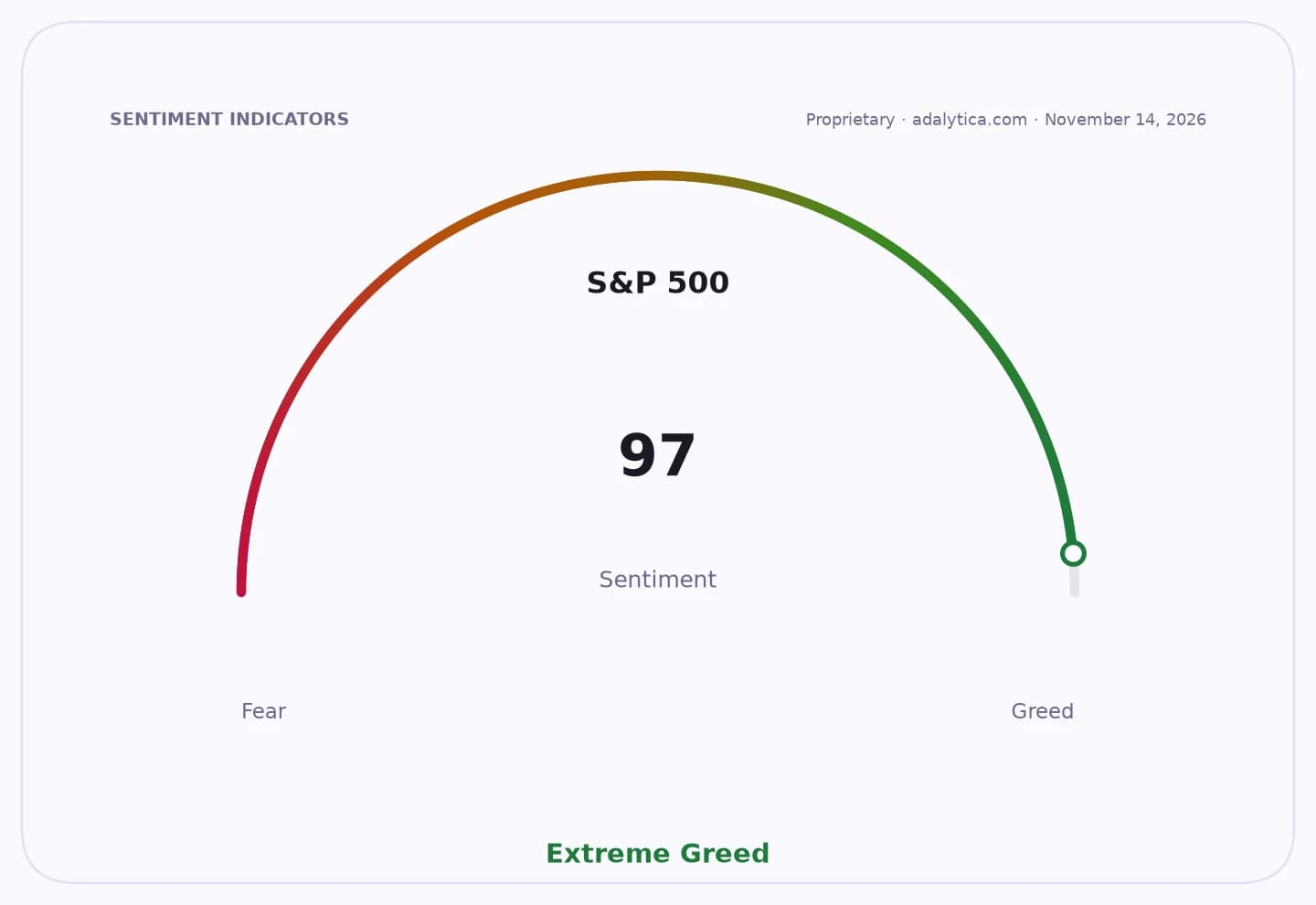
The stock’s recent strength also reflects a broader worry that the AI boom has pulled too many investors into crowded, duration-heavy trades. Berkshire looks almost anti-fragile by comparison. It is not a pure bond proxy, but it behaves like one when growth stocks are under pressure: less sensitive to higher rates, less exposed to speculative sentiment and better insulated from the kind of multiple compression now hitting tech. With the S&P 500 flashing fear in Adalytica’s sentiment gauge and the dollar also showing stress, investors are clearly looking for places where fundamentals matter more than narrative.
Still, Berkshire is not a perfect safe haven. At about 16 times earnings, it is not cheap by its own history, and unlike many classic defensive plays, it pays no dividend. That limits its appeal for income-focused investors who want immediate cash flow while volatility stays elevated. If the market continues to punish expensive growth and reward quality, the better trade may be a basket of discounted dividend names rather than a single “safety” stock, even one as respected as Berkshire.
The key investment takeaway is that Berkshire is becoming a relative winner in the tech drawdown, but investors should treat it as a capital-preservation trade, not a bargain hunt. If the selloff broadens into a deeper reset for AI and mega-cap growth, Berkshire can keep outperforming. If risk appetite returns quickly, its edge narrows. For now, the market is sending a clear message: in this phase of the cycle, quality and cash discipline are back in favor.
| Entity | Gains | Losses |
|---|---|---|
| Berkshire Hathaway | ▲Defensive inflows | ▼Less upside than high-beta tech |
| Tech ETF / AI stocks | ▲None | ▼Multiple compression |
| Dividend value stocks | ▲Safe-haven demand | ▼Missed in crowded growth trades |
| Berkshire income seekers | ▲Stability | ▼No dividend yield |