Bitcoin is trading just under $80,000, but the more important story for investors is that the market is still pricing in a relatively benign policy backdrop even as the odds of a Federal Reserve hike have moved higher and the latest rally has run into technical resistance.
Bitcoin Tests $82,000 Resistance on Fed Risk

That tension matters because bitcoin’s recent rebound has been built on three supports that can all weaken quickly: expectations of easier monetary policy, heavy spot ETF inflows and a belief that Washington will keep moving toward clearer crypto rules. If any one of those pillars slips, the market could be forced to reprice the move from a recovery trade into a short-lived squeeze.
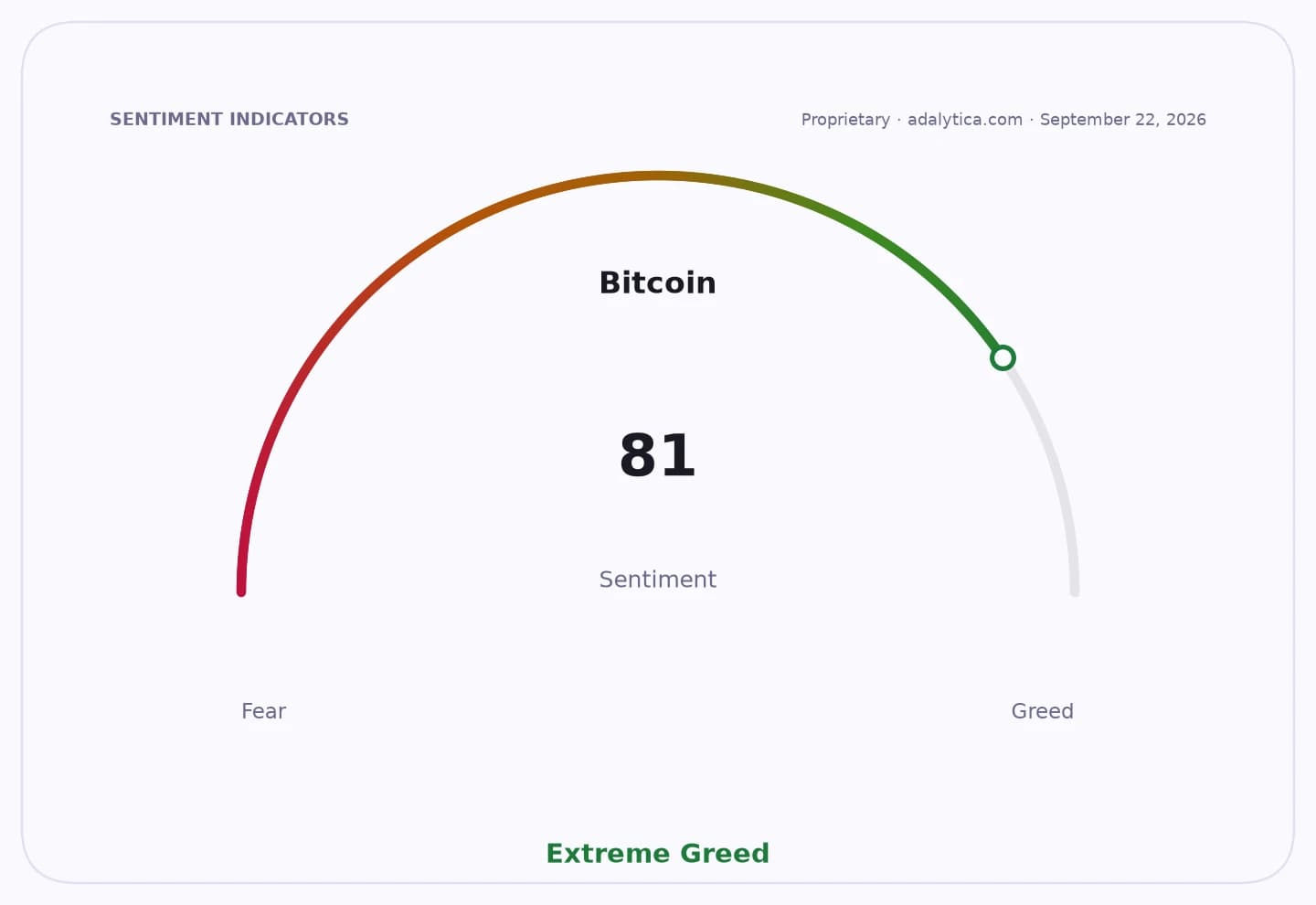
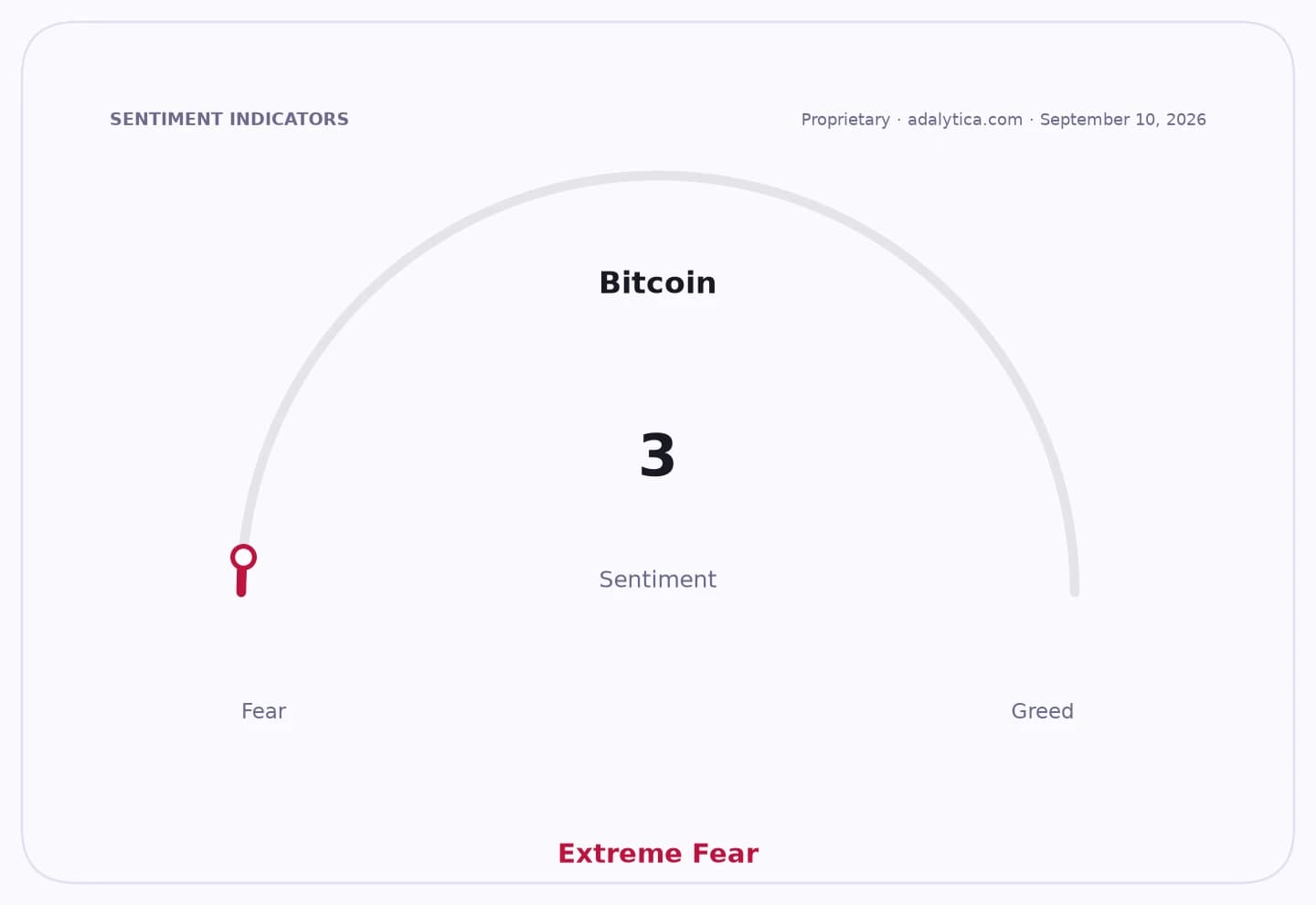
Sentiment IndicatorsⓘProprietary · adalytica.com · September 6, 2026
This is a snapshot — live sentiment, awareness and momentum for 130+ markets update continuously in the dashboard.Open AlphaPulse
After rising about 2.5% over the past week, bitcoin has spent the last several sessions moving between roughly $76,000 and $82,000, with a peak near $82,300 still below the May high. The price is now testing the 50-week moving average, a level traders often watch as resistance during broader downtrends. So far, the lack of a sharp rejection has helped keep sentiment constructive, but it has not produced a convincing breakout.
The catalyst that has mattered most is macro. Comments from Federal Reserve officials, alongside stronger-than-expected August jobs data, pushed markets to assign a roughly 50% chance of a rate increase on Sept. 16, while expectations for unchanged policy into year-end fell sharply. That is a direct test for bitcoin because higher Treasury yields tend to tighten financial conditions, lift the dollar and reduce appetite for speculative assets. On Adalytica’s Bitcoin Fear & Greed Index, sentiment is still neutral at 32, but awareness is in extreme fear territory, a sign the market is alert to risk even as spot prices hold up.
ETF flows have been the main counterweight. US spot bitcoin funds drew about $731 million in one day, the largest inflow since January, underscoring that institutional demand has not disappeared. That matters for market structure: when allocators keep buying through regulated vehicles, it can offset leverage washouts and give bitcoin a floor even when macro turns less supportive. It also helps explain why ether has largely tracked bitcoin rather than breaking out on its own, while larger altcoins have been left to more idiosyncratic trading flows.
Regulation is the other source of support. Expectations that the CLARITY Act could advance in the Senate on Sept. 15 have helped sustain the view that the US is moving toward a more usable framework for digital assets. For investors, that is less about an immediate price catalyst than about lowering the long-term discount rate on the asset class by making custody, exchange activity and treasury allocation more predictable.
The bullish case is straightforward: persistent ETF inflows, easier regulatory visibility and any softening in Fed rhetoric could push bitcoin through the $82,000-$83,000 band and reopen a larger trend higher. The bearish case is equally clear: if the market is underestimating the chance of tighter policy, rising yields could cap the rally and send bitcoin back into the wide consolidation range that has dominated since late August.
For now, the base case is not a collapse but a test. A weekly close above the recent highs would suggest buyers still control the tape; failure there would reinforce the view that the market is still not fully pricing macro risk.
| Entity | Gains | Losses |
|---|---|---|
| Bitcoin bulls | ▲ETF inflows, easier policy hopes | ▼Higher-rate repricing |
| Spot bitcoin ETFs | ▲Asset gathering | ▼Outflow risk if yields rise |
| Federal Reserve hawks | ▲Stronger case for tighter policy | ▼Risk-asset enthusiasm |
| Treasury yields / US dollar | ▲Support from tighter expectations | ▼If bitcoin breaks out on dovish shifts |