Bitcoin dropped after a stronger-than-expected US jobs report forced traders to scale back bets on near-term Federal Reserve easing, a move that matters because tighter-for-longer rates tend to strengthen the dollar and drain appetite for speculative assets.
Bitcoin Falls After Strong US Jobs Report

The trigger was simple: the US economy added 162,000 jobs in August, almost three times the 55,000 to 58,000 economists had expected, while unemployment held at 4.1% and hourly earnings rose 0.3% on the month. That is not the kind of labor-market cooling that gives the Fed cover to cut aggressively, and it immediately reset risk pricing across crypto and broader markets.
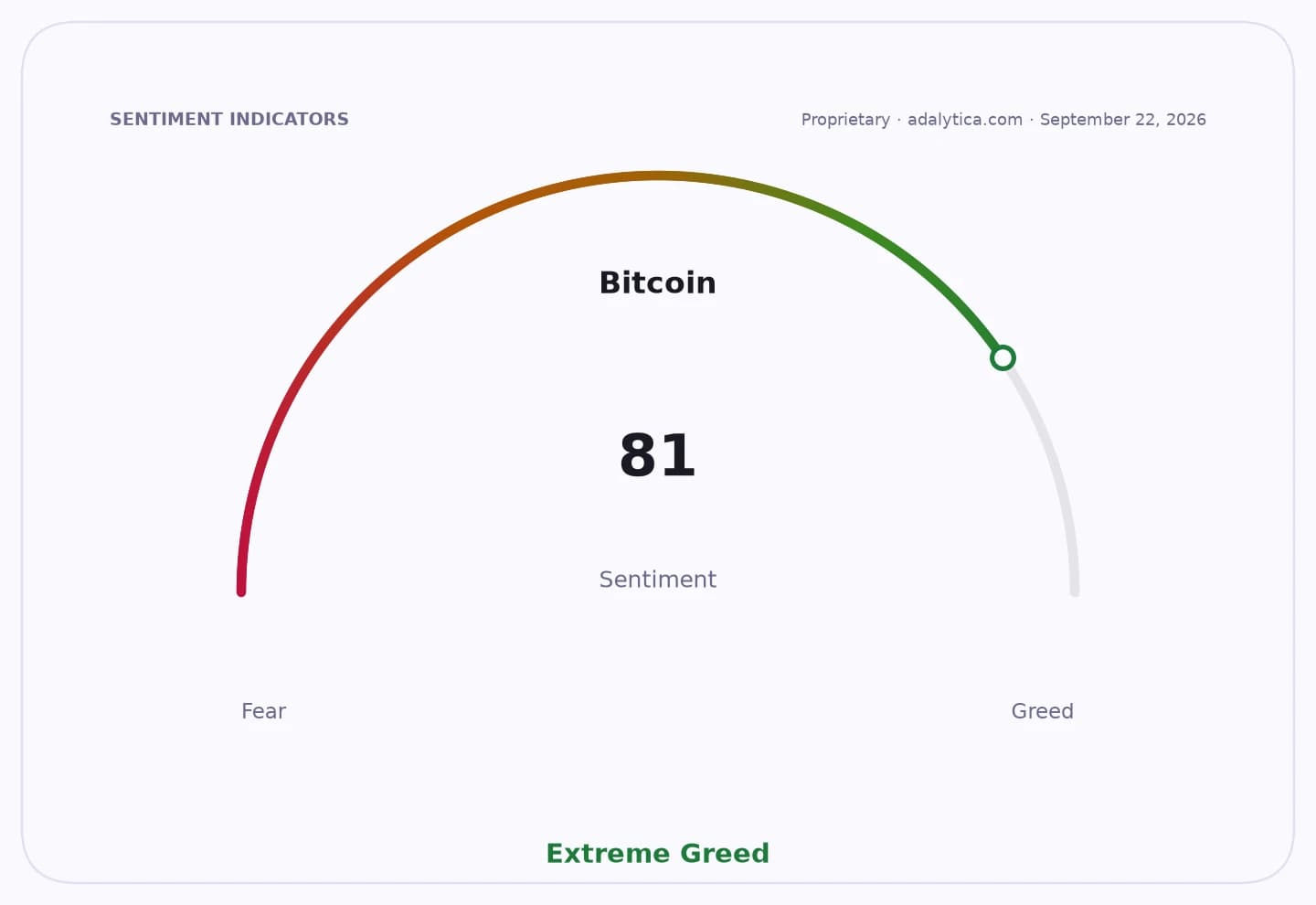
Sentiment IndicatorsⓘProprietary · adalytica.com · September 6, 2026
This is a snapshot — live sentiment, awareness and momentum for 130+ markets update continuously in the dashboard.Open AlphaPulse

Bitcoin, which had briefly traded above $81,000 before the release, fell about $2,000 to $79,200 as investors reconsidered how long US rates may stay elevated. That reaction is economically important because the entire bull case for digital assets still leans heavily on abundant liquidity, easier financial conditions and a softer dollar. When those assumptions get pushed back, Bitcoin loses one of its most powerful tailwinds.
The move also rippled through related trades. Coinbase and MicroStrategy, two of the most closely watched Bitcoin-linked equities, showed the same sensitivity to macro conditions that has defined this cycle: they can surge when liquidity expectations improve, but they also tend to wobble when the market reprices Fed cuts. That makes them high-beta expressions of the same thesis, not insulated businesses when rates move against them.

For investors, the bigger message is that the next leg in crypto will likely be decided by macro, not by narrative alone. The jobs data strengthened the case for a firm dollar and higher Treasury yields, both of which can weigh on Bitcoin in the short term. The market now turns to next week’s CPI report, which could either confirm a sticky-inflation backdrop or reopen the door to easier policy.
My view is that this pullback is less a thesis break than a reminder of what drives the asset class. Bitcoin remains a liquidity trade at its core, and liquidity expectations are being challenged. That creates opportunity for disciplined investors who understand the difference between a cyclical shakeout and a structural reversal. If inflation softens, Bitcoin’s torque to lower rates could reassert itself quickly; if not, the market may have to wait longer for the next decisive breakout.
| Entity | Gains | Losses |
|---|---|---|
| US dollar | ▲Higher-rate support | ▼Bitcoin demand |
| Treasury yields | ▲Stronger repricing | ▼Risk assets |
| Fed hawks | ▲More policy cover | ▼Fed doves |
| Coinbase/MicroStrategy longs | ▲Macro relief, lower yields | ▼Crypto bulls on easy-money trade |