Bitcoin may not be reacting to Anthropic, OpenAI or SpaceX yet, but Arthur Hayes thinks the biggest threat to the cryptocurrency’s next move is a wave of AI listings that could squeeze liquidity across the financial system.
Bitcoin Traders Watch AI IPO Liquidity Risk
That matters because Bitcoin has rarely traded in isolation. When investors are willing to fund high-growth technology at rich valuations, money tends to stay loose, credit spreads stay tight and risk assets get a tailwind. When that enthusiasm cracks, the opposite can happen fast.
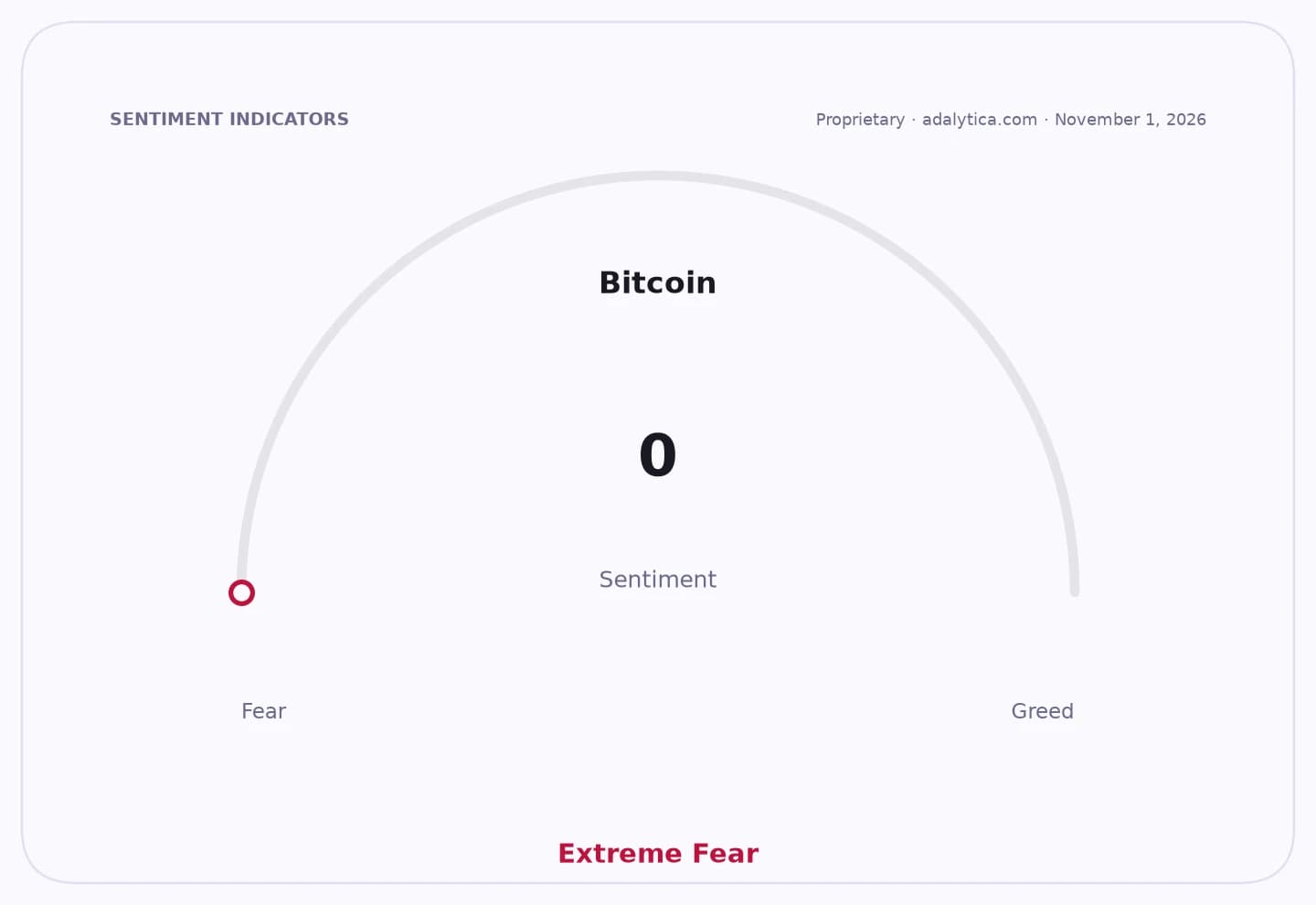
Sentiment Indicators
Bitcoin
Hayes, the BitMEX co-founder and Maelstrom investment chief, argues that planned IPOs for Anthropic, OpenAI and SpaceX could unload far more supply on public markets than buyers are ready to absorb. He points to Anthropic’s filing and says early investors could face dilution of as much as 83% by June 2027. At a hypothetical $1.5 trillion valuation, he calculates the market would need to absorb about $1.245 trillion of stock — a scale he thinks is unrealistic. He is even harsher on OpenAI, which he says is burning cash too quickly, and on SpaceX, where he estimates the release of roughly 8.6 billion additional shares.
The reason investors should care goes beyond the IPO calendar. If these listings disappoint, Hayes says the damage would not stop at AI stocks. Weaker shares could lift borrowing costs for the companies themselves, force banks to become more cautious, and tighten dollar liquidity just as crypto tends to rely on abundant funding. In other words, a stumble in the hottest corner of the equity market could become a broader tightening event.
That argument is not purely theoretical. Bitcoin has already been under pressure, closing at $74,441.34 in the latest data point, well below its 50-day moving average of $81,604.80. Its relative strength index sits at 34.2, a level that suggests the market remains weak but not yet oversold in a durable way. The broader risk backdrop looks shaky too: the Nasdaq-100 tracker QQQ closed at $679.35, still below its 50-day average of $720.02, while the ARK Innovation ETF finished at $78.98, beneath its own 50-day line of $85.35. That combination says investors are already rotating away from the kind of speculative growth that usually feeds crypto enthusiasm.
Hayes is not calling for a permanent bear market in Bitcoin, though. His view is closer to a two-step cycle: first, AI-funded exuberance unwinds and hurts risk assets; then central banks and fiscal authorities step in with easier money, which eventually becomes bullish for Bitcoin and other cryptocurrencies. He says that if investment in AI infrastructure cools sharply enough, policymakers may be pushed toward more aggressive money creation — a setup he believes would ultimately favor digital assets. For now, however, he says Maelstrom is staying cautious.
That makes this less of a Bitcoin price call than a story about the plumbing underneath the market. If the AI IPO pipeline really does force investors to choose between funding private-turned-public growth stories and keeping liquidity in other speculative trades, Bitcoin could feel the squeeze first. Long-term investors do not need to guess the next headline, but they should understand the linkage: when the market’s favorite growth theme changes, capital allocation changes with it. For crypto holders, this is a reminder to stay patient, size positions carefully and watch liquidity, not just price targets.
| Entity | Gains | Losses |
|---|---|---|
| AI IPO hopefuls | ▲Access to public capital | ▼Higher scrutiny, dilution pressure |
| Bitcoin bulls | ▲Potential later liquidity rebound | ▼Near-term funding squeeze |
| Banks and creditors | ▲Wider spreads, more pricing power | ▼Slower lending growth |
| Speculative growth stocks | ▲None in the short term | ▼Valuation compression |