Bitcoin’s plunge below $56,000 has turned a selloff in a single token into a full-blown de-risking event across crypto, tech and other speculative assets, with more than $2.4 billion in leveraged positions wiped out in 24 hours.
Bitcoin Falls Below $56,000 in Crypto Deleveraging
Bitcoin
That matters because the move is not just another volatile crypto swing. It is a warning that the market’s appetite for high-beta trades is breaking down at the same time Wall Street is rethinking the durability of the AI boom, bond yields remain elevated and investors are no longer willing to pay up for unproven growth. When Bitcoin stops behaving like an alternative asset and starts trading like the most crowded risk proxy in the market, liquidation cascades can follow fast.
Sentiment Indicators
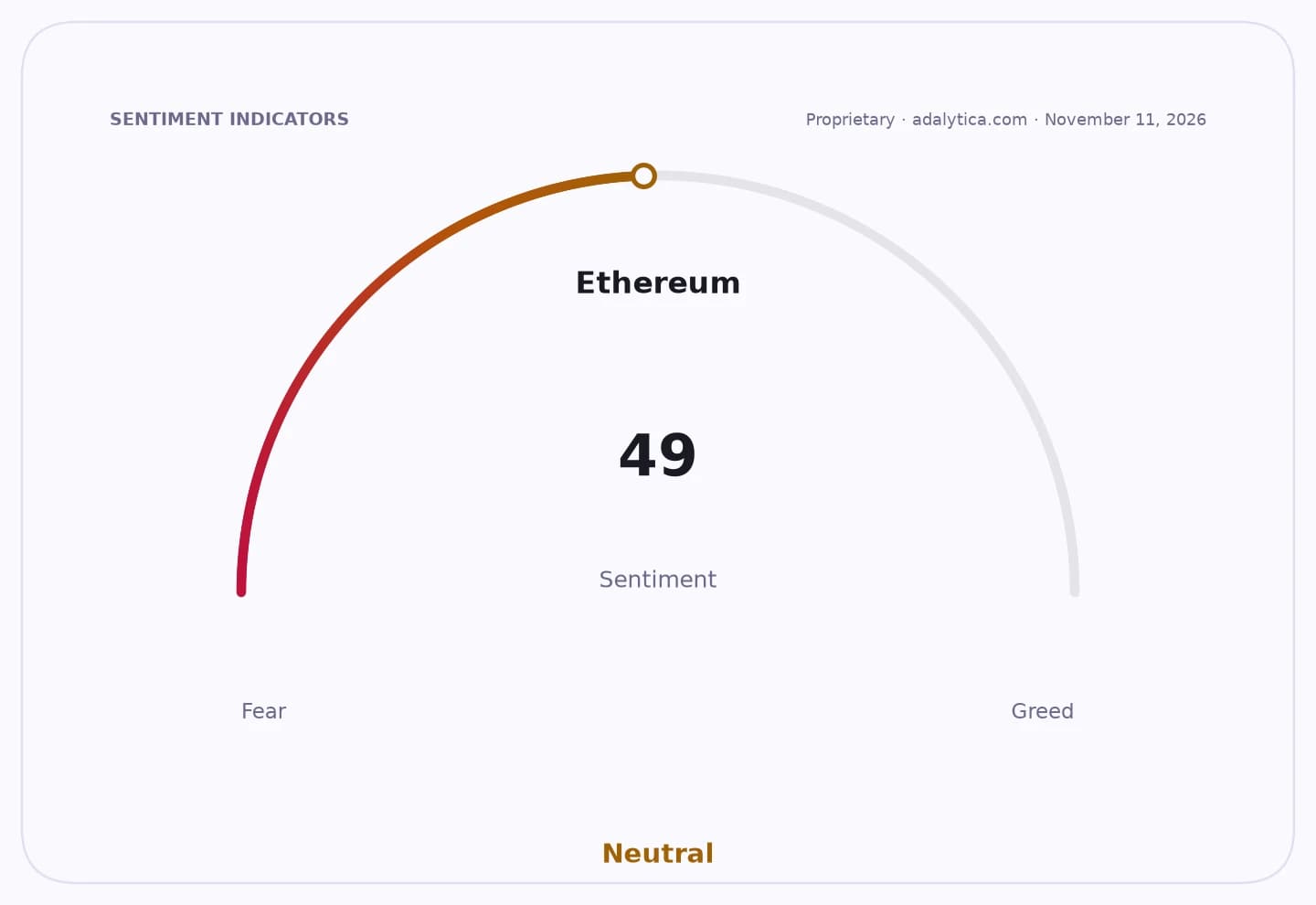
Bitcoin traded around $55,830 on Saturday, the lowest since September 2024 and more than 55% below its record above $126,000 in October last year. Ether fell more than 10% to about $1,564, Solana dropped nearly 10% to around $65.5 and XRP slipped below $1, underscoring how quickly the pain spread from the market leader to the rest of the digital-asset complex.
The mechanics are classic and brutal. CoinGlass data cited by Investing.com showed roughly $2.4 billion of crypto derivatives positions were liquidated in a day, including more than $1 billion tied to Bitcoin futures and about $545 million in Ether. Forced selling by leveraged traders tends to deepen the decline, because each stop-out pushes prices lower and triggers another round of liquidations. In a market built on leverage, that feedback loop can become self-reinforcing.
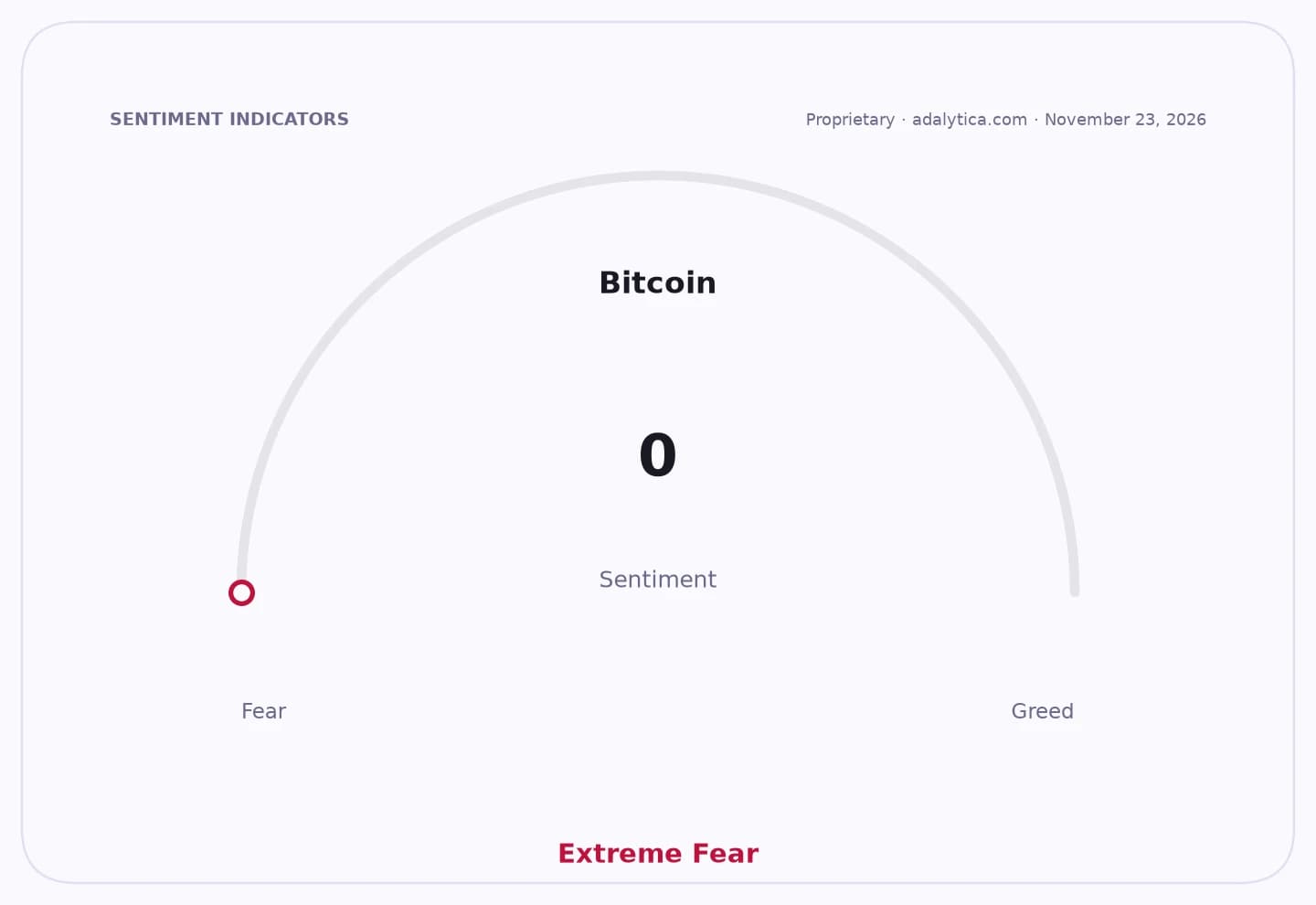
Bitcoin — 30-day sentimentadalytica.com
Explore this data interactively — full history, time series and cross-market comparisons.
The catalyst extends far beyond crypto. Reuters reported that investors are increasingly uneasy about lofty AI valuations and whether the enormous spending on chips, power and data centers will translate into sustainable profits. That anxiety hit the Nasdaq hard, with the tech-heavy index falling more than 4% on Friday, and spilled into semiconductor stocks and AI names. For crypto, which has increasingly traded like a momentum asset rather than a hedge against the financial system, that is a toxic combination.
Rising U.S. Treasury yields and the prospect of a tighter-for-longer Federal Reserve only sharpen the pressure. The 10-year Treasury yield was around 4.9%, while the two-year hovered near 4.6%, keeping cash and government bonds comparatively attractive versus speculative assets with no earnings and no yield. In that environment, traders are not rewarding stories — they are demanding balance sheets, cash flow and discipline.
The message for investors is that crypto’s biggest vulnerability right now is not regulation, fraud or even technology. It is liquidity. When macro risk aversion rises, the assets that rose fastest on leverage are usually the first to be sold. That is why Bitcoin, Ethereum, Solana and XRP are moving together: they are all caught in the same unwind.
There is still a contrarian opportunity here, but only for investors willing to think in terms of capital flows rather than headlines. Wintermute says Bitcoin would need to recover above $68,000, alongside a return of inflows into spot Bitcoin ETFs, to rebuild a durable uptrend. If that happens, the rebound could be violent, because the market is already oversold. Adalytica’s Bitcoin Fear & Greed Index is at 14, deep in “Extreme Fear,” while Bitcoin’s relative strength index sits near 17, a level that historically signals capitulation rather than comfort.
For now, the asymmetric trade is not in chasing the dip blindly. It is in owning the infrastructure and liquidity providers that survive the shakeout and gain share when the next wave of institutional money returns. That means watching exchange operators, miners with low-cost power, and the ETF ecosystem closely — because when the smoke clears, the survivors of this reset will likely control a larger piece of a much more selective market.
| Entity | Gains | Losses |
|---|---|---|
| Bond markets | ▲Gain relative appeal | ▼Lose if yields fall on panic |
| Crypto bulls on leverage | ▲Gain if rebound is sharp | ▼Lose to forced liquidations |
| Spot Bitcoin ETF issuers | ▲Gain if inflows return | ▼Lose if risk aversion persists |
| AI and tech momentum trades | ▲Gain if confidence returns | ▼Lose in broad de-risking |