Ethereum is losing its footing fast, and the market’s biggest warning sign is not the price alone but the money leaving through the front door. Ether has shed nearly $1,000 in seven weeks, dropped to around $1,735 and now faces a decisive test of the $1,700 support zone as U.S. spot ETF outflows and exchange inflows feed a fresh wave of selling.
Ethereum ETF Outflows Push ETH Toward $1,700

That matters because Ethereum is no longer just a speculative token; it is a core institutional crypto trade tied to ETF flows, staking demand and the health of the broader digital-asset risk complex. When money exits a spot ETF wrapper, it often signals de-risking rather than a simple trading pause. Over four sessions, Ethereum ETFs saw net outflows of $208.5 million, including $131.2 million on Thursday alone, with BlackRock’s ETHA responsible for $124.2 million of that one-day withdrawal. At the same time, CryptoQuant flagged 17,485 ETH of net inflows to Binance, a pattern that can precede more selling.
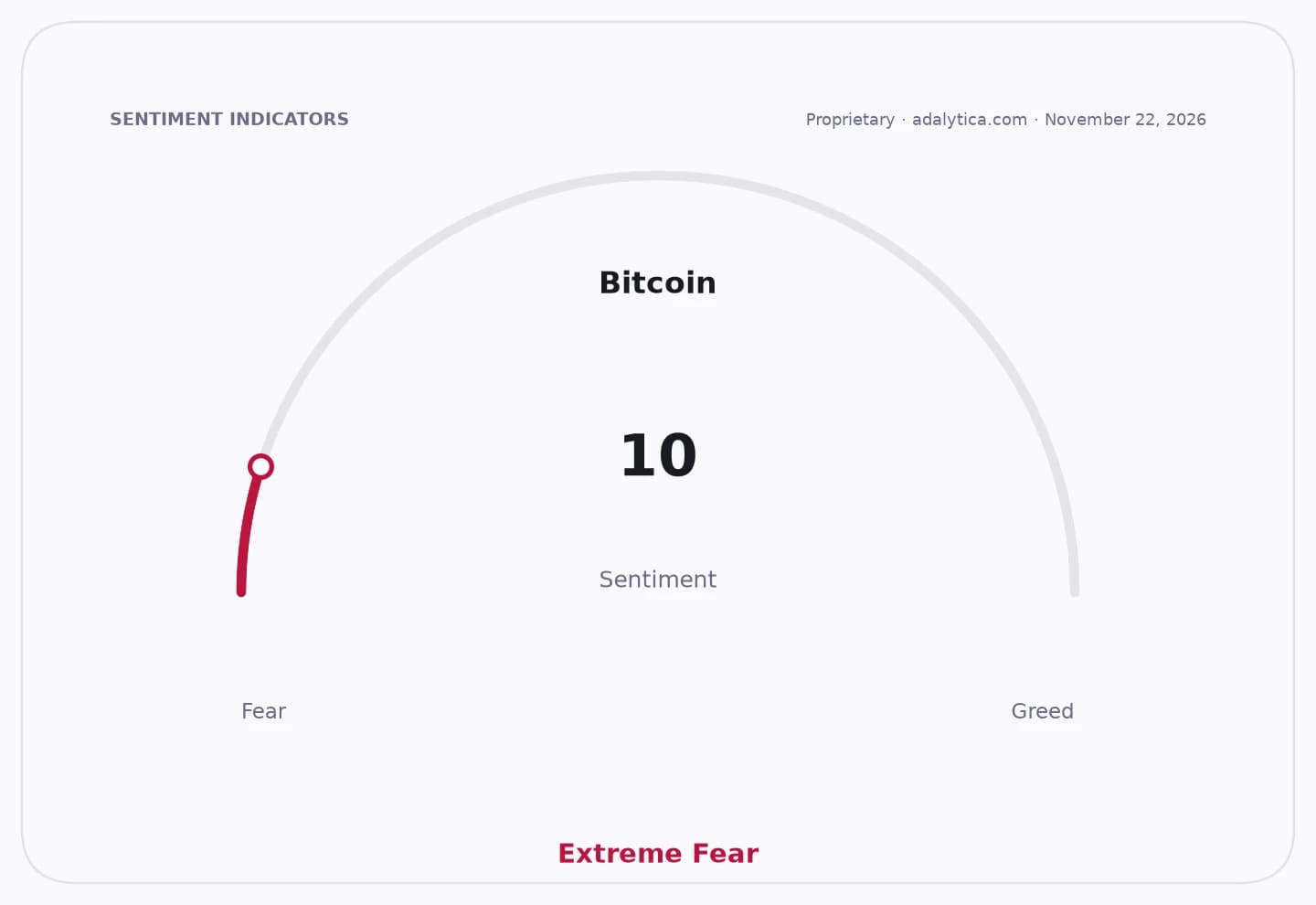
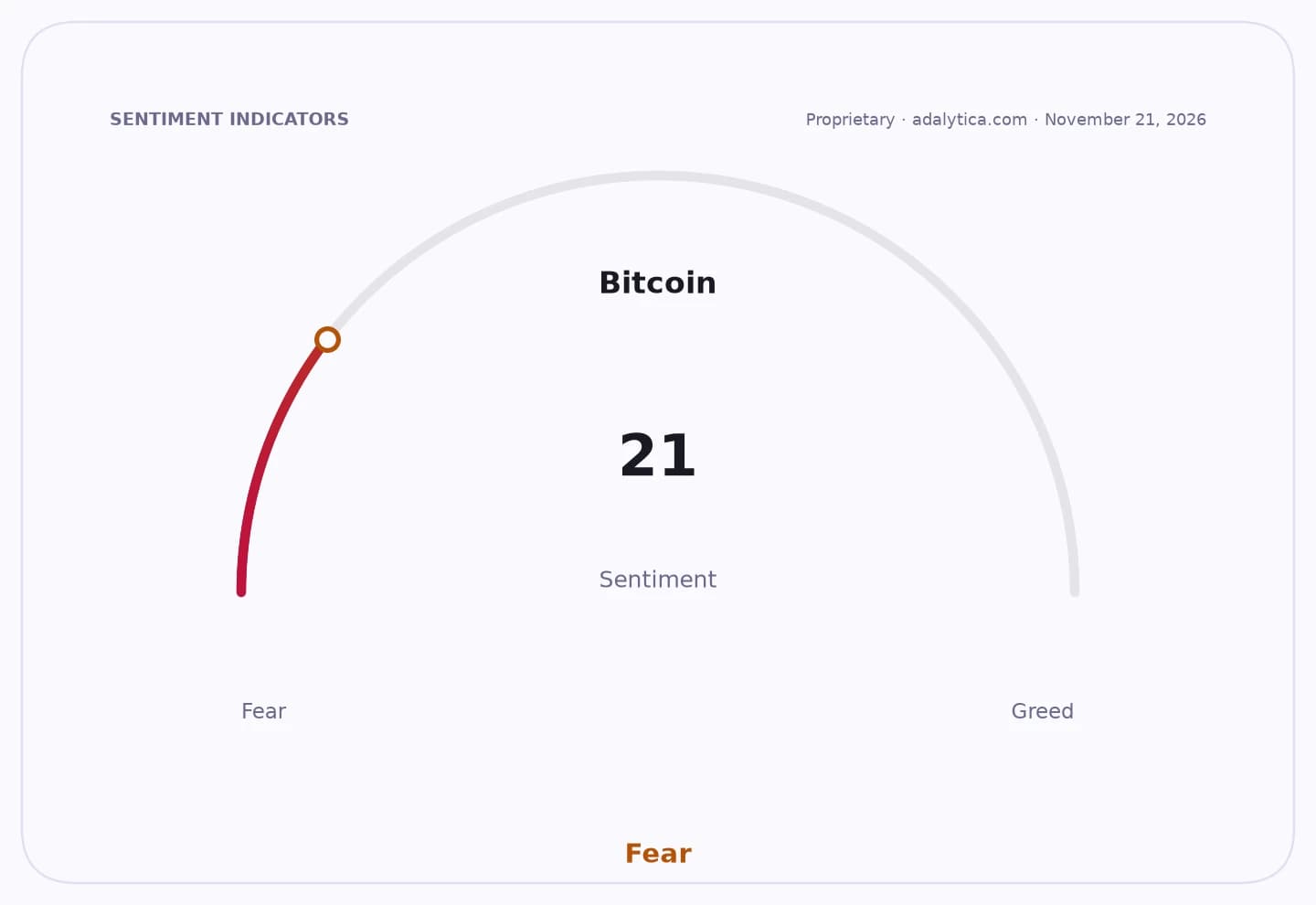
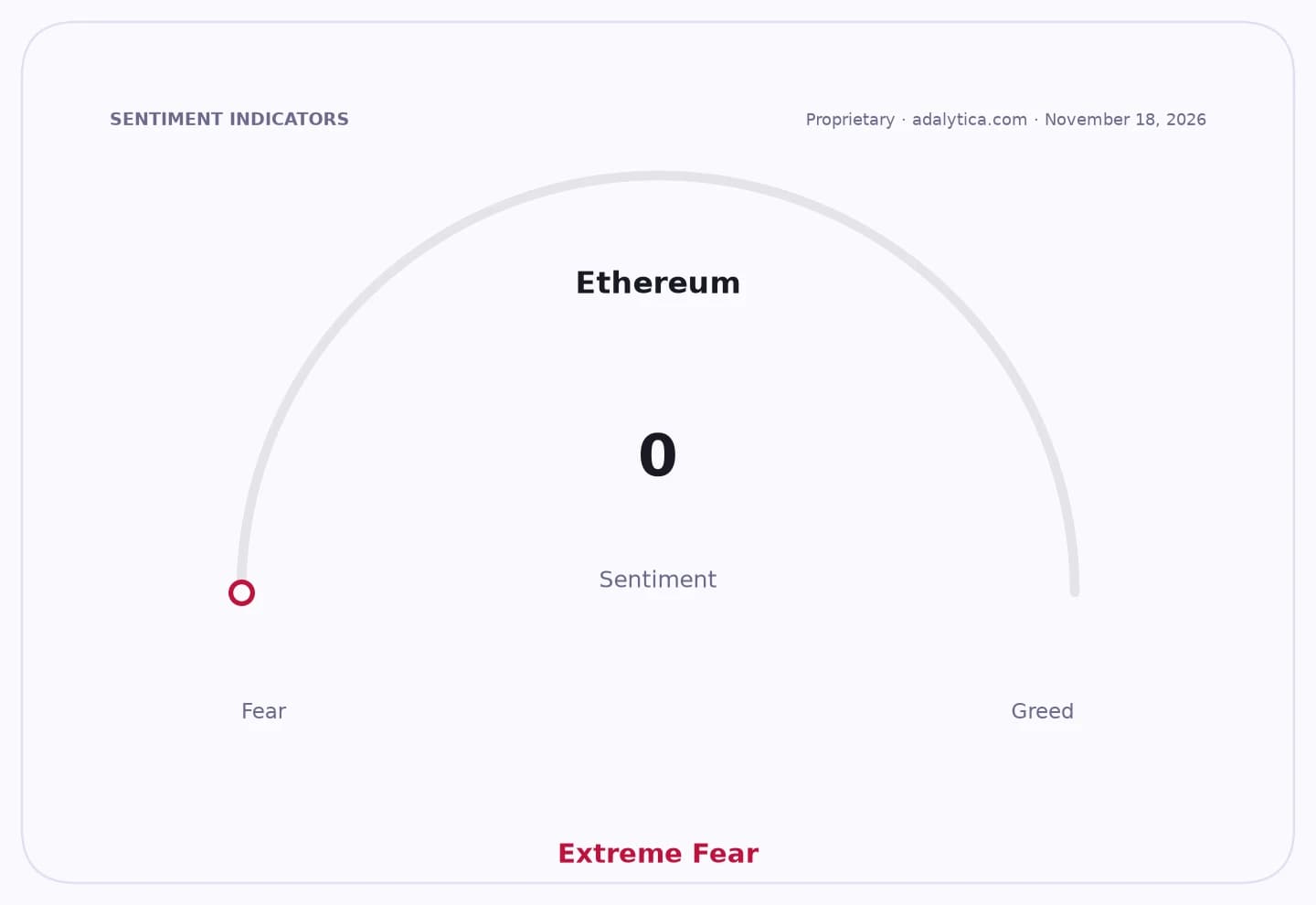
Sentiment Indicators

The setup is especially bearish because the decline is colliding with weakening momentum on the chart. Ether briefly traded near $1,620 on Friday after slipping through $1,700, while its relative strength index has fallen to deeply oversold levels, reinforcing how compressed the move has become. The 50-day moving average remains far above the spot price, and the longer-term 200-day moving average is also overhead, showing that Ethereum has not merely corrected — it has broken down through trend support that traders were using to justify dip buying.
The economic significance is broader than one coin. Ethereum sits at the center of decentralized finance, stablecoin settlement and tokenized finance, with roughly $40 billion in total value locked and $131 billion in stablecoins on the network. Those fundamentals help explain why long-term holders and stakers have not abandoned the asset, but they have not prevented a near-term reset in capital allocation. In a market already strained by fear across risk assets, crypto is behaving like the most leveraged expression of liquidity stress.
Investors should focus on two levels. If Ether can reclaim $1,800 to $1,850, the market can argue for a stabilization rally back toward $2,000, where resistance and technical pressure converge. If it cannot, the path opens toward $1,600 and then $1,500, a zone that would bring Ethereum back near its June low and force a deeper reassessment of institutional appetite for crypto beta. In other words, this is not a debate about Ethereum’s long-term utility; it is a debate about whether ETF-led demand can withstand a harsher macro and market backdrop.
My view is that the market underestimates how quickly Ethereum can reprice once ETF flows turn negative and momentum breaks. That creates asymmetric opportunity, but only for investors willing to wait for capitulation or a confirmed reclaim of support. For now, the burden of proof is on the bulls, and $1,700 is the line that will decide whether this is a temporary flush or the start of another leg down.
| Entity | Gains | Losses |
|---|---|---|
| Ethereum bulls | ▲Deep-value entry if support holds | ▼Near-term momentum and confidence |
| Spot ETH ETF issuers | ▲Trading volume from volatility | ▼AUM from redemptions |
| Long-term stakers | ▲Network yield and conviction | ▼Mark-to-market losses |
| Short sellers / bears | ▲Breakdown toward $1,500 | ▼Risk of squeeze if $1,800 reclaims |