Bitcoin’s break below $60,000 has turned a leveraged selloff into a broader test of crypto’s $2 trillion valuation, with more than $700 million in positions wiped out in 24 hours and stablecoin liquidity continuing to drain from the market.
Bitcoin Falls Below $60,000 Amid Liquidations
Bitcoin
That matters because crypto is not falling in isolation — it is being hit by a classic deleveraging loop. Roughly $600 million of the liquidations were long bets, showing how quickly speculative positioning has been unwound as prices broke lower. Bitcoin was last changing hands at $55,814, down sharply from $80,405 earlier this month, while Ethereum slid to $1,553. The damage across the two biggest tokens underscores how thin support has become once forced selling starts.
Sentiment Indicators
The immediate trigger may be a mix of macro risk aversion and the latest wave of crypto-specific volatility, but the real pressure point is liquidity. Over the past 30 days, $11.5 billion has exited stablecoin supply, more than in the aftermath of Terra’s collapse in 2022. That leaves fewer dollars parked on the sidelines to buy dips, and it means every bout of selling has a larger price impact than it would in a healthier market. In other words, this is no longer just a price correction; it is a funding problem.
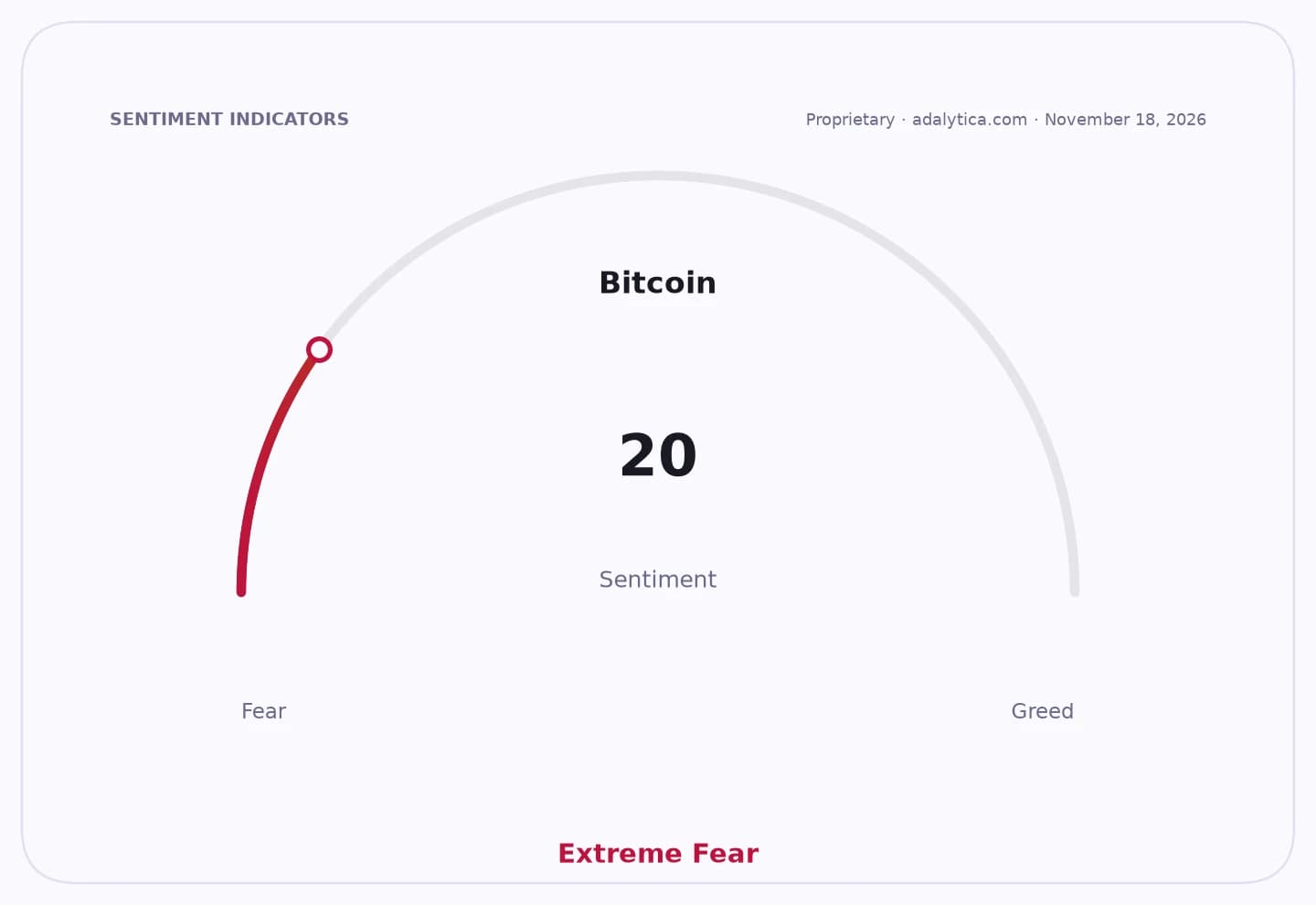
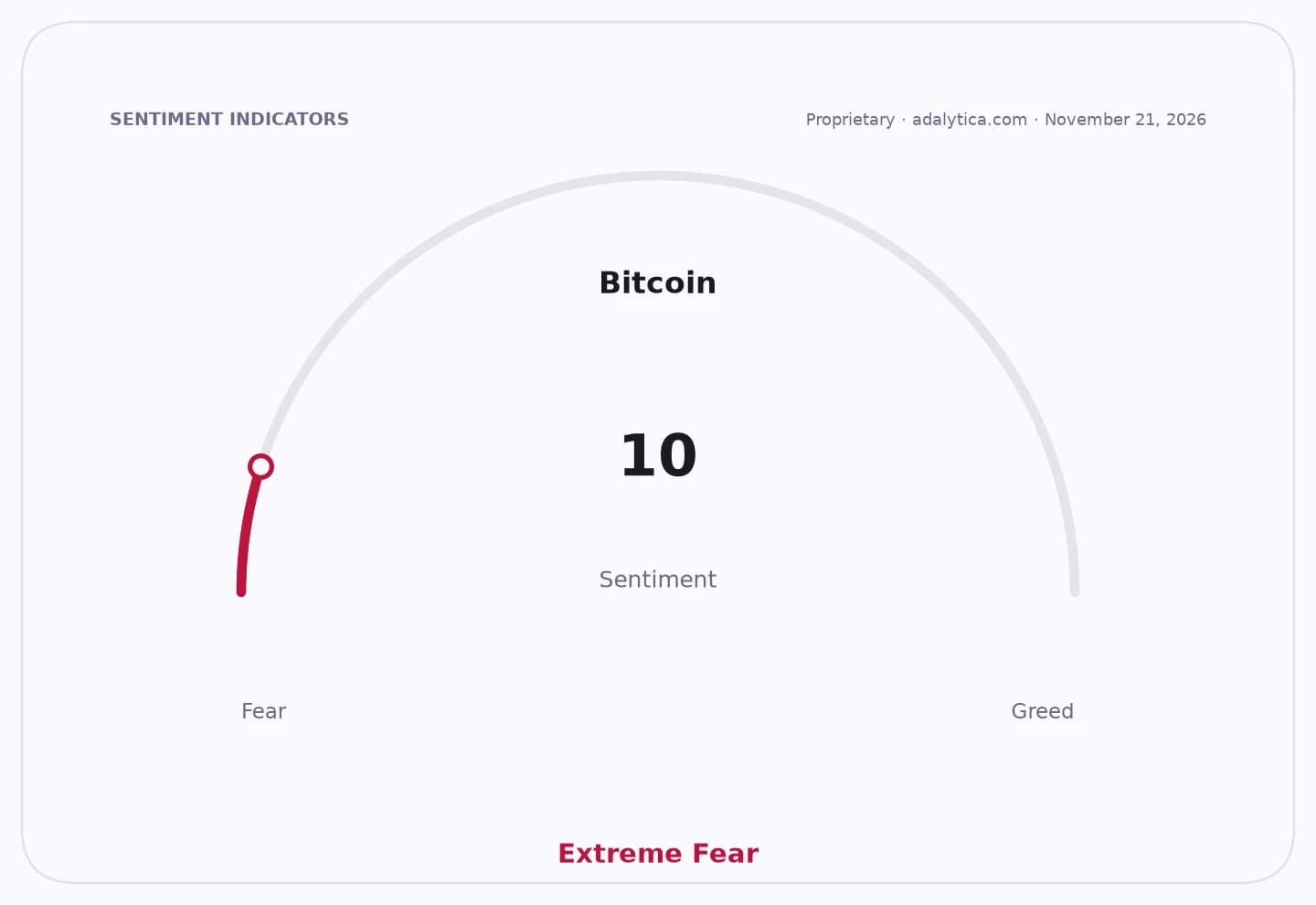
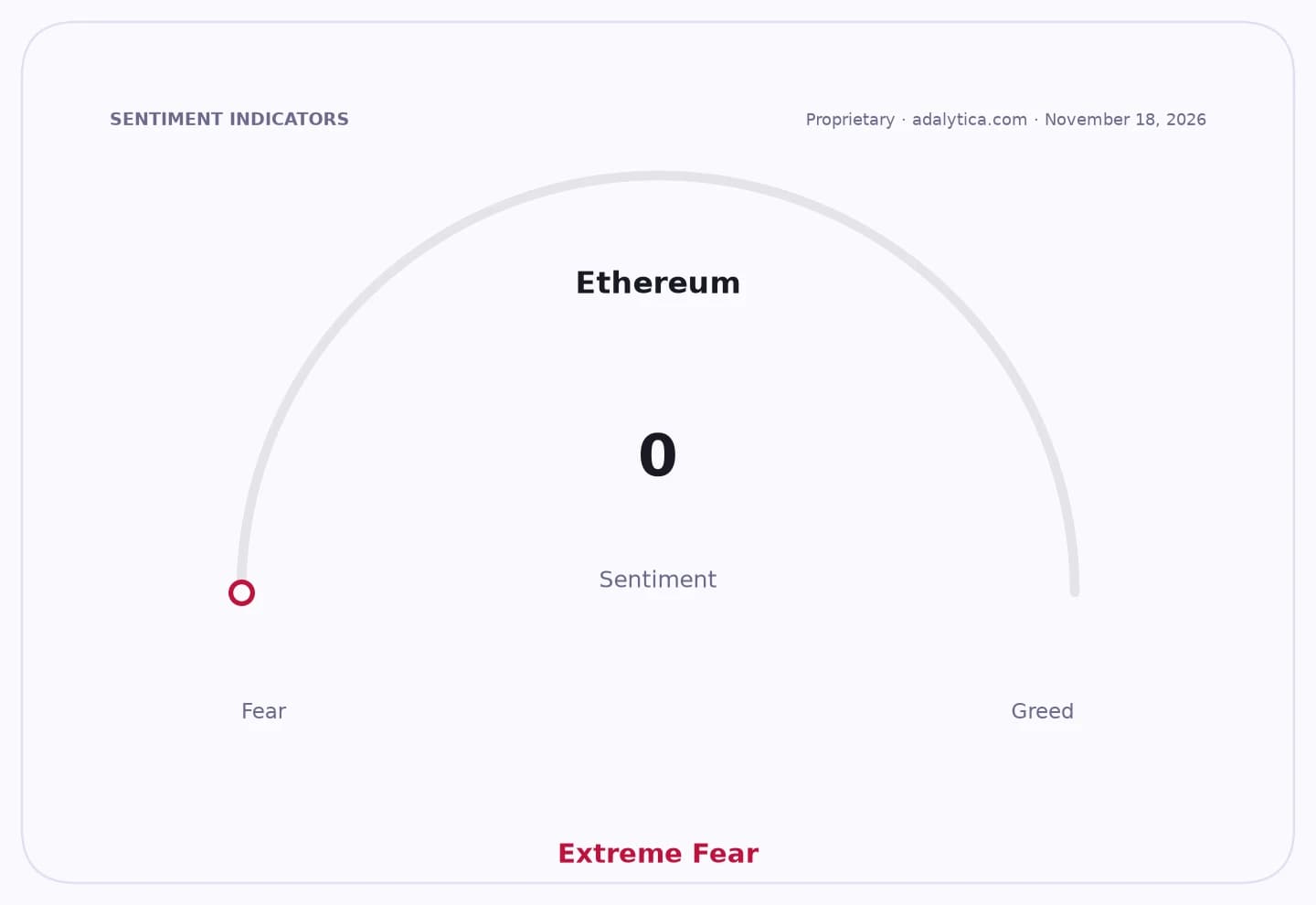
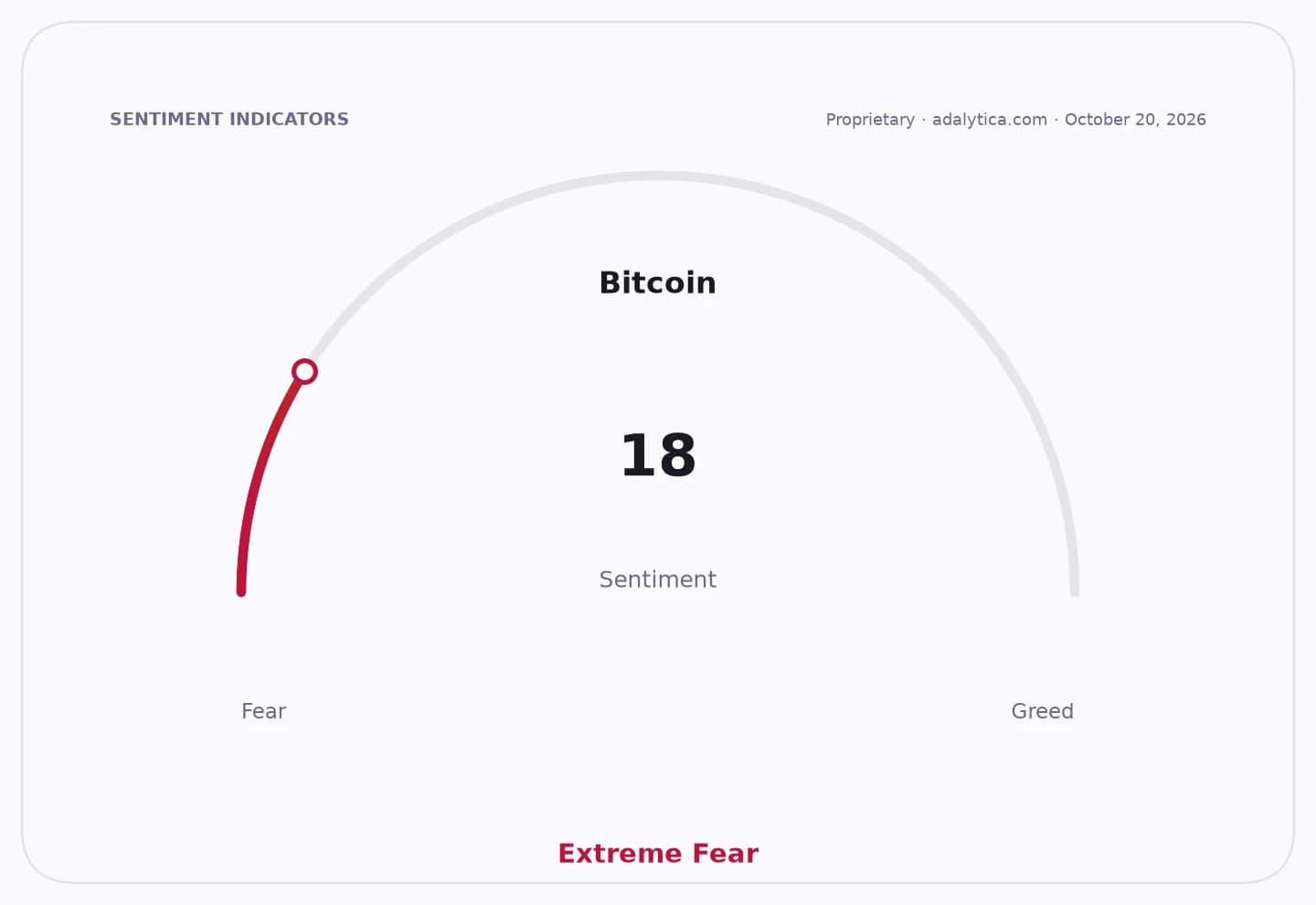
The timing also matters. Coinbase has been hammered alongside the broader crypto complex, while the market’s fear gauge for Bitcoin has sunk into the low 20s, according to Adalytica.com. That is a sign of stress, not capitulation with fresh buying power behind it. When fear rises and liquidity falls at the same time, rebounds tend to be shorter and more fragile.
There is also a second-order story here for investors outside crypto. A disorderly Bitcoin break often ripples into risk assets more broadly, especially when speculative trading conditions have already been stretched. If the crypto market cap slips below $2 trillion, as this momentum suggests it could, that would reinforce the message that investors are still reducing leverage rather than reaching for risk. For traders, that means watching not just Bitcoin’s next support level, but whether stablecoin supply stops contracting and whether liquidations cool enough to let spot buyers regain control.
Our view is that the market is underestimating how much damage this kind of liquidation wave can do once liquidity disappears. Until fresh capital returns, Bitcoin remains vulnerable, Ethereum is exposed, and crypto-linked equities will trade as high-beta proxies for a market that is still cleaning itself up.
| Entity | Gains | Losses |
|---|---|---|
| Long crypto traders | ▲Lower leverage risk | ▼Forced liquidations |
| Stablecoin issuers | ▲Potential rebound demand | ▼Supply outflows |
| Coinbase and crypto brokers | ▲Higher volatility volume | ▼Price-driven sentiment hit |
| Bitcoin bears | ▲Downtrend confirmation | ▼Missed if panic reverses |