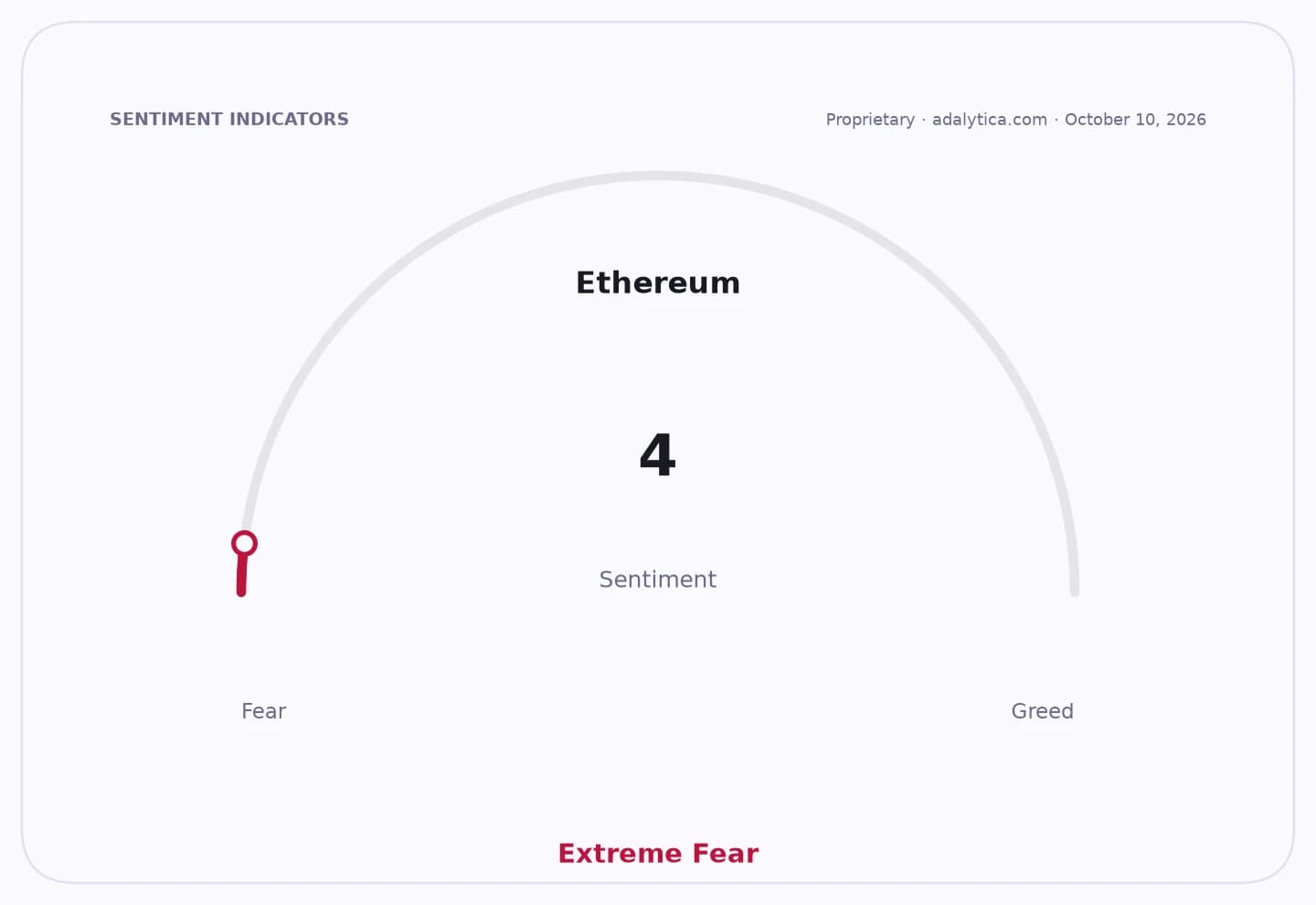
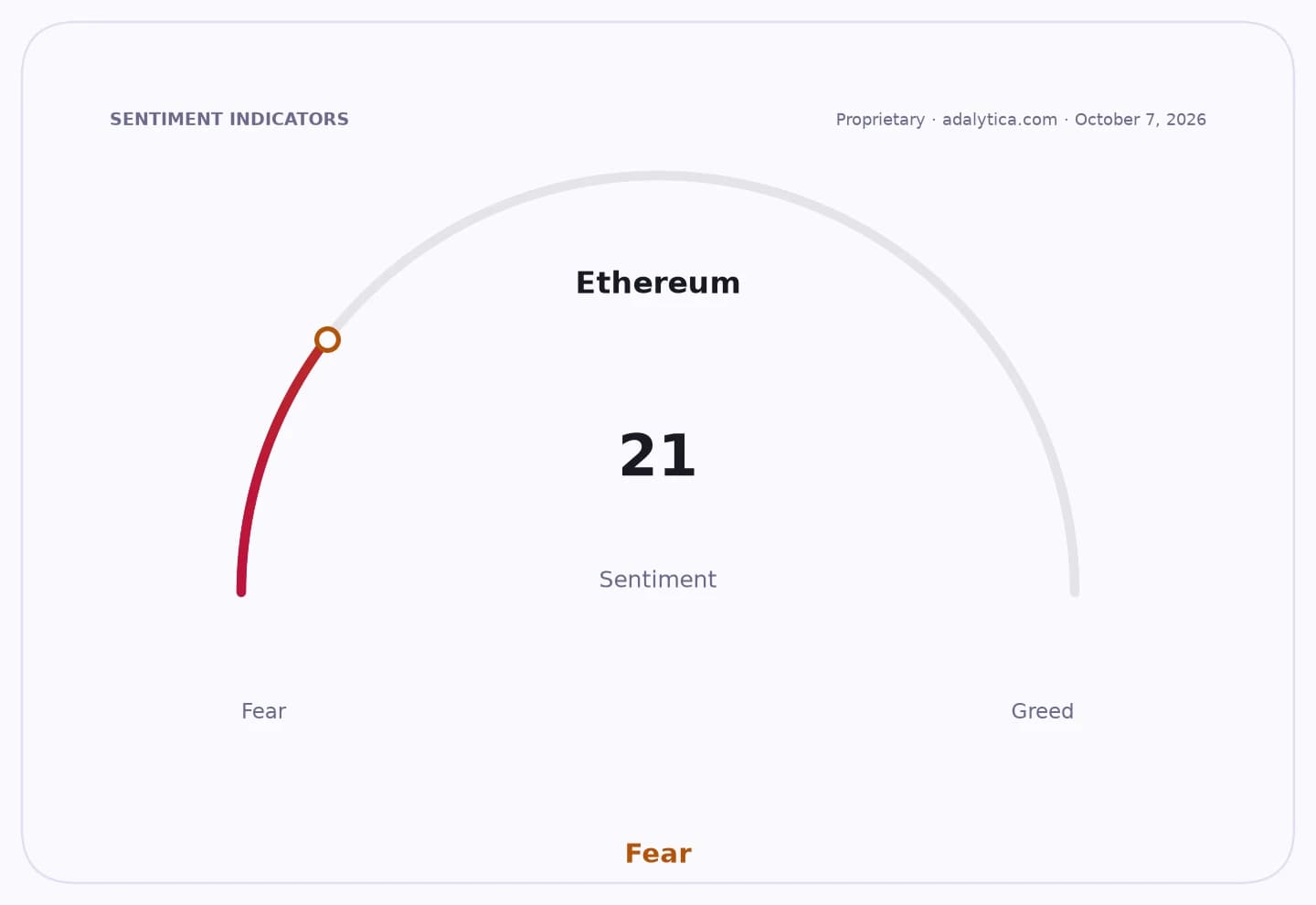
Bitcoin exchange-traded funds posted $91.72 million of net outflows on Oct. 6, a sign that the hot institutional bid that had helped lift crypto markets is losing some momentum even as bitcoin remains above key technical support.
Bitcoin ETFs See $91.72M Net Outflows
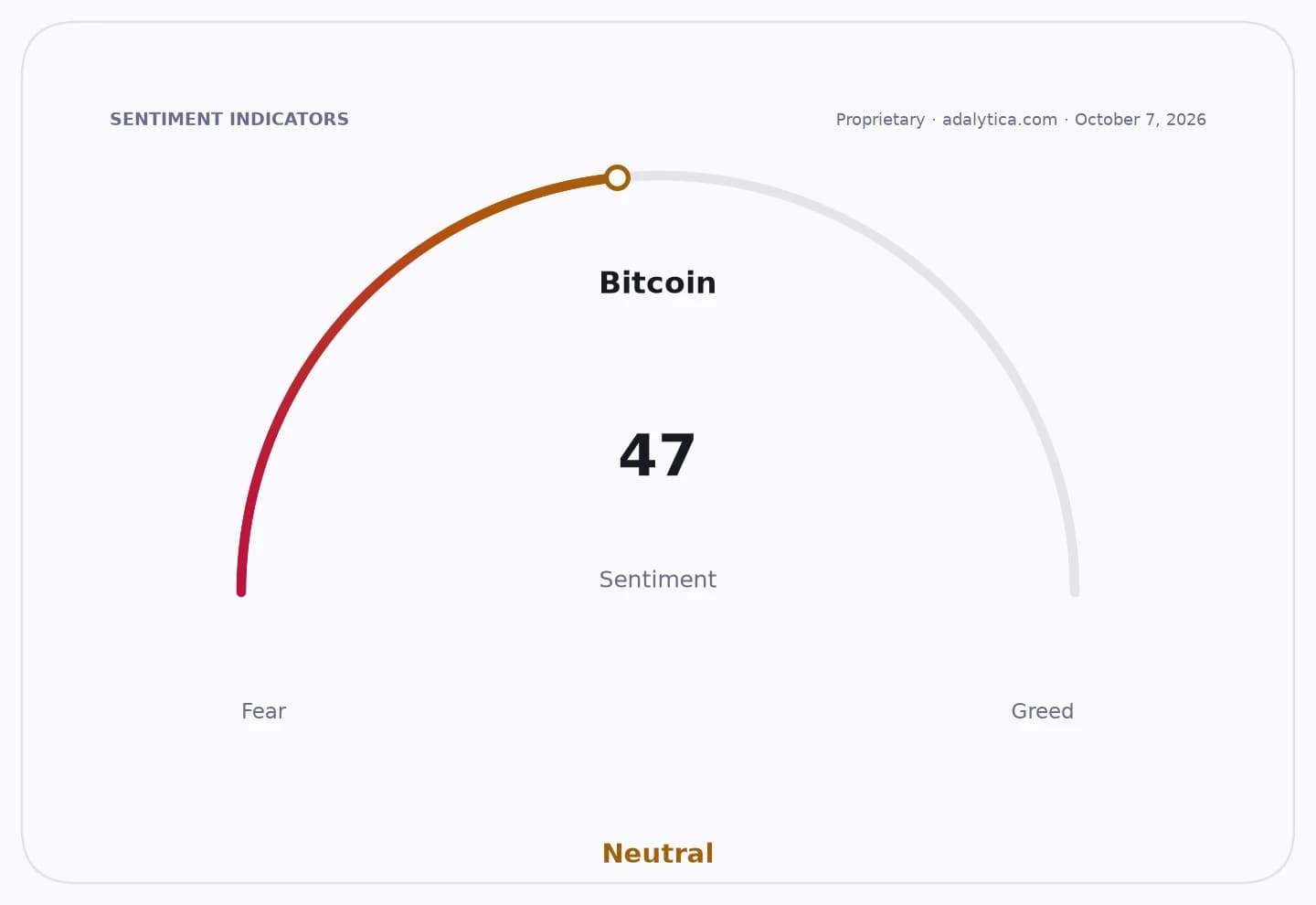
The withdrawals matter because spot bitcoin ETFs have been one of the clearest conduits for traditional money into the asset class, and their daily flow profile is now an important gauge of whether rallies are being driven by fresh allocation or simply carried by spot buying and leverage. Ethereum ETFs also saw money leave, with $58.29 million in outflows, but the larger issue for investors is that bitcoin fund demand is no longer uniformly one-way.
Sentiment IndicatorsⓘProprietary · adalytica.com · October 7, 2026
This is a snapshot — live sentiment, awareness and momentum for 130+ markets update continuously in the dashboard.Open AlphaPulse
Lookonchain data showed bitcoin ETFs shed 1,059 BTC on the day, while ether products lost 21,432 ETH. Over seven days, bitcoin ETFs still held a modest net inflow of 1,074 BTC, or about $93 million, while ether ETFs saw a much larger $215.37 million leave. That divergence suggests institutions are still favoring bitcoin over ethereum, but are becoming more selective after a strong run in crypto-linked products.
The flow picture is being read against a softer tone in price and positioning. Bitcoin traded at $85,557.56 on Oct. 6 and slipped to $83,370.79 on Oct. 7, leaving it below its 50-day moving average and closer to the middle of the recent range. Technical indicators remain constructive in the longer term — the 200-day moving average sits well below current levels — but momentum has clearly cooled, with RSI easing into neutral territory and MACD flattening. That combination usually points to consolidation rather than immediate trend exhaustion, though it leaves less room for disappointment if ETF outflows persist.
The message for investors is that bitcoin’s next move may depend less on narrative and more on whether ETF demand re-accelerates. A sustained period of outflows would pressure spot prices, reduce the marginal buyer, and test the view that institutions are steadily deepening crypto exposure. A return to inflows, by contrast, would reinforce bitcoin’s lead over ethereum and revive the case for the asset as the preferred institutional crypto allocation.
For now, the market is caught between longer-term structural demand and shorter-term profit-taking. That makes ETF flow data one of the most important near-term signals in crypto, especially as traders watch whether bitcoin can hold support around the 50-day average and attract fresh buying back into the funds.
| Entity | Gains | Losses |
|---|---|---|
| Bitcoin short sellers | ▲Near-term downside pressure | ▼Squeeze risk if inflows return |
| Long-term bitcoin holders | ▲200-day trend support | ▼Softer ETF demand |
| Ethereum ETF holders | ▲Relative allocation interest | ▼Larger weekly redemptions |
| Bitcoin ETF issuers | ▲Trading volume from flows | ▼Asset-gathering momentum |