JPMorgan’s estimate that crypto markets could absorb $50 billion of inflows in 2026 points to a renewed institutional bid for digital assets even after a volatile year marked by thefts, outflows and extreme fear across the Bitcoin market.
Bitcoin holds above key moving averages
That matters because fresh capital is the lifeblood of crypto prices, exchange volumes and fund flows. If JPMorgan’s forecast proves right, it would imply the sector is still deep enough to attract large-scale allocations from funds, corporate treasuries and retail platforms despite repeated shocks to confidence.
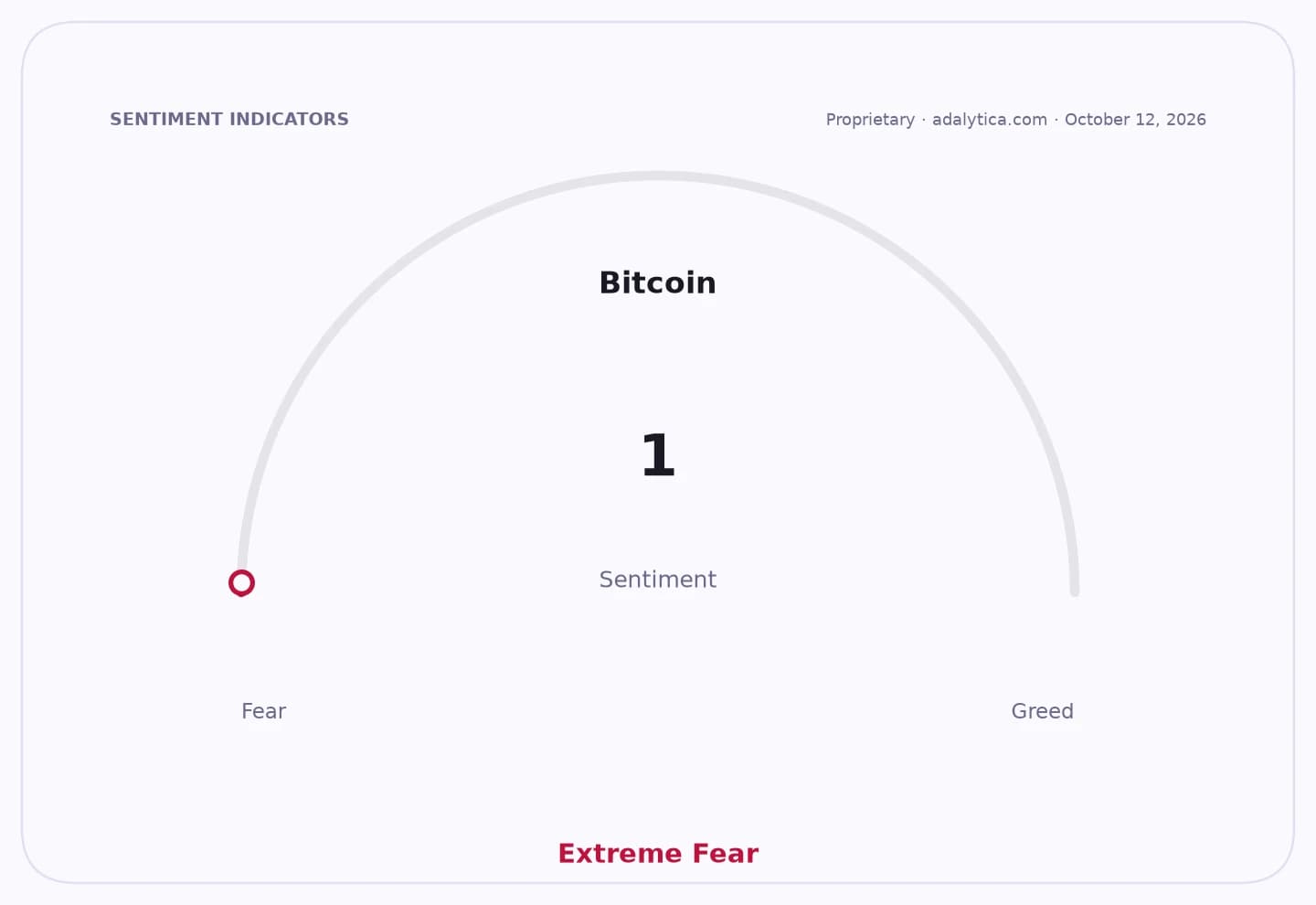
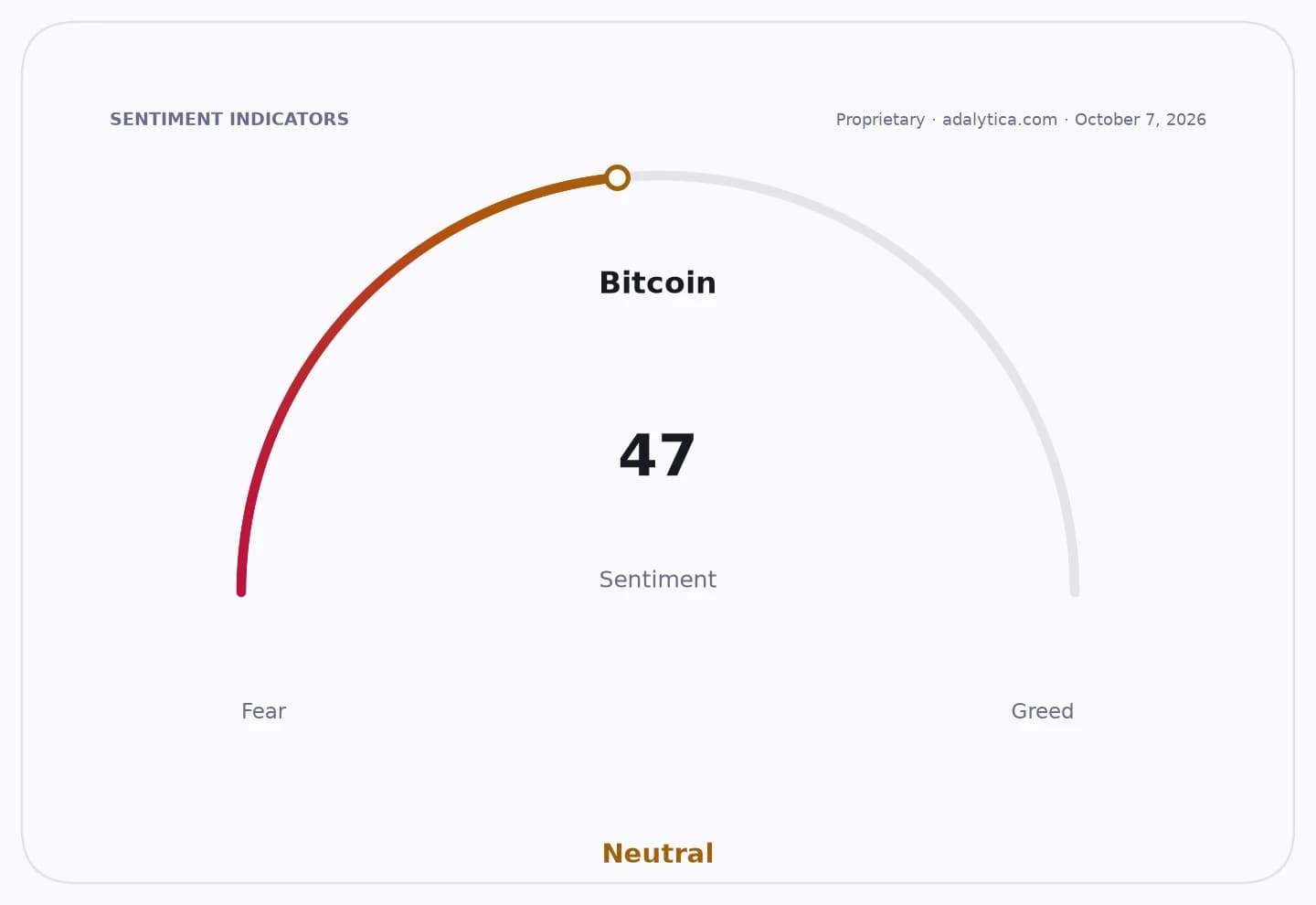
Sentiment IndicatorsⓘProprietary · adalytica.com · October 12, 2026
This is a snapshot — live sentiment, awareness and momentum for 130+ markets update continuously in the dashboard.Open AlphaPulse
Bitcoin has already recovered from a sharp midyear selloff, rising to $83,862.60 on Oct. 12 from a low of $58,558.86 on June 30, while still trading well below its peaks. The move has come alongside a broader swing in sentiment: Adalytica’s Bitcoin Fear & Greed Index shows “Extreme Fear” at 2, even as the token sits above both its 50-day moving average of $80,945.67 and its 200-day average of $71,981.03.
For investors, that combination keeps the market in a fragile but tradable zone. Persistent inflows would support bitcoin and crypto-linked assets such as Coinbase and Robinhood, which tend to benefit when trading activity and customer engagement rise, but the same names remain exposed if price weakness or security breaches keep sidelining capital.
The macro backdrop is not obviously hostile to risk assets. The 10-year Treasury yield is near 5.23%, money supply has continued to expand, and the Federal Reserve funds rate is forecast around 3.73% in October 2026, a mix that can still support demand for alternative assets if investors keep reaching for returns.
At the same time, the crypto market is trying to shake off a string of setbacks, including major thefts and evidence that some institutional money has stayed cautious. CME’s launch of a crypto index excluding bitcoin and ether suggests professional investors are still experimenting with ways to gain exposure while limiting concentration risk.
The next test is whether inflows actually show up in fund data and trading volumes through year-end. If they do, crypto may be entering another accumulation phase; if they don’t, JPMorgan’s forecast could look more like a hopeful baseline than a durable trend.
| Entity | Gains | Losses |
|---|---|---|
| Bitcoin and broader crypto market | ▲Fresh capital support | ▼Fear-driven selling pressure |
| Coinbase and Robinhood | ▲Higher trading volumes | ▼Slower retail and institutional activity |
| Crypto ETF and ETP issuers | ▲More asset inflows | ▼Outflow risk after prior volatility |
| Skeptical or underweight investors | ▲— | ▼Missed upside if inflows accelerate |