Bitcoin is ending the week lower as a suspected $86 million hardware-wallet theft rattles confidence in one of crypto’s most basic security assumptions: that self-custody is safer than leaving coins on exchanges.
Bitcoin Falls on Ledger Hardware Wallet Theft Report
That matters because this is not just another price dip. It goes to the heart of why many investors own Bitcoin in the first place. If users begin to doubt the integrity of hardware wallets, the market faces a second-order hit: weaker retail participation, slower adoption of self-custody and fresh pressure on already fragile crypto sentiment. Bitcoin fell about 1% to $82,828 in the latest session after touching $84,230, leaving it above its 50-day moving average near $81,043 but still well below the upper end of its recent range. The 14-day RSI at 47 shows momentum has cooled without yet entering a deeply oversold setup, suggesting traders are still waiting for a catalyst rather than stepping in aggressively.
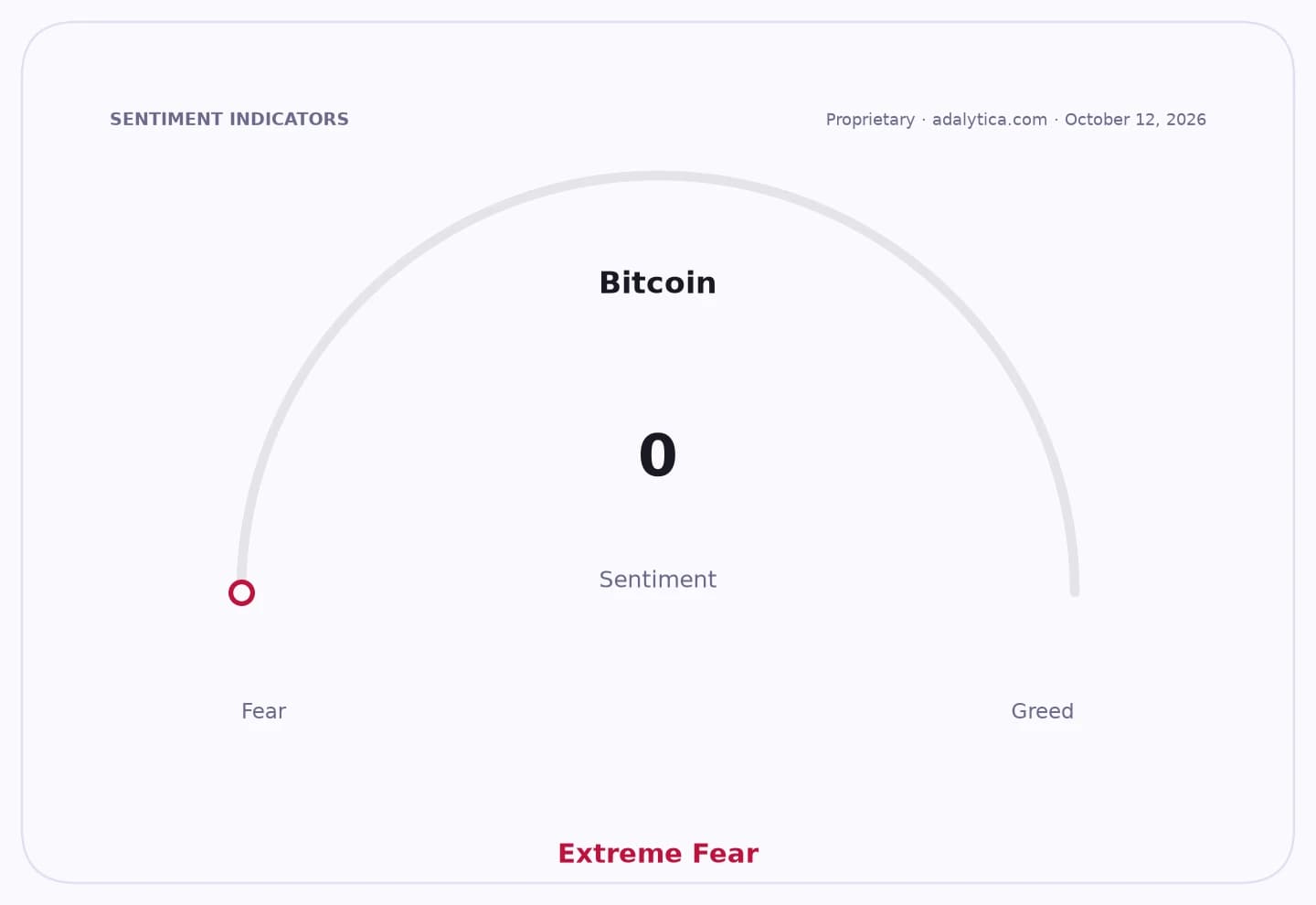
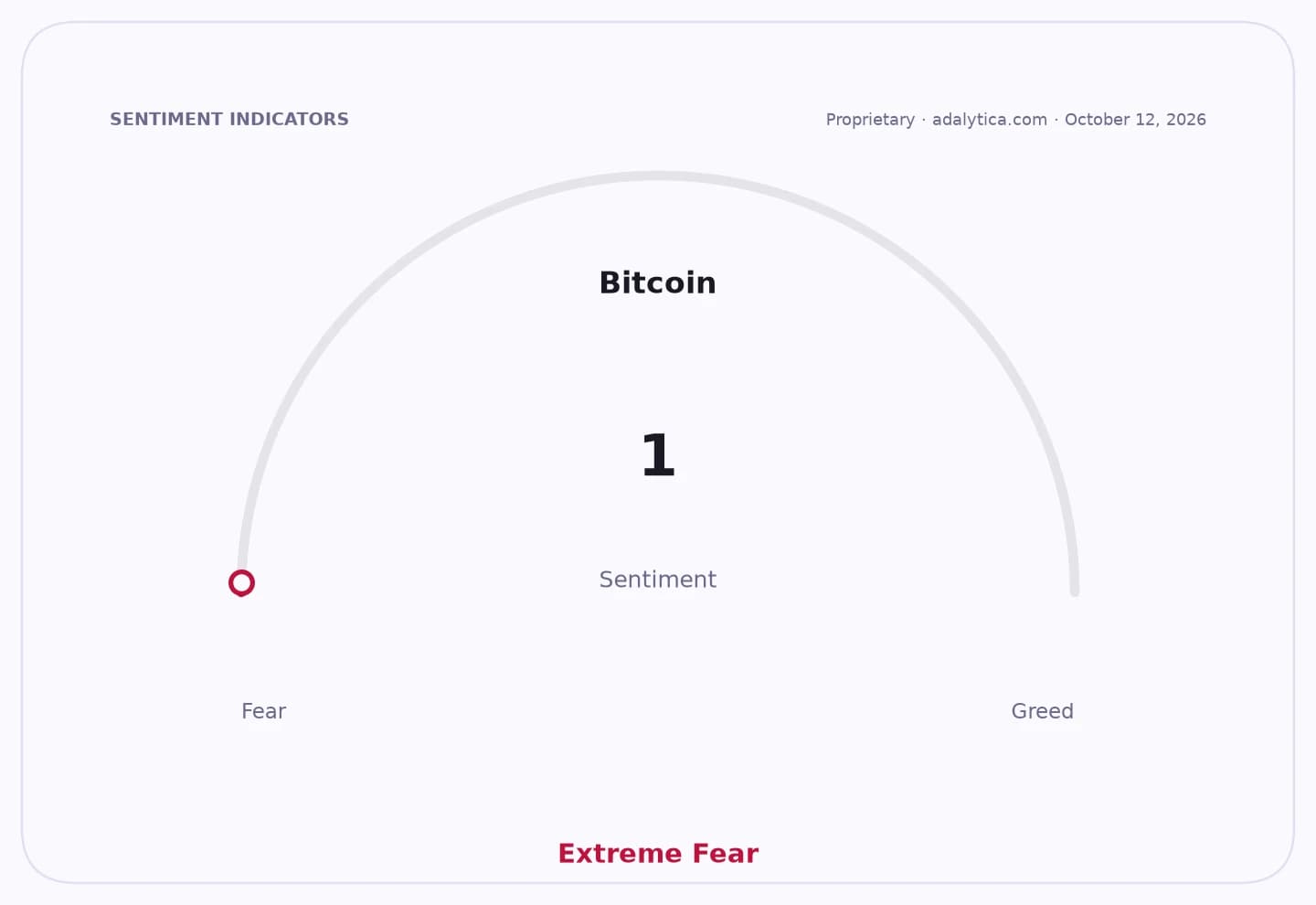
Sentiment IndicatorsⓘProprietary · adalytica.com · October 12, 2026
This is a snapshot — live sentiment, awareness and momentum for 130+ markets update continuously in the dashboard.Open AlphaPulse
Ledger said it is investigating reports of missing funds tied to devices sold through a reseller in Southeast Asia and asked CryptoBilis to pause sales and shipments. The company has not confirmed the size of the losses or whether the incident reflects device tampering, a supply-chain attack or some other compromise. But even without proof that Ledger’s own systems were breached, the optics are damaging. Hardware wallets are supposed to be crypto’s safest off-ramp from exchange risk. If investors start to question that premise, the premium on security products, custody services and blockchain forensics rises — while confidence in the broader self-custody model falls.
The timing is poor for a market already under strain. Adalytica’s Bitcoin Fear & Greed Index is sitting at 1, a reading that points to extreme fear and shows sentiment has collapsed over the past week. That lines up with the broader market backdrop: nearly $1 billion in crypto liquidations have hit traders amid macro uncertainty and geopolitical tensions, while Bitcoin has been chopping lower from the highs that had briefly renewed bullish momentum. Bitcoin remains above its 200-day moving average, a sign the longer-term trend is still intact, but the recent break below the psychological $85,000 area shows how quickly confidence can unwind when security headlines hit.
Bitcoin — 30-day sentimentadalytica.com
Explore this data interactively — full history, time series and cross-market comparisons.Open AlphaPulse
The spillover is likely to be felt most sharply in crypto-adjacent equities. MicroStrategy, now trading around $155.71, has held up better than Bitcoin itself, but it remains leveraged to the asset’s direction and to investor appetite for balance-sheet exposure to the token. Coinbase, at $181.74, is more exposed to trading activity and volatility; a prolonged security scare could keep retail engagement muted and volume choppy. For investors, that means the real opportunity may not be in chasing another quick rebound in Bitcoin, but in positioning around the companies that profit when volatility drives demand for custody, infrastructure and compliance.
Ledger still says there is no confirmed evidence its own wallet technology was compromised, and that distinction matters. If the case turns out to be a reseller-specific or supply-chain issue, the damage may be contained. But even a contained breach can reshape behavior in an industry built on trust, opacity and irreversibility. For now, the message for crypto investors is straightforward: the market is reminding them that security scares can move prices faster than narratives about adoption.
| Entity | Gains | Losses |
|---|---|---|
| Ledger competitors | ▲Trust-driven demand | ▼Ledger brand pressure |
| Custody providers | ▲Safety demand | ▼Self-custody skepticism |
| Bitcoin shorts | ▲Volatility trade | ▼Dip buyers |
| COIN, MSTR longs | ▲Risk-on rebound | ▼Crypto security headlines |