Bitcoin’s slide below $84,000 triggered more than half a billion dollars in forced crypto long liquidations, underscoring how a thin market and heavy leverage can still turn a modest move into a broad deleveraging event.
Bitcoin Falls Below $84,000 After Crypto Liquidations
The immediate economic significance is that crypto prices are being steered less by spot demand than by derivatives positioning, with overextended longs vulnerable to sharp intraday air pockets. Bitcoin briefly fell to $83,560, just under its 21-day moving average of $83,850, before stabilizing near $84,000, while cumulative 24-hour liquidations across crypto reached $550 million, according to CoinGlass. That kind of unwind removes leveraged fuel from the market and can deepen short-term volatility even when the underlying move in the asset is relatively contained.
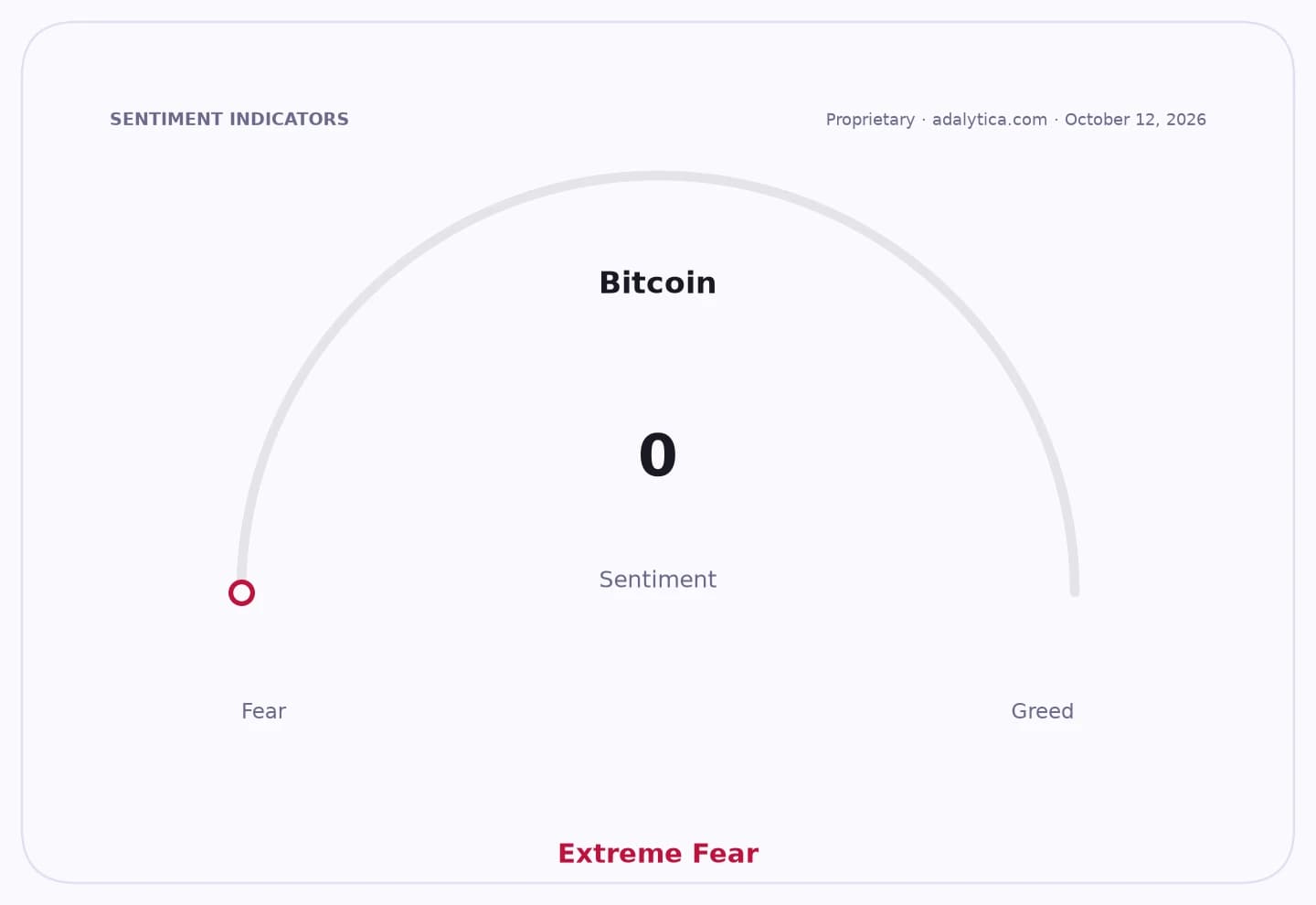
Sentiment IndicatorsⓘProprietary · adalytica.com · October 12, 2026
This is a snapshot — live sentiment, awareness and momentum for 130+ markets update continuously in the dashboard.Open AlphaPulse
The drop also revived concern that the move was helped by aggressive short positioning. Onchain data cited by Lookonchain showed four wallets using USDC to open shorts on 148.49 BTC with 40x leverage on Hyperliquid shortly before the selloff. Whether that positioning caused the move or simply anticipated it, the sequence matters for market structure: when large directional bets cluster around visible technical levels, they can accelerate liquidations and distort price discovery.
Bitcoin’s ability to hold its 21-day moving average is now the first line of defense for bulls. Traders have flagged $82,500 as a more important support level tied to a broader inverse head-and-shoulders setup on the weekly chart, while analyst Rekt Capital said a daily or three-day close above $86,700 would be needed to confirm upside continuation. Until then, the market looks stuck in a range where rebounds are being met by overhead liquidity and every failed push higher risks another cascade of stop-losses and liquidations.
That dynamic has implications well beyond Bitcoin itself. Open interest across the 21 exchanges tracked by CoinGlass rebounded from about $54.2 billion to $55.3 billion within six hours after the flush, suggesting traders were already rebuilding exposure near the lows. That can support a rebound if spot buyers step in, but it also leaves the market exposed to another leverage washout if prices lose nearby support.
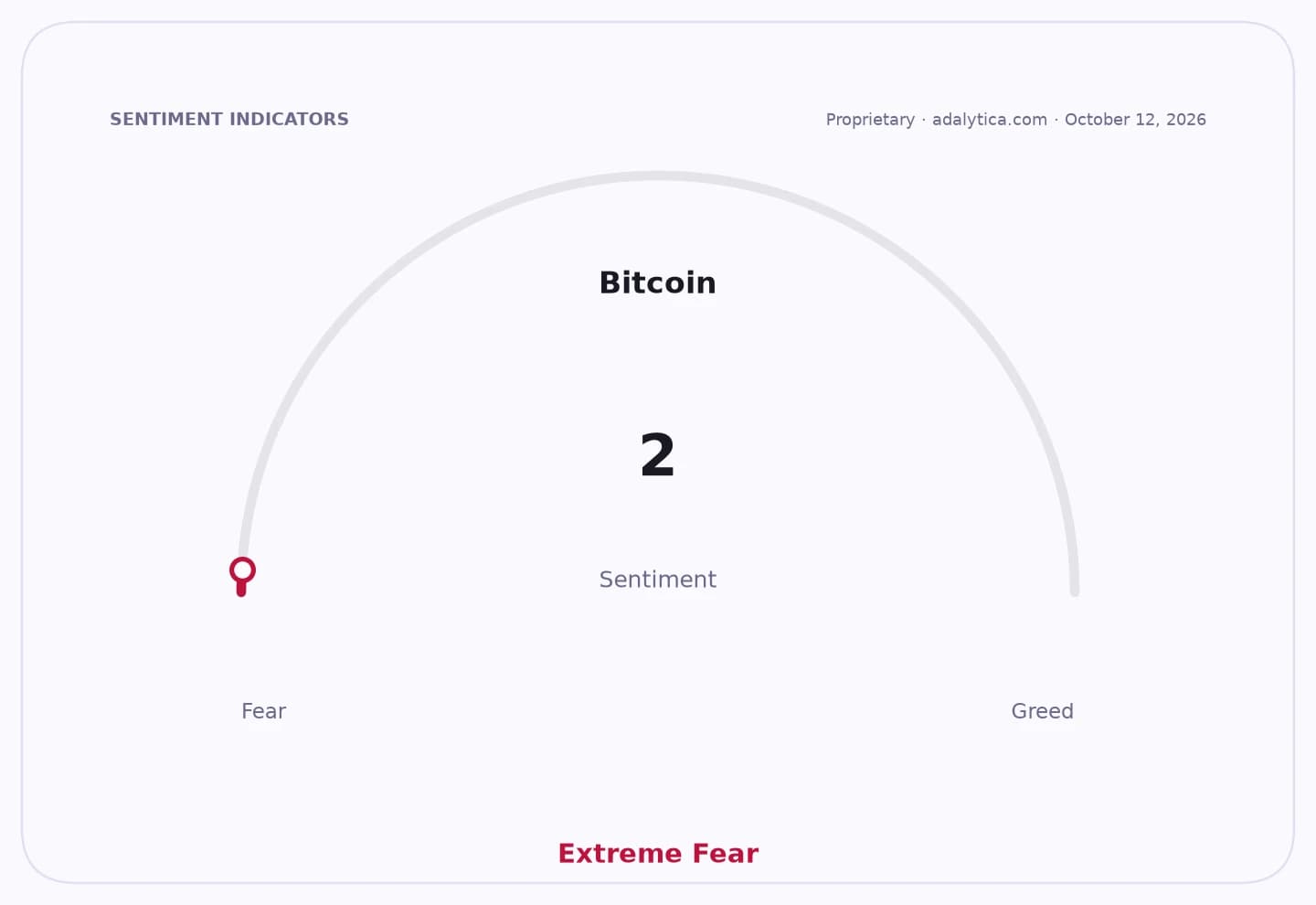
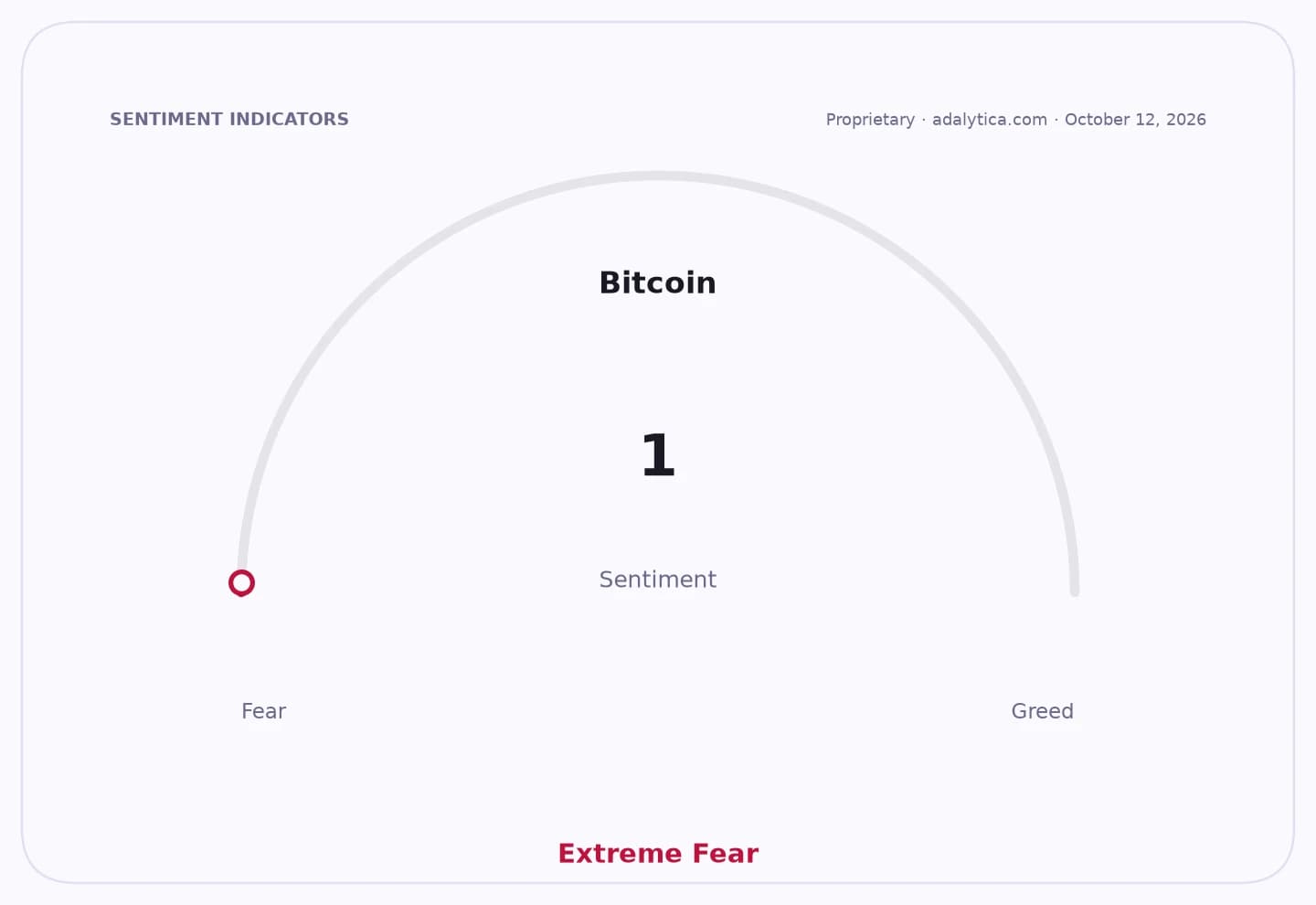
For investors, the message is that crypto remains highly reflexive: price, leverage and liquidations feed off one another faster than in most major asset classes. Adalytica’s Bitcoin Fear & Greed Index has collapsed to “Extreme Fear,” but sentiment resets alone do not end these swings; they often mark the point where leverage has to be cleared before a more durable trend can form. A sustained recovery above $86,700 would improve the technical picture, while a break below $82,500 would raise the odds that this is still a broader corrective phase rather than a clean restart of the uptrend.
| Entity | Gains | Losses |
|---|---|---|
| Bitcoin bears | ▲Forced deleveraging | ▼Longs and momentum buyers |
| Hyperliquid shorts | ▲Timely downside exposure | ▼Late-covering short sellers |
| Spot buyers near support | ▲Better entry levels | ▼Traders chasing upside breakouts |
| Leveraged crypto longs | ▲— | ▼Margin, collateral, P&L |