Bitcoin is trying to stabilize above $83,000 after a violent selloff, but the real story is that the market is still deciding whether this is a tradable rebound or the start of another liquidation wave toward $70,000.
Bitcoin Holds Above $83,000 After Selloff
That matters because bitcoin remains the bellwether for risk appetite across crypto, and the latest move has already dragged in the usual second-order casualties: bitcoin miners, exchange platforms and treasury-heavy corporate holders. When bitcoin loses traction, forced selling, margin stress and ETF outflows can turn a normal correction into a capital-preservation event.
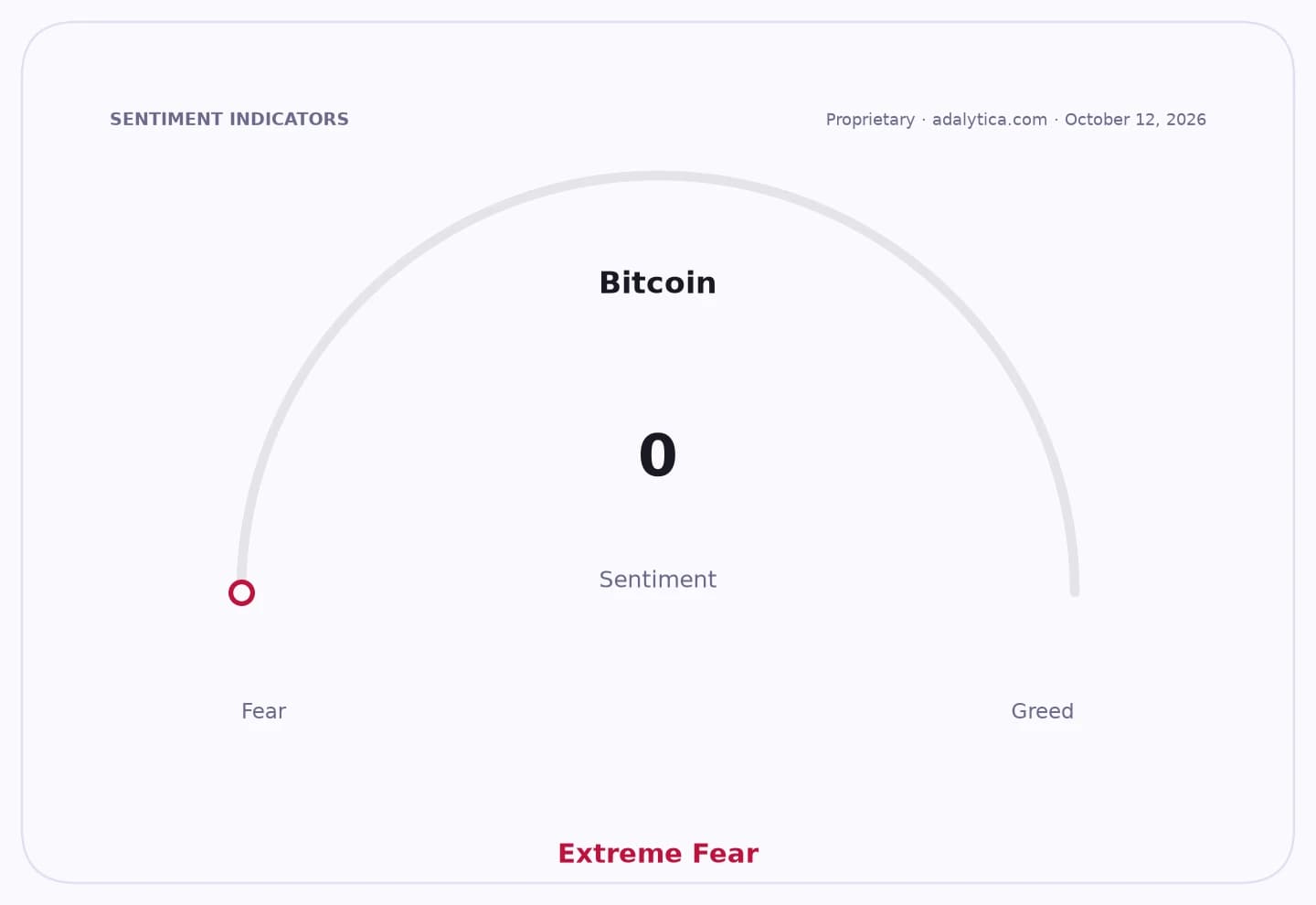
Sentiment IndicatorsⓘProprietary · adalytica.com · October 12, 2026
This is a snapshot — live sentiment, awareness and momentum for 130+ markets update continuously in the dashboard.Open AlphaPulse
The technical picture shows why traders are split. Bitcoin closed at $83,003.65 on Oct. 12, recovering modestly from a test of support around $80,000, but it remains below its 50-day moving average of about $81,047 and well under the September peak near $87,000. The 200-day moving average sits near $72,051, which is why $70,000 has emerged as the next downside magnet if the support line breaks.
Momentum has improved from the panic lows, but not enough to call a trend reversal. Bitcoin’s relative strength index has rebounded to 47.8 from deeply oversold levels, while the MACD is still below its signal line, suggesting the bounce is more of a pause than a confirmed breakout. In plain terms: bulls have arrested the selling, but they have not reclaimed control.
That is exactly the setup that creates asymmetry. If bitcoin clears $84,000 with volume, it opens the door to a retest of $87,000 and then a run toward the psychologically important $90,000 level. That would likely force short covering and bring sidelined capital back into the ETF and corporate-treasury trade. If it fails, the market is vulnerable to another cascade, especially after the recent flash crash briefly pushed prices below $79,000 and shook confidence across digital assets.
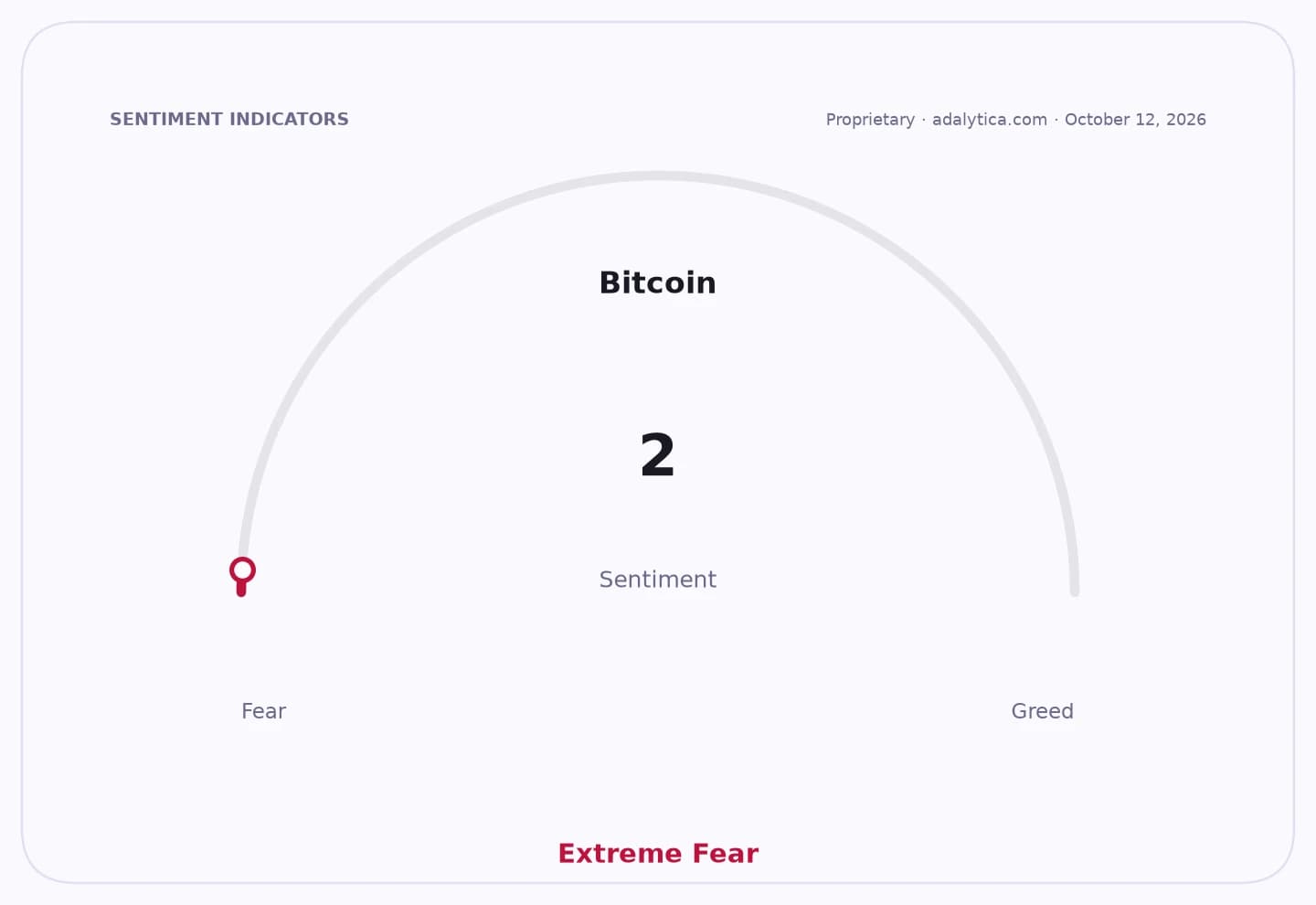
The broader risk backdrop only makes the fork in the road more important. Adalytica’s Bitcoin Fear & Greed Index is at 2, or “Extreme Fear,” a level that usually reflects capitulation rather than comfort. But fear alone is not a buy signal. It becomes an opportunity only when price reclaims resistance and flows turn positive again.
Investors should also watch the spillover names. MicroStrategy, the most leveraged bitcoin proxy in large-cap equities, is still trading far below its highs at about $152.68, while Coinbase remains deeply sensitive to spot-price volatility and trading volumes. If bitcoin breaks higher, those names can re-rate quickly; if it rolls over, they tend to magnify the downside.
My thesis is simple: bitcoin is at an inflection point, and the market is underestimating how quickly this can turn either way. A decisive move back above $84,000 would argue that this was a violent shakeout inside a longer uptrend. A failure to hold $80,000 would confirm that the market still needs to flush out speculative excess before a durable bottom can form. For now, the highest-conviction trade is not chasing the first bounce — it is waiting for a confirmed break of either $84,000 or $80,000, because that will likely decide whether bitcoin heads toward $90,000 or $70,000 next.
| Entity | Gains | Losses |
|---|---|---|
| Bitcoin bulls | ▲Rebound to $90,000 | ▼Breakdown below $80,000 |
| Bitcoin bears | ▲Slide toward $70,000 | ▼Short squeeze on $84,000 breakout |
| MicroStrategy | ▲Leverage to upside | ▼Hits on downside volatility |
| Coinbase | ▲Higher trading volumes | ▼Weak spot prices, risk-off flows |