Stocks are sitting near record highs, but investors are being warned the next major pullback may be set up by the very forces that helped drive the rally: passive inflows, leveraged trading and crowded positioning.
SPY near highs as pullback risks build

Nick Lumpp, president of RCN Wealth Advisors, said in an interview that tighter financial conditions, slowing artificial intelligence growth and a market structure increasingly dominated by index funds and leverage could leave equities more vulnerable if the flow of money reverses. That matters because it points to a market where gains are being amplified by mechanics as much as fundamentals, raising the odds of a sharper downside move when sentiment turns.
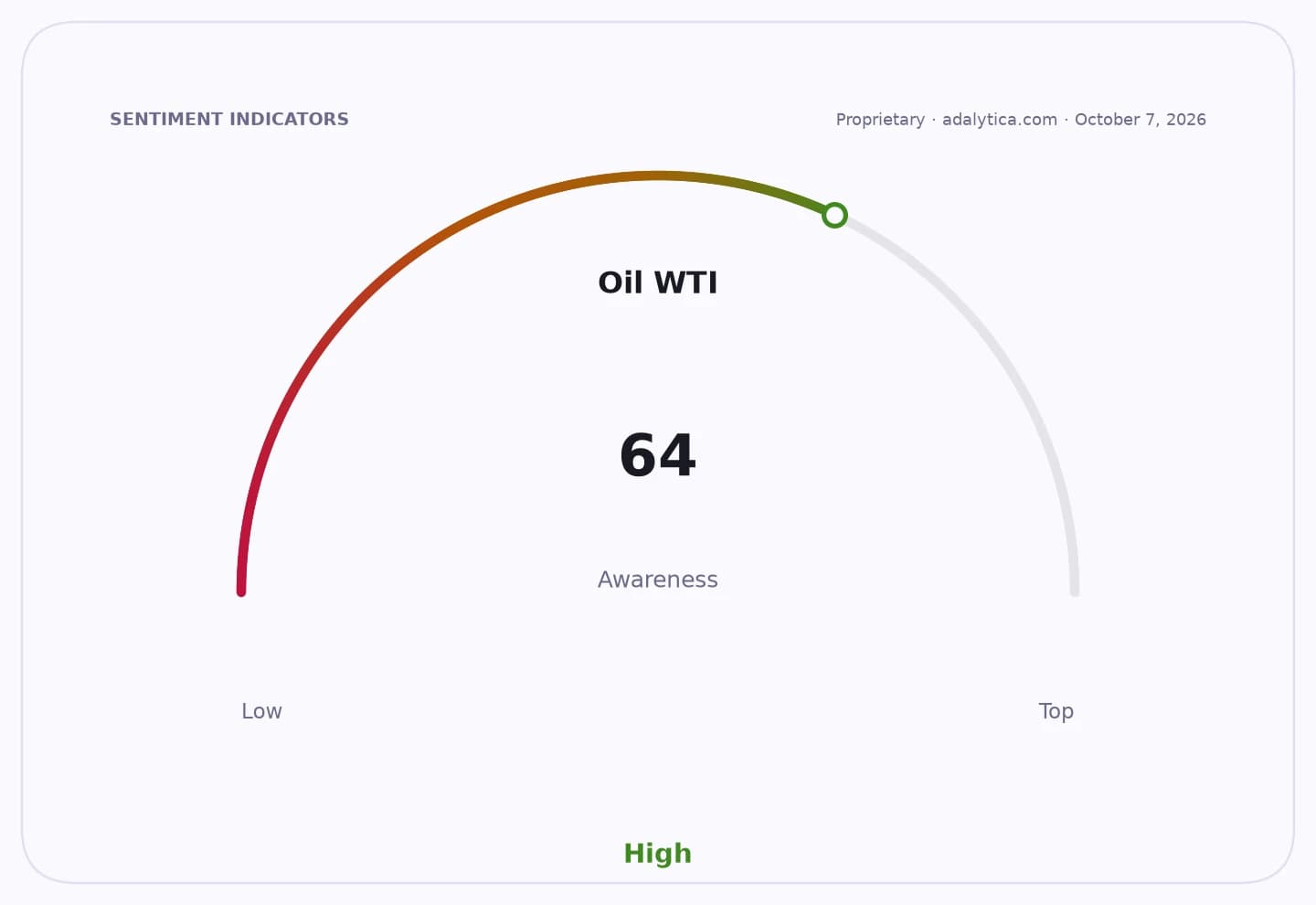
Sentiment IndicatorsⓘProprietary · adalytica.com · October 7, 2026
This is a snapshot — live sentiment, awareness and momentum for 130+ markets update continuously in the dashboard.Open AlphaPulse
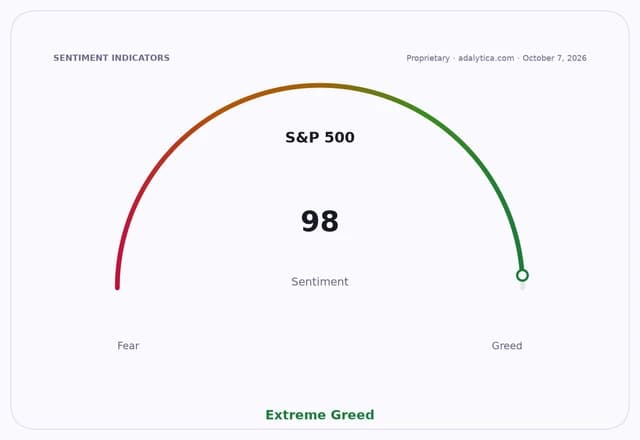
The S&P 500 ETF SPY closed at 777.22 on Oct. 7, after touching a recent high of 779.09 a day earlier, with its 50-day moving average at 764.58 and the RSI at 66.4, a sign the benchmark remains technically extended. The Adalytica S&P 500 Trade Signals snapshot shows sentiment at 98, or “Extreme Greed,” even as awareness sits at 0, labeled “Extreme Fear,” a combination that often reflects late-cycle complacency rather than broad conviction.
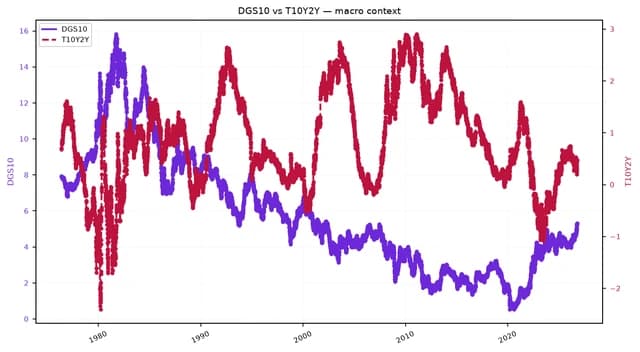
Treasury and credit data also argue for caution. The 10-year Treasury yield was at 5.287%, while the 10-year/2-year curve was barely positive at 0.513 percentage point, a signal of a flat yield curve and tighter monetary conditions. High-yield bond spread readings of 3.032 percentage points remain well above pre-tightening levels, showing corporate borrowing costs have not normalized even as equities push higher.
The defensive trade has already begun to show up in bonds and gold. TLT, the iShares 20+ Year Treasury Bond ETF, closed at 77.14, below its 50-day average of 80.81 and with an RSI of 15.4, reflecting heavy recent selling. Gold ETF GLD finished at 375.88, also below its 50-day average of 396.73, after slipping from a recent October peak above 382.
For investors, the key risk is not just a slower economy, but a market structure that can move faster in both directions. If passive inflows, trend-following CTAs, options hedging or leveraged ETFs stop reinforcing the rally, Lumpp’s point is that the same liquidity mechanisms that lifted stocks could intensify a downturn.
The near-term focus is on whether rates, credit and earnings can justify current valuations. Any further rise in yields or deterioration in growth expectations would likely pressure the most crowded parts of the market first.
| Entity | Gains | Losses |
|---|---|---|
| Passive index funds | ▲Benefit from inflows | ▼Face outflow risk |
| Active stock pickers | ▲More trading dislocations | ▼Lose to crowded flows |
| Equity longs | ▲Momentum support | ▼Pullback exposure |
| Treasury and gold holders | ▲Safe-haven demand | ▼Miss equity upside |