Nearly $18 billion of Bitcoin and Ethereum options expire today, setting up a reset in dealer hedging that could briefly magnify swings in crypto prices even if it does not dictate the next major trend.
Bitcoin and Ethereum options worth $18B expire today
The expiry is economically important because it removes a large chunk of open interest at once, forcing market makers and dealers to unwind, roll or rebalance hedges tied to spot bitcoin and ether. That can change the flow of buying and selling in the underlying market, particularly when positioning is concentrated around a narrow band of strikes and spot is trading close enough for those contracts to matter.
Bitcoin accounts for about $15.9 billion of the total, with Ethereum another $2.1 billion, according to the data provided. The Bitcoin book alone represents roughly 37% of Deribit’s outstanding BTC open interest, underscoring how outsized today’s settlement is relative to the remaining market. The September Bitcoin book is also call-heavy, with a put/call open-interest ratio of 0.69, and much of the positioning is clustered around the $85,000, $90,000, $95,000 and $100,000 strikes.
That matters because BTC is trading in the mid-$80,000s, where those strikes become relevant to hedging flows. If dealers are short calls, rising prices can force them to buy the underlying to stay hedged, reinforcing upside moves. Once the options expire, that mechanical demand disappears, which can leave the market more vulnerable to a pullback or a broader re-pricing of volatility.
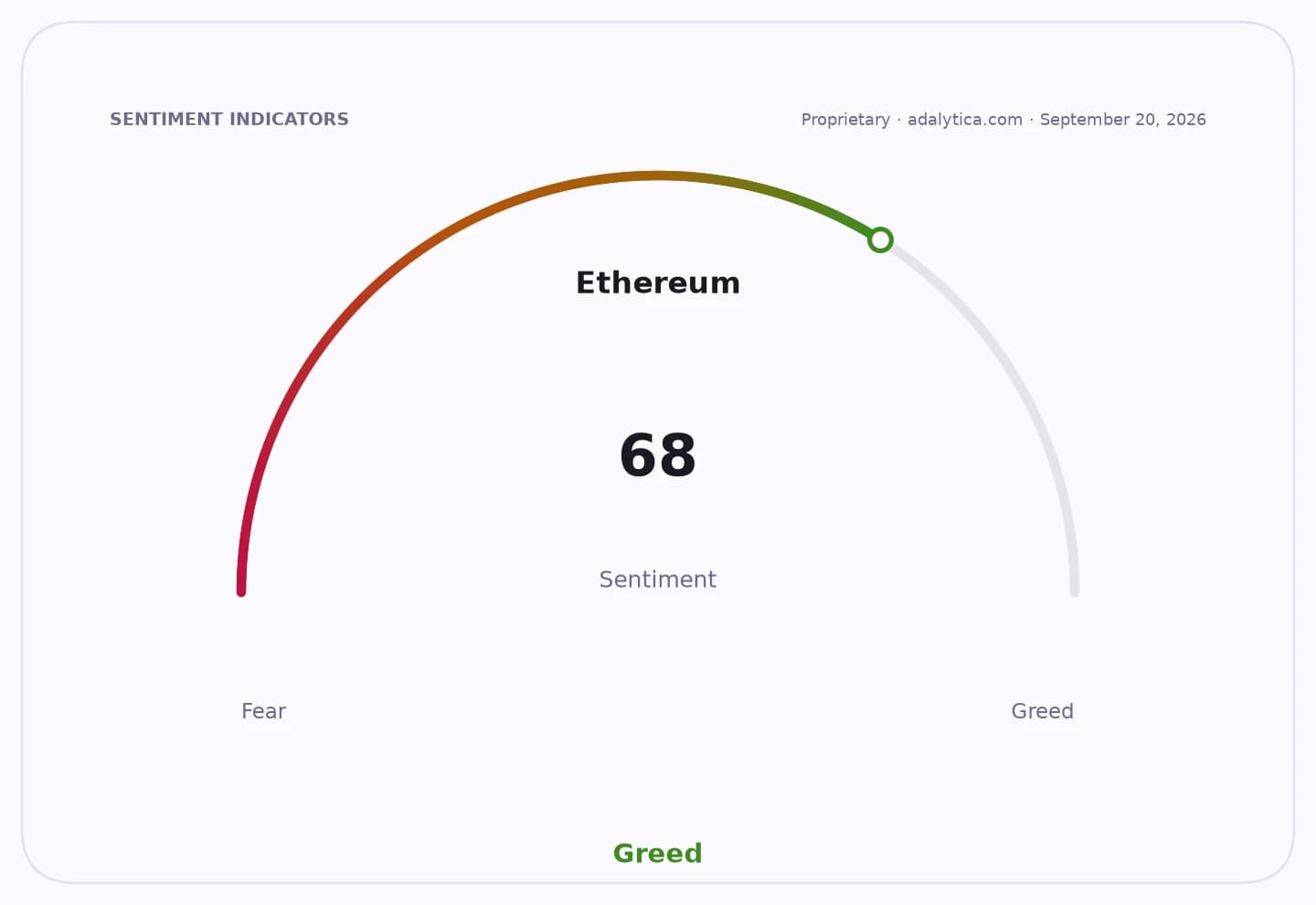
The immediate question for investors is not whether expiry alone will set the trend, but whether it removes a source of support just as the market is already stretched. Bitcoin has been oscillating near the upper end of its recent range, with the latest price around $84,147 and its 50-day moving average near $77,284, while the Relative Strength Index sits at 76.3, a level often viewed as overbought in conventional technical analysis. Ethereum has also been firm, trading near $2,716 with an RSI of 78.6.
For traders, that combination raises the odds of choppier price action around settlement, especially if spot moves through the key strikes and prompts hedges to be adjusted. For longer-term investors, the bigger issue is that expiry can temporarily distort price discovery, making short-term moves look more meaningful than they are. A call-heavy book can exaggerate rallies on the way up, but once the contracts roll off, that support can vanish quickly.
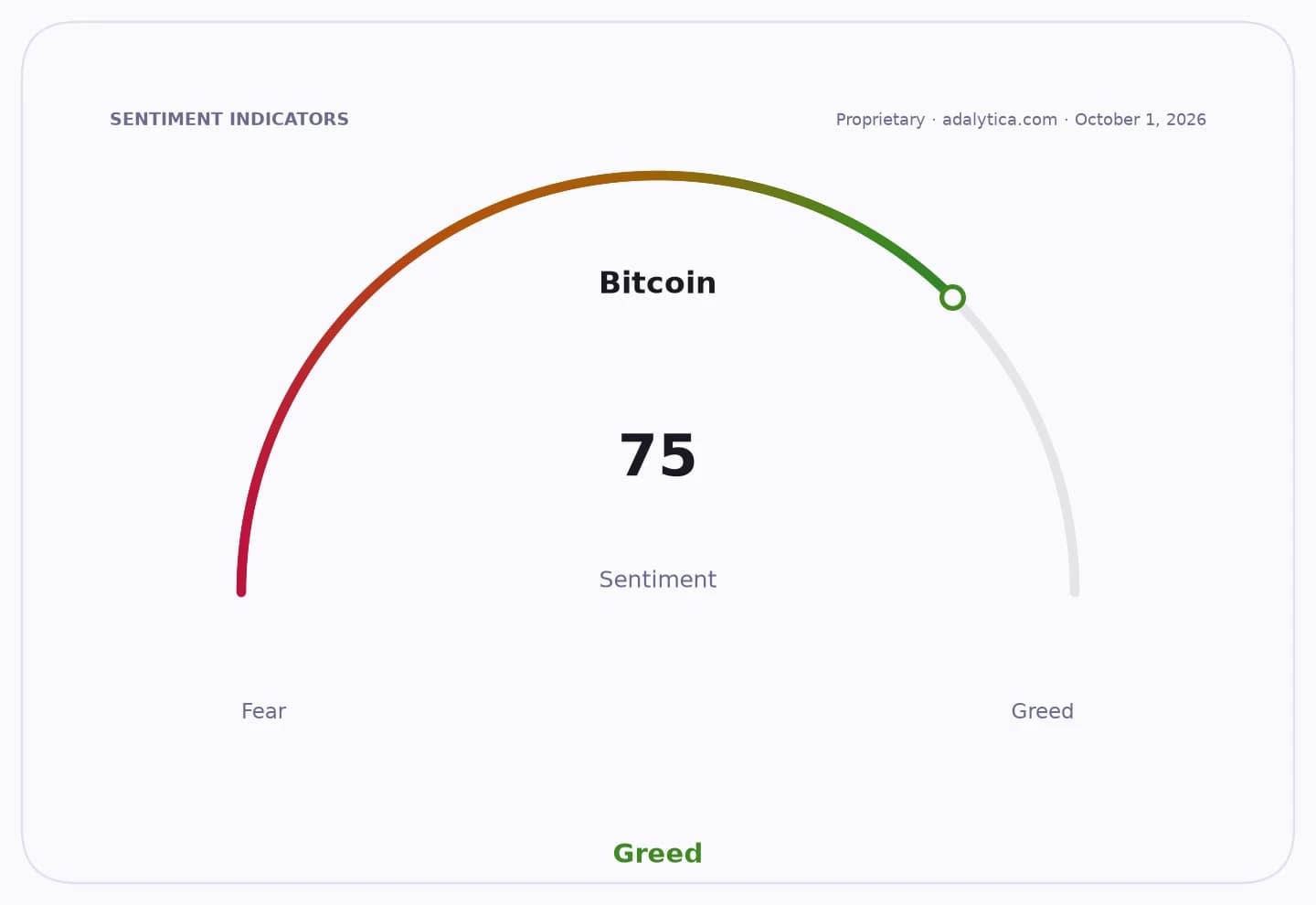
The broader crypto market often takes its cue from bitcoin, so any post-expiry volatility can spill into ether and smaller tokens through sentiment and risk appetite. Adalytica’s Bitcoin Fear & Greed Index still reads 75, in “Greed,” but its 7-day change has fallen 22 points, suggesting enthusiasm has cooled even as prices have held up.
That leaves today’s settlement as a potential inflection point for positioning rather than a standalone macro event. If bitcoin holds above the main strike cluster after expiry, it would suggest underlying demand is strong enough to absorb the loss of dealer support. If it slips back toward the high-$70,000s, investors may conclude that options-related flows had been doing more of the heavy lifting than the spot market revealed.
| Entity | Gains | Losses |
|---|---|---|
| Options buyers with profits | ▲Locked-in gains at expiry | ▼Further upside participation |
| Dealers/market makers | ▲Hedge reset opportunity | ▼Gamma-related hedging pressure |
| Bitcoin bulls | ▲If spot holds above key strikes | ▼If expiry removes support |
| Ethereum traders | ▲Spillover liquidity and interest | ▼Higher short-term volatility |