Bitcoin’s latest slide has sharpened the case for a crypto market split between scarce digital money and everything else, and that matters because the altcoin era is increasingly being judged on cash flow, network usage and actual demand rather than narrative alone.
Bitcoin slide favors Ethereum and Solana over altcoins
The biggest message for investors is simple: most altcoins are being forced to prove they are more than a tradable story. That is where Bitcoin’s maturation changes the market structure. As the benchmark asset has settled into a scarcer, more institutionally understood role, capital is becoming less tolerant of tokens that cannot show users, fees or durable economic activity. The result is a reckoning for projects whose value depends mainly on the hope that someone will pay more later.
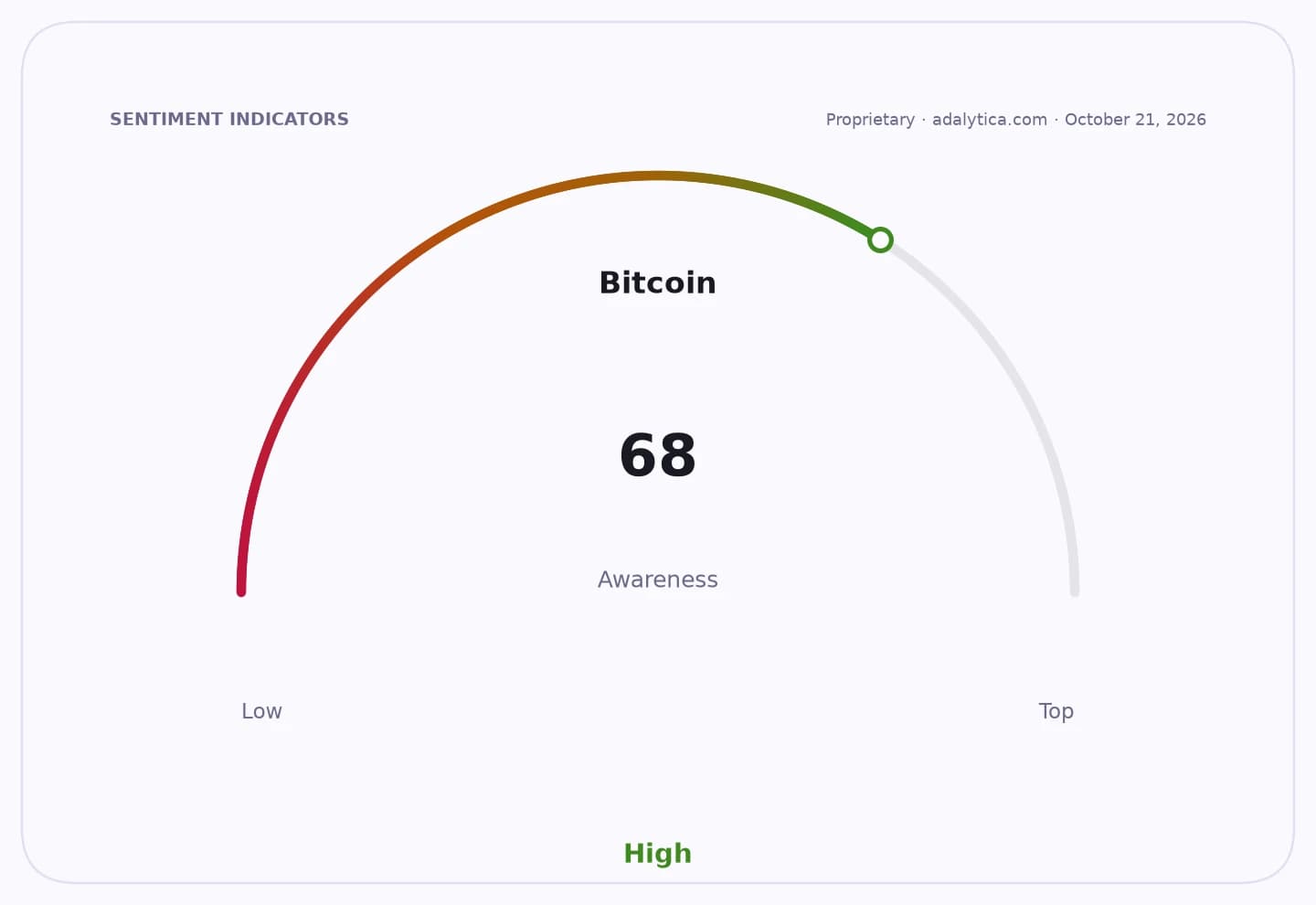
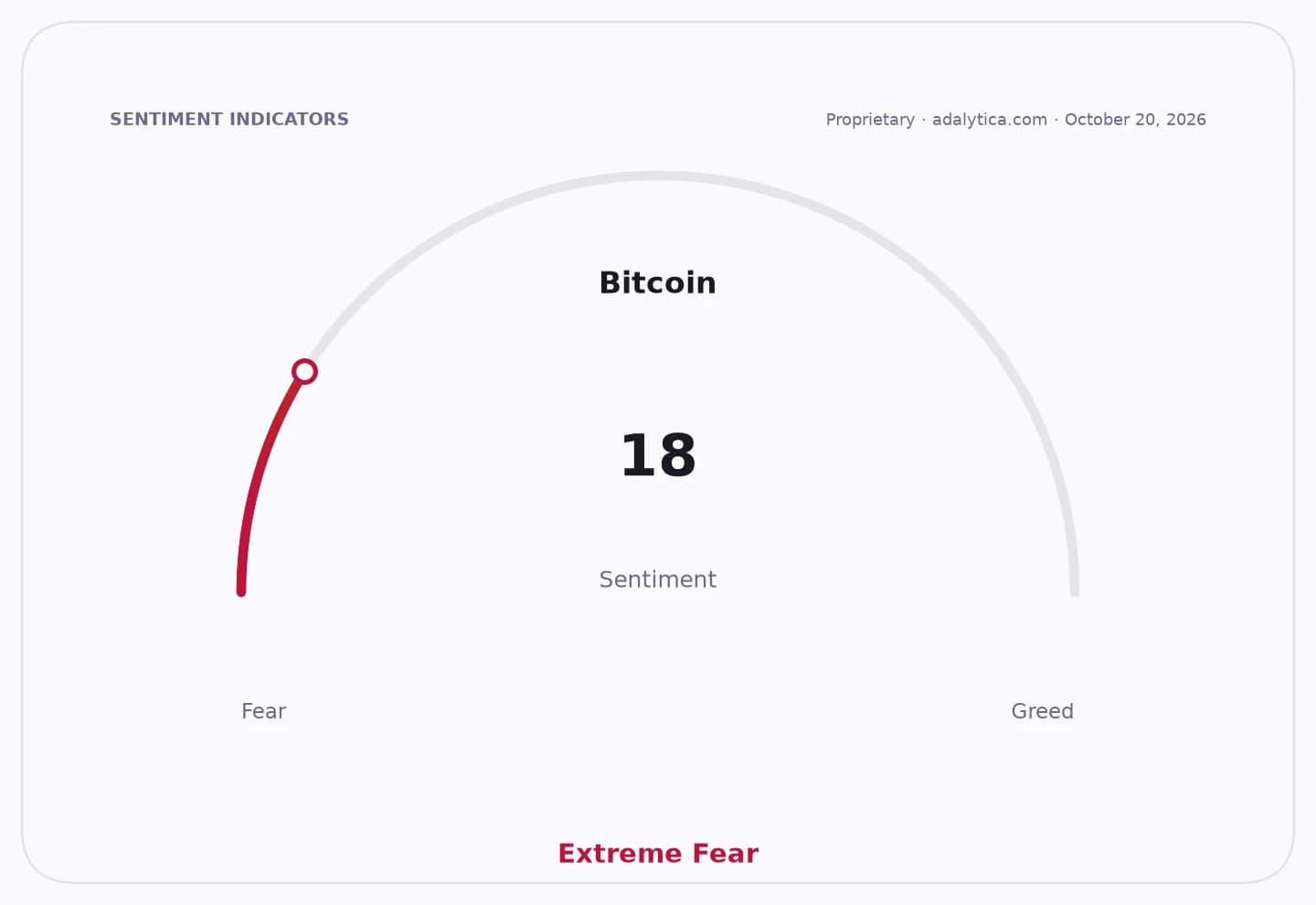
Sentiment IndicatorsⓘProprietary · adalytica.com · October 21, 2026
This is a snapshot — live sentiment, awareness and momentum for 130+ markets update continuously in the dashboard.Open AlphaPulse
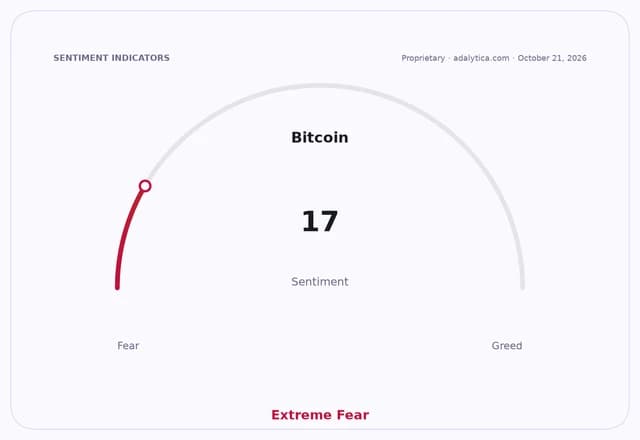
That shift is visible in the data. Bitcoin was trading around $84,123 on Oct. 21 after recovering from a sharp drawdown earlier in the year, but the more important read-through is behavioral. The Adalytica Bitcoin Fear & Greed Index sat at 17, deep in fear, even as awareness remained elevated at 74. In other words, the market knows Bitcoin well enough, but is still punishing risk. For altcoins, that is a brutal backdrop: when sentiment is weak, only assets with real utility can defend a thesis.
By that standard, Ethereum and Solana look like the clearest survivors. Ethereum’s network held $144.6 billion in stablecoins and another $50.2 billion in value locked in DeFi applications, while Solana had $15.9 billion in stablecoins and $5.9 billion locked in its apps. Those figures matter because stablecoins and DeFi activity are not abstract metrics; they are evidence that users are parking capital on-chain to transact, lend, trade and build. That creates recurring demand for blockspace, fees and infrastructure, and it gives ETH and SOL something Bitcoin itself does not need: a use-driven ecosystem that can compound.
XRP, by contrast, looks far weaker on the numbers that count. The XRP Ledger generated just $34,286 in fees over the 30-day period ended Oct. 14, even as Ripple’s own stablecoin, RLUSD, produced $7.3 million in reserve income from Treasury-bill assets in the same window. That is the tell. If the economics are accruing to the company behind the token rather than to token holders, the investment case is much less compelling than the marketing pitch. Banks may still use Ripple’s rails, but the asset most investors are buying is not the one capturing the economics.
Cardano sits in the same bucket of unproven adoption. It had just $64.9 million locked in DeFi and $71.1 million in stablecoin capital parked on-chain, which is tiny relative to the scale needed to justify a large standalone valuation. After years in the market, the thesis still rests on future adoption rather than present usage. That is not the kind of setup the market is rewarding now.
Meme coins are facing the harshest verdict of all. Dogecoin and Shiba Inu remain almost entirely dependent on the greater-fool trade, with Shiba Inu’s Shibarium network collecting just $13.04 in fees over 30 days and Dogecoin’s fees going to miners rather than being retained by the ecosystem. Those are not businesses. They are speculation vehicles.
For investors, the opportunity is to stop treating all altcoins as one trade. The market is finally pricing the difference between networks that generate economic activity and tokens that only generate attention. Bitcoin belongs at the center of the portfolio as the scarce base asset, but the real asymmetric upside in altcoins is now concentrated in the few names with genuine usage and durable network effects — chiefly Ethereum and Solana. Everything else needs to earn its place.
The next phase of this cycle should favor infrastructure over hype, and that is exactly where capital should move. If you want exposure to crypto’s next leg, own the assets with users, fees and balance-sheet-like utility. Avoid the rest until the numbers, not the narrative, change.
| Entity | Gains | Losses |
|---|---|---|
| Bitcoin | ▲Scarcity premium | ▼Speculative altcoin flows |
| Ethereum | ▲DeFi and stablecoin usage | ▼Pure narrative tokens |
| Solana | ▲On-chain activity growth | ▼Low-utility competitors |
| XRP, Cardano, meme coins | ▲— | ▼Fee weakness and weak adoption |