Bitcoin’s latest price action says far more about risk appetite than about any “supercycle” thesis, and that matters for investors trying to build wealth over years, not days. The cryptocurrency is still volatile and well below the kind of straight-line climb that would justify the supercycle label, even as one strategist argues that Wall Street’s embrace and new crypto plumbing could keep prices rising over the long run.
Bitcoin Falls to $77,384 as ETF Inflows Continue
Bitcoin
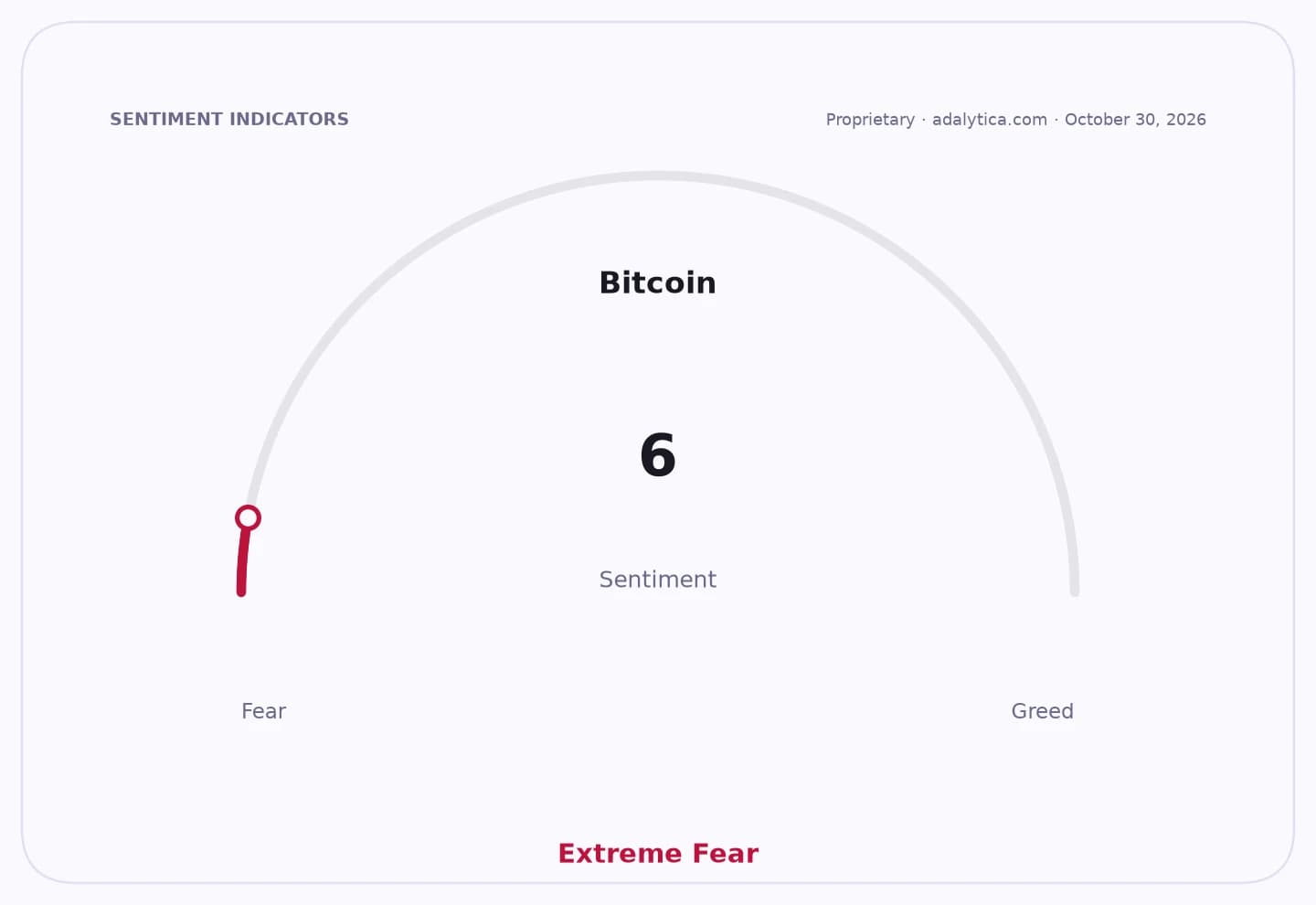
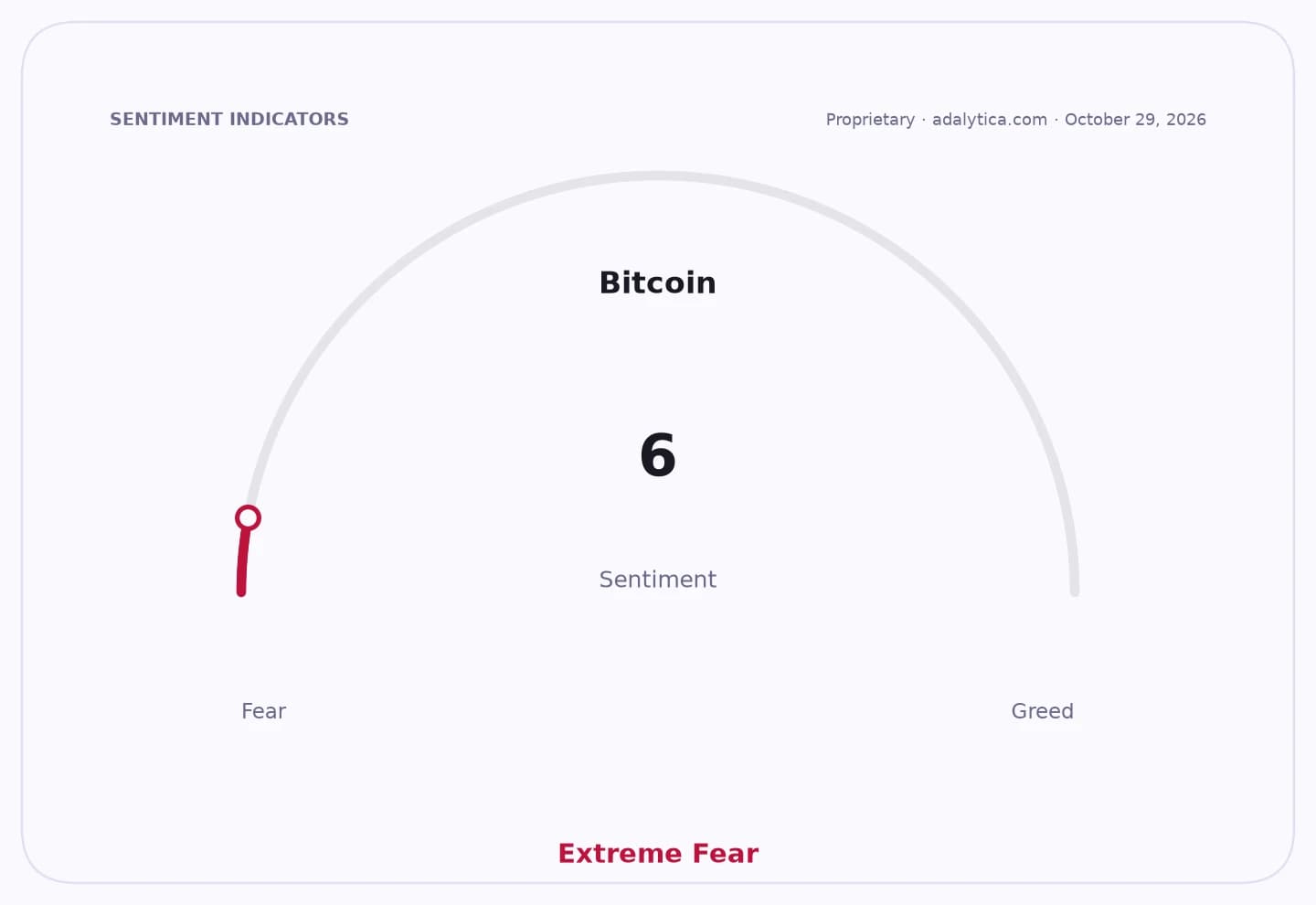
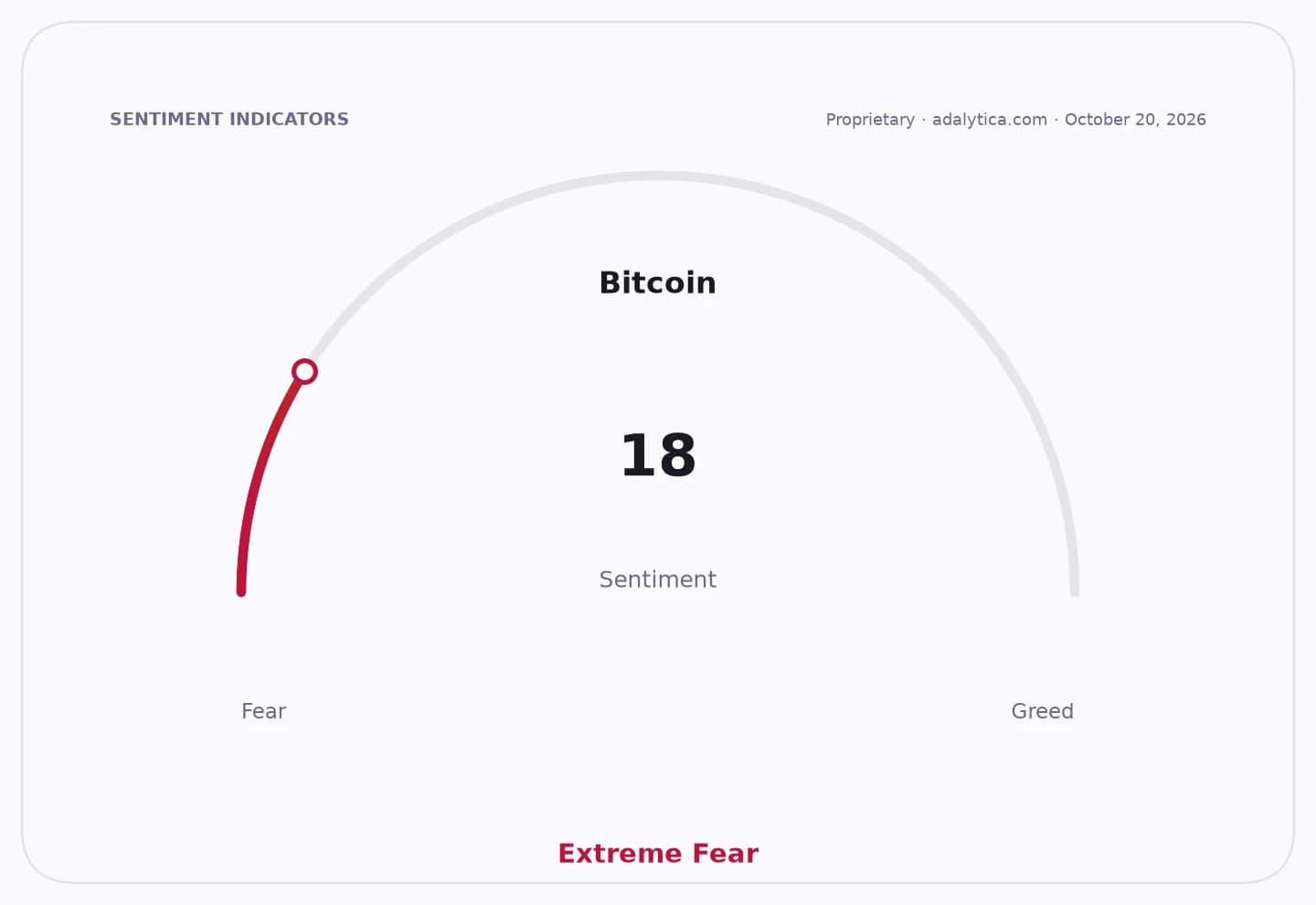
That is the key investing takeaway here: the debate over whether Bitcoin has entered a new permanent boom phase does not change the basic playbook. Bitcoin closed at about $77,384 on Oct. 30, down from more than $81,000 in early September, and the move has been accompanied by weak technical readings, including an RSI near 31 and price below its 50-day moving average. Adalytica’s Bitcoin Fear & Greed Index sits at 8, or “Extreme Fear,” which is hardly the kind of backdrop that supports a story of effortless, uninterrupted gains.
Sentiment Indicators
Still, the long-term bull case is not fantasy. Spot Bitcoin ETFs have already pulled in $57.8 billion in cumulative net inflows through Oct. 20, giving institutional and retail investors an easy on-ramp that did not exist in prior cycles. On top of that, stablecoin regulation under the Genius Act and the broader trend toward tokenization could push more financial activity onto blockchain rails over time. If that happens, Bitcoin should benefit from a deeper, more durable market structure, even if it still suffers the violent drawdowns that have always defined crypto.
For investors, that is exactly why the supercycle argument is less important than it sounds. Bitcoin has always been a high-volatility asset, and institutional support does not erase bear markets; it can simply make the market bigger, more liquid and more accessible. MicroStrategy and Coinbase, two of the biggest listed proxies for crypto exposure, have both been hit hard in recent months, underscoring that the pain of a Bitcoin selloff does not stay confined to the coin itself.
So should long-term investors ignore the hype and dismiss Bitcoin altogether? Not necessarily. The smarter lesson is to treat Bitcoin as a speculative satellite position, build it slowly, and never let one digital asset dominate a diversified portfolio. If you believe in the long-term scarcity story, the ETF inflows and the regulatory shift give you real reasons to stay interested. But if you are waiting for a supercycle to justify buying, you are probably asking the wrong question. The better one is whether Bitcoin still deserves a measured place in a patient, diversified portfolio — and for many investors, the answer remains yes.
| Entity | Gains | Losses |
|---|---|---|
| Bitcoin long-term holders | ▲Scarcity narrative | ▼Volatility risk |
| Spot Bitcoin ETF issuers | ▲Persistent inflows | ▼Bear-market outflows |
| MicroStrategy | ▲Bitcoin upside leverage | ▼Sharp BTC drawdowns |
| Coinbase | ▲Higher crypto activity | ▼Slower speculative trading |