Ethereum is emerging as the biggest winner from a potential $3 trillion stablecoin boom, and that matters because the next wave of digital money would likely run through the network already doing most of the heavy lifting in tokenized dollars.
Ethereum and stablecoins: long-term demand case
That is the core case Spark CEO and co-founder Rune Christensen is making: if stablecoins scale from a niche crypto product into a mainstream payments rail, Ethereum’s role as the settlement layer could deepen fast. For investors, that is more than a crypto narrative. It is a bet on network effects, transaction demand and fee generation on the chain most closely tied to dollar-denominated digital finance.
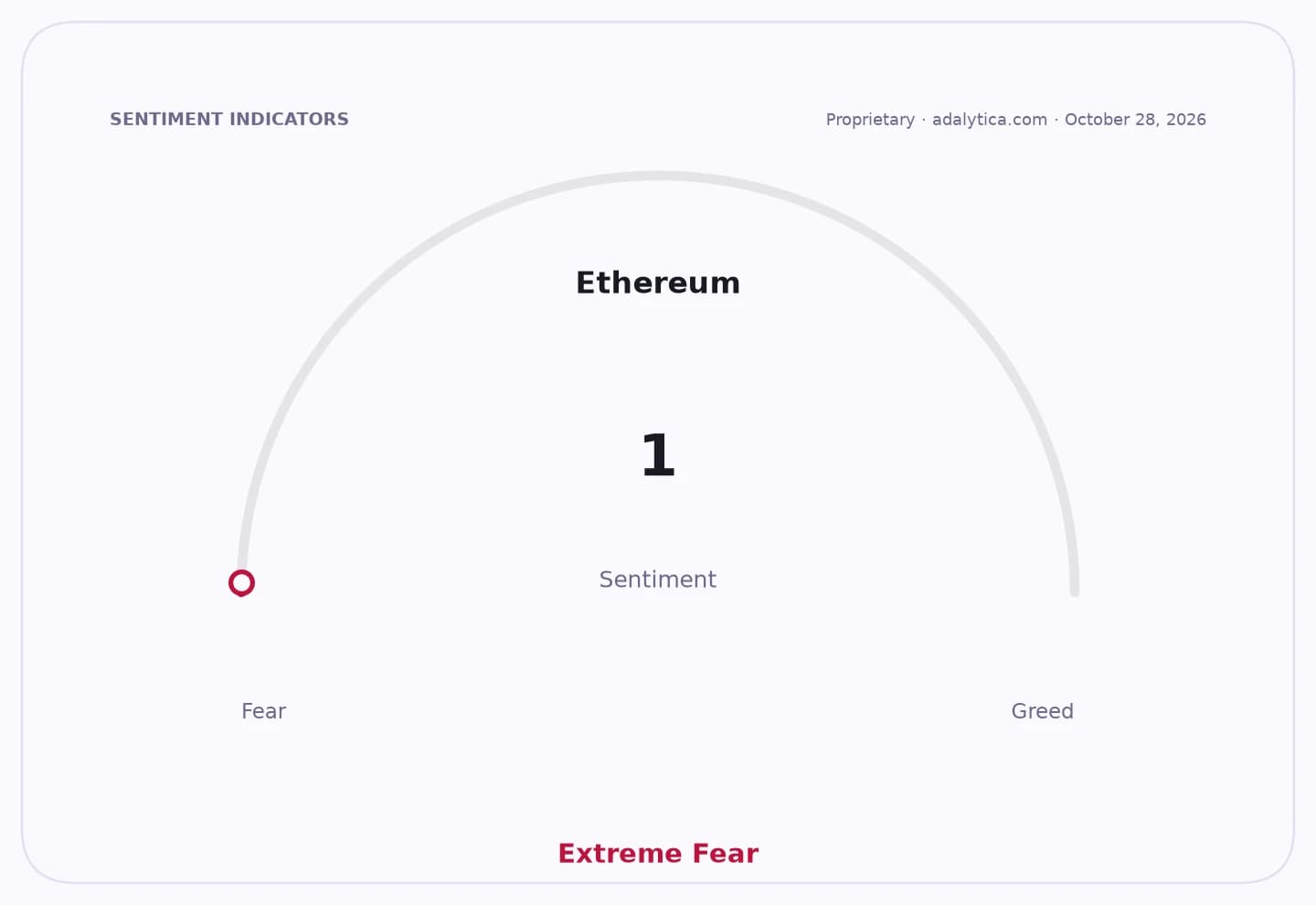
Sentiment IndicatorsⓘProprietary · adalytica.com · October 27, 2026
This is a snapshot — live sentiment, awareness and momentum for 130+ markets update continuously in the dashboard.Open AlphaPulse
The timing is striking. Ethereum has been pummeled in the market, with ETH recently trading around $2,316, far below its 50-day moving average of roughly $2,539 and well under its 200-day average near $2,158. Technical readings still show weakness, with the relative strength index in the mid-30s and conventional momentum indicators negative. Adalytica’s Ethereum Fear & Greed Index is also at 5, or “Extreme Fear,” suggesting the market is pricing in disappointment rather than long-term adoption.
That disconnect is exactly why the stablecoin thesis matters. Stablecoins are one of crypto’s clearest product-market fits: they move value quickly, cheaply and globally, and they are increasingly used for trading, payments and onchain settlement. If that market grows into the trillions, whoever secures the infrastructure layer stands to benefit from persistent usage, not just speculative cycles.
Ethereum — 30-day sentimentadalytica.com
Explore this data interactively — full history, time series and cross-market comparisons.Open AlphaPulse
Ethereum’s advantage is that it is already the dominant home for much of that activity. Even as competitors push faster and cheaper chains, Ethereum keeps the strongest brand, the deepest developer ecosystem and the broadest institutional recognition. That gives it a real shot at being the base layer for a much larger financial system built on tokenized cash.
There are risks, of course. Ethereum still has to prove it can scale securely, and recent headlines about delayed testnet work and smart-contract vulnerabilities are a reminder that technical execution matters. Crypto markets also remain brutally cyclical, as Coinbase and other listed players know well from the wild swings in trading activity and asset prices.
But long-term investors should focus on what stablecoins represent: a secular shift in how money moves online. If that shift accelerates, Ethereum does not need every transaction to win. It only needs to remain the trusted, liquid, widely integrated backbone for a meaningful slice of a much larger market.
For patient investors, that makes ETH worth watching, not for the next week or even the next quarter, but for the next several years. The current fear may be intense, but the compounding opportunity could be even bigger if stablecoins keep moving from crypto speculation to financial infrastructure.
| Entity | Gains | Losses |
|---|---|---|
| Ethereum | ▲Higher onchain demand | ▼Short-term price skeptics |
| Stablecoin issuers | ▲Bigger distribution | ▼Legacy payment rails |
| ETH long-term holders | ▲Network growth upside | ▼Traders betting on weakness |
| Competing blockchains | ▲Less, if Ethereum stays dominant | ▼Market share to Ethereum |