Bitcoin is stuck in a fragile no-man’s-land around $80,000, and that matters because the next move may tell investors whether the latest crypto rebound was the start of a new cycle or just another oversold bounce.
Bitcoin Holds Near $80,000 as Momentum Weakens

The world’s biggest cryptocurrency closed at $80,591.08 on Oct. 24, with its 50-day moving average at $81,796.73 and the 200-day average at $72,899.84. That leaves bitcoin hovering just below a key short-term trend line, while momentum indicators are still weak: the RSI sat at 41.3 and the MACD remained below its signal line. In plain terms, the market has not yet built the kind of strength that typically supports a sustained breakout.
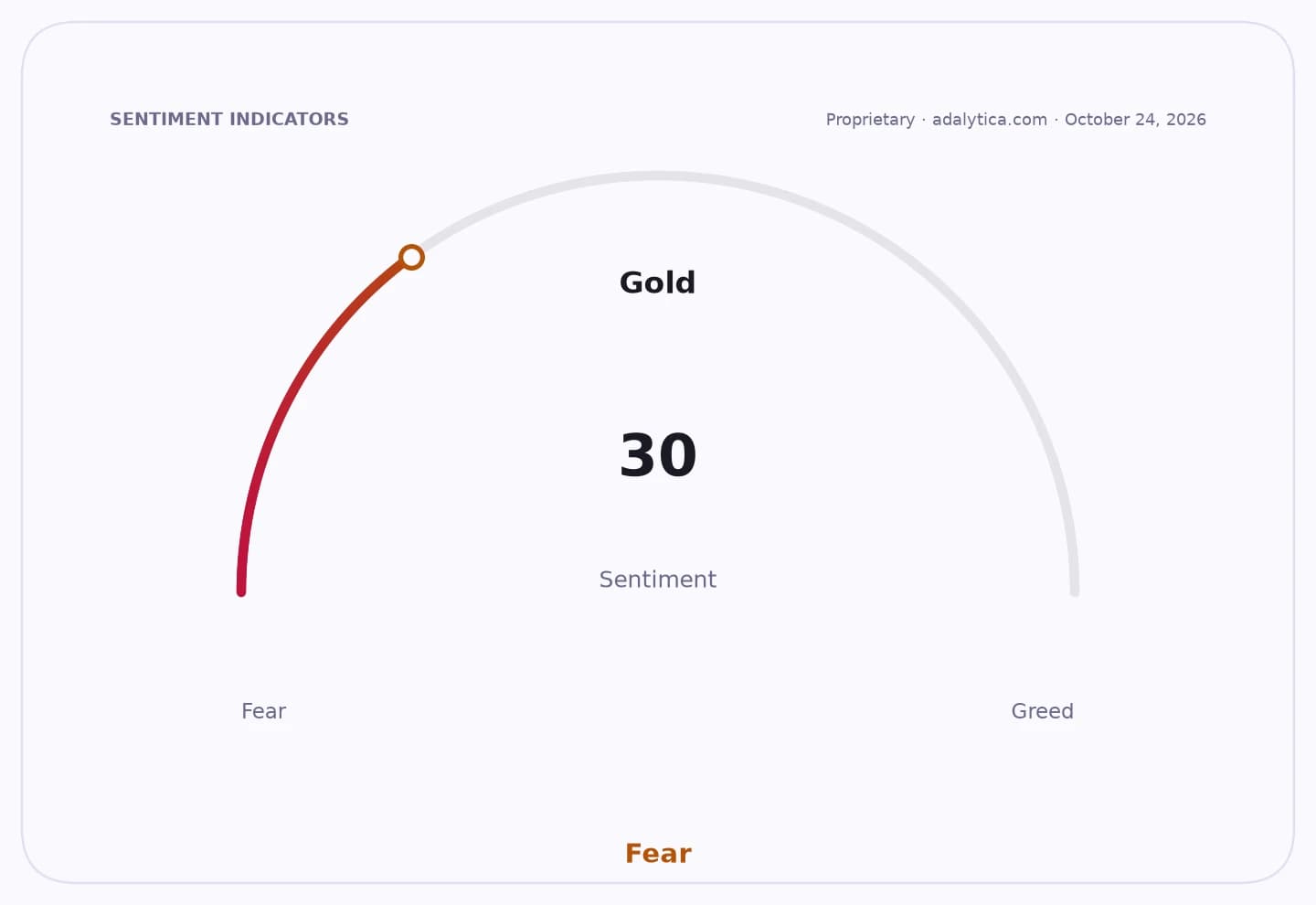
Sentiment IndicatorsⓘProprietary · adalytica.com · October 24, 2026
This is a snapshot — live sentiment, awareness and momentum for 130+ markets update continuously in the dashboard.Open AlphaPulse

That hesitation matters economically because bitcoin remains one of the cleanest gauges of global risk appetite. When the token can’t hold gains, it usually reflects tighter liquidity, higher real yields and fading willingness to chase speculative assets. The broader backdrop fits that pattern: U.S. Treasury yields have stayed elevated, inflation has re-accelerated in the narrative of some traders, and investors are still treating crypto as a trade rather than a conviction asset.
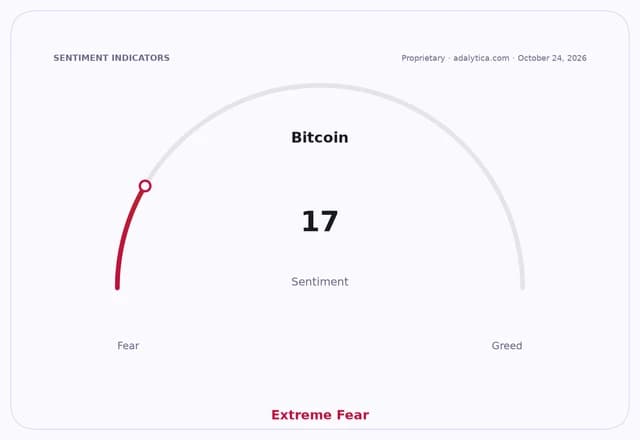
The market is also signaling a genuine lack of confidence. Adalytica’s Bitcoin Fear & Greed Index stood at 17, or “Fear,” after a 30-day drop of 82 points. That is not the backdrop for a durable bull run. It says traders are nervous, positioning is light and rallies are still being sold into rather than embraced. Even after recent rebounds, bitcoin remains far below the euphoric levels seen in prior peaks, and the latest bounce has failed to convince the market that the worst is over.
That weakness also hits the equity side of the crypto ecosystem. Coinbase Global, which tends to trade with crypto volumes and retail enthusiasm, fell to $164.45 from $183.81 only days earlier, while Strategy — the largest corporate bitcoin holder — slipped to $146.01 after a sharp run-up earlier this year. Both stocks are telling the same story as bitcoin itself: investors are reluctant to pay for embedded crypto upside unless the underlying asset starts behaving like a true trend, not a reflexive rally.
Still, the story is not simply bearish. The longer-term setup is where the asymmetry lives. Michael Saylor is still publicly calling for bitcoin to reclaim $100,000, and Strategy keeps accumulating coins, even if that strategy becomes more leveraged as prices fall. More importantly, the market may be underestimating bitcoin’s evolving role as a macro hedge rather than just a speculative token. One analyst cited in the Polish report noted that bitcoin’s correlation with gold has risen to its highest level since 2020, while its tie to the S&P 500 and Nasdaq 100 has eased. That shift matters. If investors increasingly treat bitcoin as “digital gold” in a world of swollen deficits and currency debasement concerns, the next big leg higher could come faster than skeptics expect.
For now, though, the burden of proof sits with the bulls. Bitcoin needs to reclaim the $87,000 area that previously acted as resistance, then prove it can hold above the 50-day average with improving momentum. Until that happens, the market is saying exactly what the seed headline suggests: bitcoin is far from bullish, and crypto remains as capricious as ever. For investors, the best move is to stay selective, keep dry powder and watch for a decisive trend signal rather than chase every bounce.
| Entity | Gains | Losses |
|---|---|---|
| Bitcoin bears | ▲Lower prices, weaker momentum | ▼None in the near term |
| Bitcoin bulls | ▲Potential long-term store-of-value thesis | ▼Near-term breakout conviction |
| Strategy (MSTR) | ▲Future upside if bitcoin rebounds | ▼Balance-sheet risk from coin exposure |
| Coinbase (COIN) | ▲Trading volumes if volatility returns | ▼Retail enthusiasm and fee growth |