Ethereum is being rewritten for a different decade, with co-founder Vitalik Buterin laying out a roadmap that could turn the network from a conventional blockchain into what he calls a “cryptographic world computer” by 2030.
Ethereum roadmap targets 2030 cryptographic scaling

That matters because the next phase of Ethereum’s investment case is no longer about incremental fee cuts or marginal throughput gains. It is about whether the network can keep its role as the base layer for decentralized finance, tokenization and smart contracts while handling far larger data loads, tighter privacy demands and the long-term threat from quantum computing. For investors, the story is less about a near-term catalyst for ether and more about whether Ethereum’s architecture can stay relevant as competitors push faster, cheaper chains.
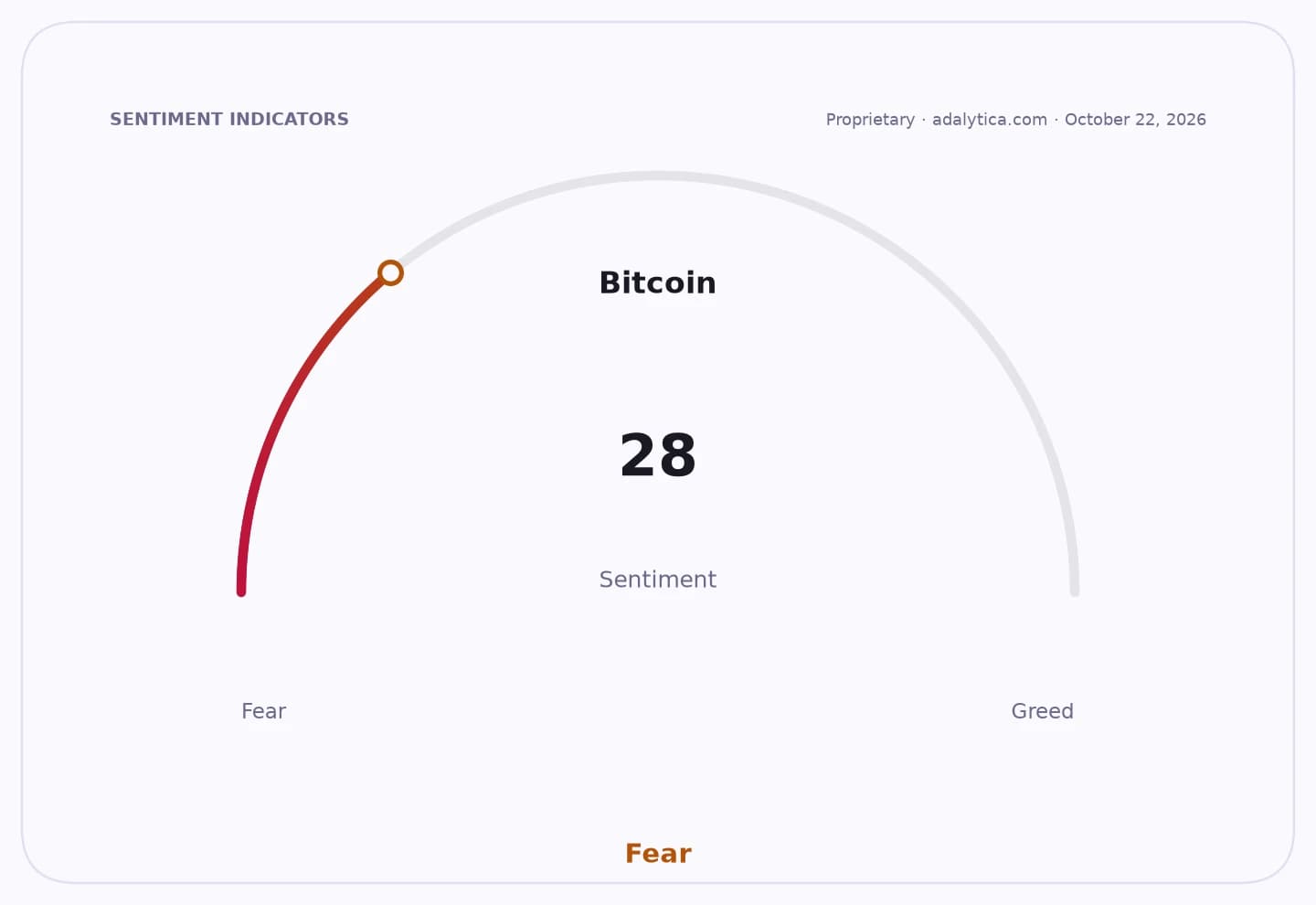
Sentiment IndicatorsⓘProprietary · adalytica.com · October 22, 2026
This is a snapshot — live sentiment, awareness and momentum for 130+ markets update continuously in the dashboard.Open AlphaPulse
Buterin’s long-term vision centers on deeper use of zero-knowledge technology, a more optimized proof-of-stake design and more sophisticated block construction. He also wants verification to rely less on every node redoing the same work and more on cryptographic proofs, with tools such as PeerDAS intended to make data availability and validation more efficient. In practical terms, that would reduce the amount of work required to secure and check the chain, while preserving decentralization.
The roadmap suggests Ethereum is moving toward a much more modular and cryptography-heavy stack. That has strategic value: the more the network can offload computation and verification into proofs, the more it can scale without simply increasing hardware requirements for validators and nodes. It also strengthens Ethereum’s positioning against rivals that compete largely on speed and cost, because it shifts the debate from raw transactions per second to security, composability and trust minimization.
The near-term milestone is Glamsterdam, now targeted for the fourth quarter of 2026, with protocol-level separation of block building and block proposing, plus block-level access lists. A year later, the planned Hegotá upgrade is expected to introduce features including fork-choice enforced inclusion lists and frame transactions. Buterin described Hegotá as likely the last “normal” fork that would still look familiar to early Ethereum developers, underscoring how radical the subsequent transition may be.
That transition matters economically because it would change the cost structure of running the network and, by extension, the economics of participating in it. More efficient proof systems and parallelized execution can support higher throughput without proportionately higher operating costs. If successful, that could improve the network’s ability to absorb growing demand from DeFi, stablecoins and tokenized assets. The bear case is that the roadmap is technically ambitious, the timelines may slip and the benefits may arrive too slowly to prevent users and liquidity from drifting to simpler alternatives.
The quantum-safety push adds another layer to the story. The Ethereum Foundation set up a post-quantum security team in January 2026, and Buterin has already backed a proposal, EIP-8288, that would bundle signatures and STARK proofs off-chain and verify them through a recursive STARK. The concern is not immediate breakage — no quantum computer can currently crack Ethereum’s cryptography — but migration in crypto infrastructure takes years. Early preparation reduces the risk that future upgrades become forced, disorderly and expensive.
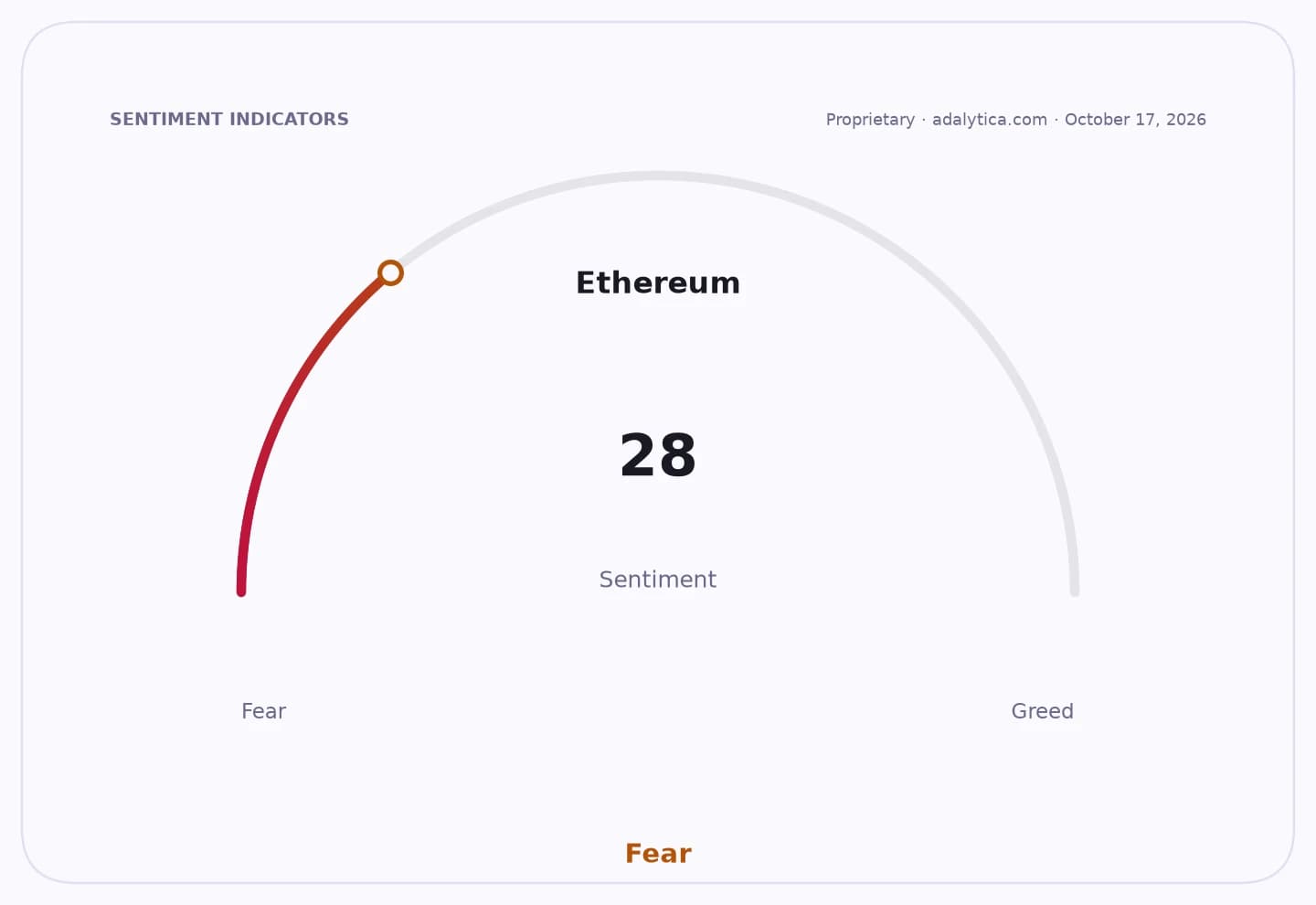
Market context suggests investors are still treating these developments as a long-horizon architecture story rather than a price trigger. Ether traded at $2,377.56 on Oct. 22, below its 50-day moving average of $2,550.73 and above its 200-day average of $2,154.62. The RSI reading of 40.9 points to subdued momentum, while the MACD remains negative. Adalytica’s Ethereum Fear & Greed Index showed neutral sentiment at 49, even as awareness stayed in fear territory at 16, implying the market is cautious rather than euphoric about the roadmap.
That combination leaves Ethereum in a familiar but important position: structurally ambitious, technically credible and still under pressure to prove that major design upgrades can arrive without destabilizing the network. If the roadmap holds, Ethereum could reinforce its edge as the default settlement layer for crypto applications. If it slips, the market may increasingly question whether the “world computer” narrative can keep pace with faster-moving competitors.
| Entity | Gains | Losses |
|---|---|---|
| Ethereum holders | ▲stronger long-term network case | ▼near-term upgrade risk |
| Validators and node operators | ▲more efficient verification tools | ▼software migration burden |
| DeFi and app developers | ▲better scaling and privacy | ▼more protocol complexity |
| Rival blockchains | ▲less if Ethereum executes well | ▼more if Ethereum delays |