Bitcoin is holding above $82,000, but the bigger issue for investors is whether the market is still mispricing the cycle entirely.
Bitcoin Holds Above $82,000 as Macro Pressure Builds

The latest pullback, triggered by hotter-than-expected U.S. inflation and revived fears of another Federal Reserve hike, has left the world’s largest cryptocurrency hovering near a cluster of technical levels that now define sentiment more than any headline. Bitcoin briefly slipped to $79,770 on Thursday before recovering above $82,000, while its market dominance climbed to almost 60%, underscoring how capital is still favoring the largest and most liquid token even as the broader crypto market stays fragile.
Sentiment IndicatorsⓘProprietary · adalytica.com · October 19, 2026
This is a snapshot — live sentiment, awareness and momentum for 130+ markets update continuously in the dashboard.Open AlphaPulse

That matters because Bitcoin is no longer trading in isolation. Rising U.S. yields, with the 10-year Treasury near 5.3%, have tightened financial conditions across risk assets, and crypto is showing the same sensitivity as equities. The hotter CPI print, combined with a 90% implied probability of another Fed move by December on CME FedWatch, has reinforced the idea that the macro backdrop, not crypto-native news, is still the dominant driver of price. In that setting, Bitcoin’s ability to hold support near its 50-day moving average around $81,100 becomes more important than any short-term bounce.
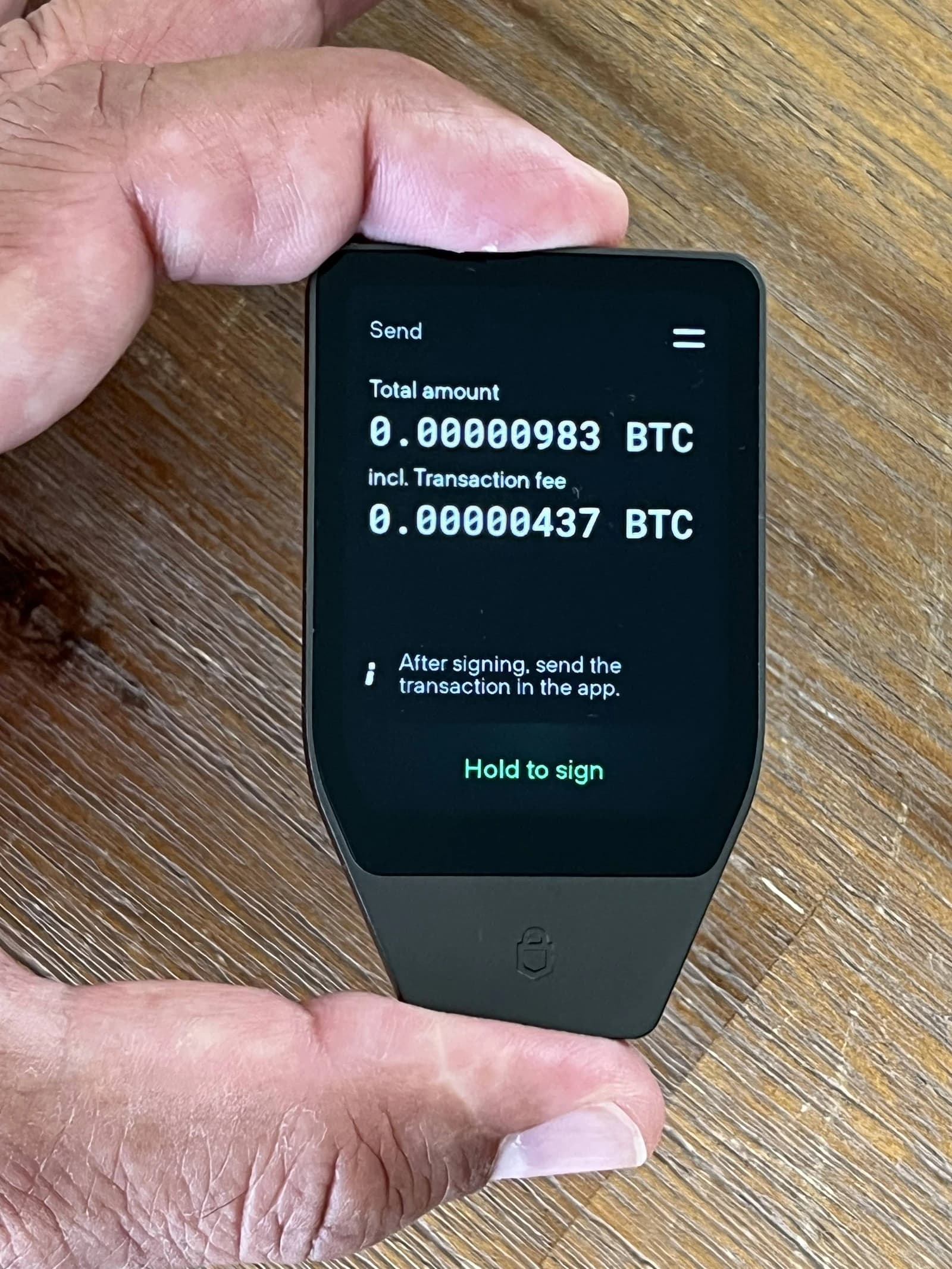
The market’s resilience has also become part of the debate. Bitcoin barely reacted to the Ledger hardware-wallet scandal that has rattled the sector, including retailer pullbacks in Europe, suggesting traders are treating the issue as an exchange-specific or operational risk rather than a systemic threat to the asset itself. That relative indifference helps explain why Bitcoin continues to outperform most altcoins on a risk-adjusted basis, even after a volatile week that saw Ethereum, XRP and Solana all weaken while Zcash, Chainlink and Monero outperformed.

Still, the most consequential new argument in the market is not about one week’s price action, but about cycle length. Analyst Matthew Hyland is arguing Bitcoin may now be in an eight-year cycle rather than the familiar four-year pattern, with a potential top as far out as 2028 and a peak near $350,000 before a classic bear-market drawdown. The thesis rests on the view that the 2022-2026 macro bear phase was twice as long as earlier risk-off periods, and that Bitcoin’s own cycle has stretched to match it.
Bullish holders see that as a useful framework for a market that has already rebounded from July’s local low and remains above the 2026 opening price near $87,490 on some trend models. CryptoQuant-linked analysis also points to a 20-month simple moving average around $87,165 as a key inflection zone, with the lower Bollinger Band near $52,694 forming the deeper accumulation area. The argument is that Bitcoin is trying to reclaim a regime-defining trendline, and that a successful move back above it would validate the next leg of a broader bull market.
The bear case is simpler: macro conditions are still hostile, speculative appetite is fading, and Bitcoin’s recent bounce has not yet produced conviction. Its RSI has slipped into the mid-30s and the MACD remains close to flat, suggesting the market lacks momentum after the latest selloff. Adalytica’s Bitcoin Fear & Greed Index is also showing extreme fear, even as longer-term awareness remains stable, a sign that positioning may be washed out but not yet decisively reversed.
For investors, the setup is now binary. If Bitcoin can defend the $81,000 area and reclaim the mid-$86,000s, the market may start to treat the current drawdown as a consolidation inside a larger advance. If it loses that zone, the next stop could be the mid-$70,000s, where the last meaningful technical support sits. Until then, the real story is not whether Bitcoin is weak; it is whether the market is underestimating how long this cycle has to run.
| Entity | Gains | Losses |
|---|---|---|
| Bitcoin bulls | ▲Cycle-extension thesis | ▼Near-term macro pressure |
| Bitcoin bears | ▲Fed-hike fears | ▼Dominance in crypto |
| Large-cap crypto holders | ▲Relative liquidity | ▼Altcoin outperformance |
| Miners and leveraged longs | ▲A sustained rebound | ▼Higher rates and volatility |