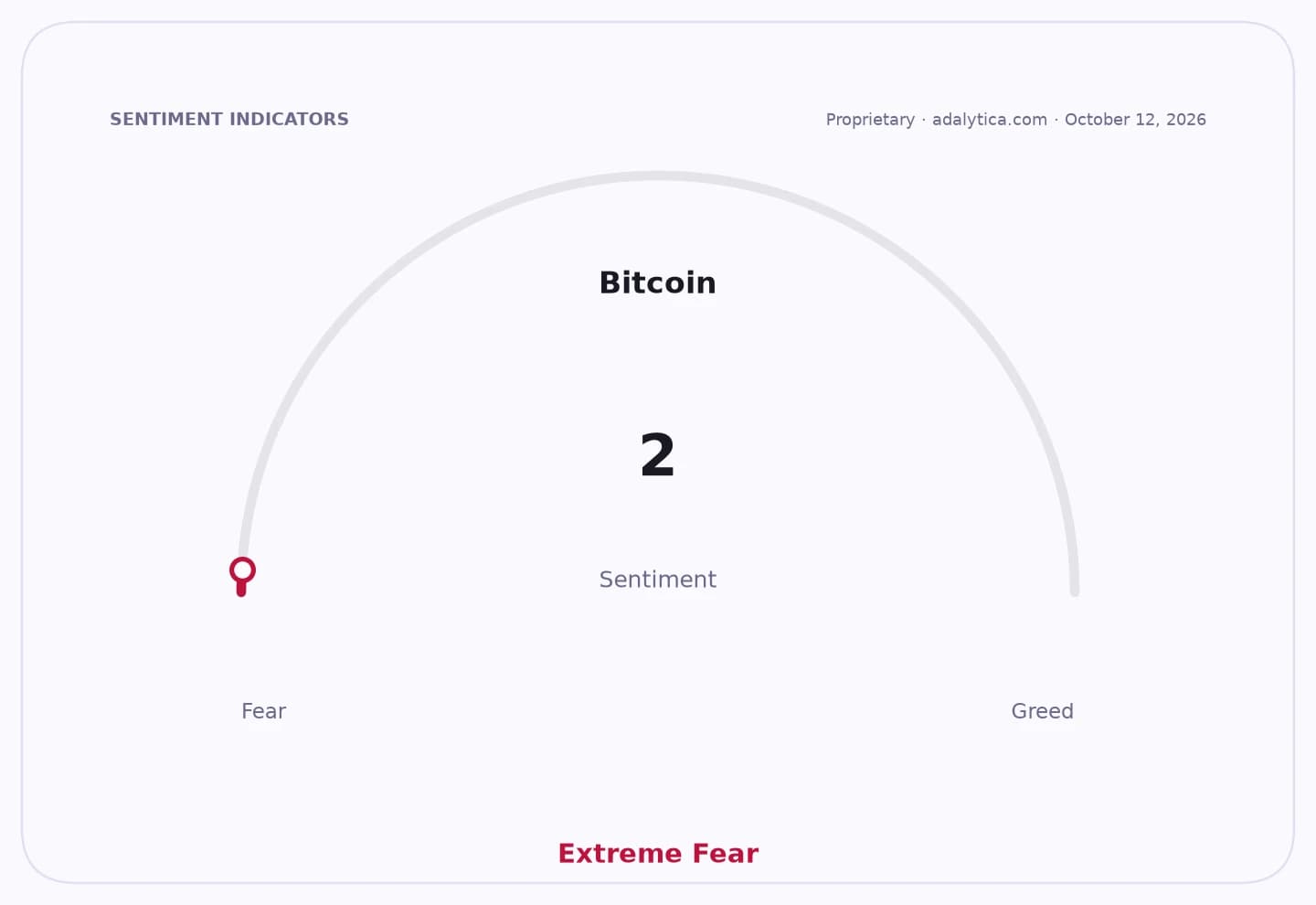
Bitcoin is sitting just below $84,000 because traders know the next U.S. inflation report could decide whether the Federal Reserve stays on hold or reopens the door to tighter financial conditions.
Bitcoin Near $84,000 Before U.S. CPI Report

The cryptocurrency was last trading around $83,390, little changed on the day, as markets braced for a fresh consumer price reading that could shape expectations for the Fed’s Oct. 28 decision. Rate-cut bets are not on the table here; money markets are already pricing a 78% chance the Fed leaves rates unchanged this month, according to LSEG. That leaves bitcoin exposed to the real risk in this setup: a hotter print that pushes Treasury yields and the dollar higher, tightening liquidity just as digital assets are trying to stabilize.
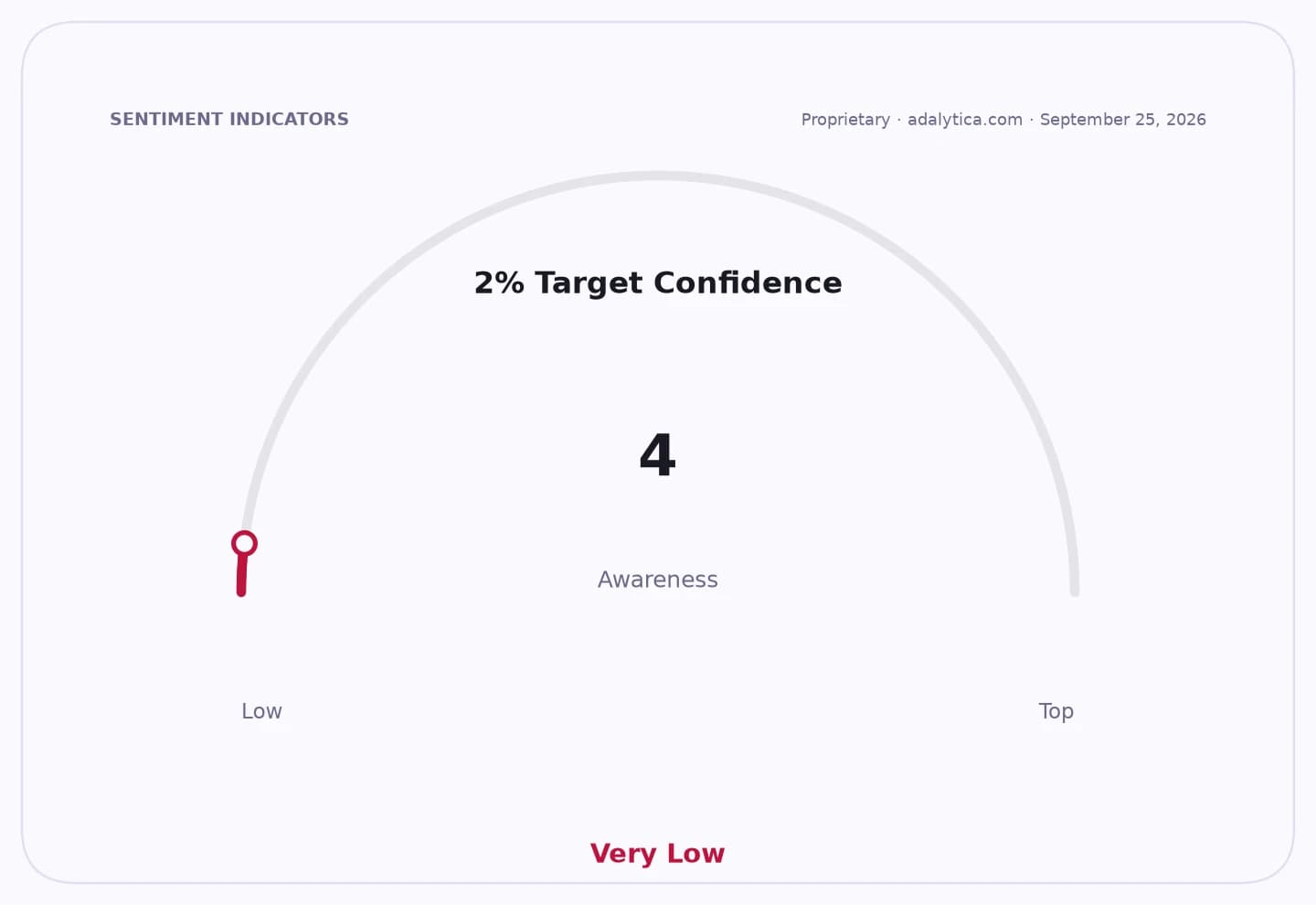
Sentiment IndicatorsⓘProprietary · adalytica.com · October 15, 2026
This is a snapshot — live sentiment, awareness and momentum for 130+ markets update continuously in the dashboard.Open AlphaPulse
That matters because bitcoin is still trading like a high-beta macro asset, not a self-contained store of value. When inflation surprises to the upside, the market tends to reprice the path of real rates and the dollar, and that usually pressures risk assets with the least conviction behind them. Tuesday’s U.S. inflation data already showed price pressures running hotter than expected, strengthening the dollar toward an 18-month high and weighing on cryptocurrencies and equities. For bitcoin, that is the wrong backdrop if the market is hoping for a clean breakout.
The bigger issue is that demand has not been strong enough to absorb the volatility. Zaye Capital Markets’ Naeem Aslam said bitcoin’s rebound looks like a short-term risk appetite trade rather than proof of a durable bullish reversal, while Exness strategist Dat Tong pointed to $65 million in net outflows from spot bitcoin ETFs on Monday, leaving October flows negative by $451 million. That is a warning sign. If institutional money is not stepping in aggressively, bitcoin becomes more vulnerable to macro shocks and thinner-volume swings.

For investors, the implication is simple: the next catalyst is not adoption rhetoric, halving hype or another social-media-driven surge. It is inflation. A benign CPI print would likely reinforce the idea that the Fed is done hiking and could revive flows into bitcoin, especially if traders continue to treat it as a liquidity-sensitive alternative asset. A stronger-than-expected reading would do the opposite, extending pressure on ETF demand and keeping bitcoin pinned below resistance.
My view is that this setup creates opportunity, but only for investors who understand the difference between a tactical bounce and a real trend reversal. If inflation cools and the Fed stays patient, bitcoin and the spot ETF complex could regain momentum fast. If inflation stays sticky, the market will keep punishing crowded longs and rewarding patience. Right now, the trade is to watch CPI before chasing the rebound.
| Entity | Gains | Losses |
|---|---|---|
| U.S. dollar | ▲Higher-rate backdrop | ▼Bitcoin and risk assets |
| Treasury bears | ▲Sticky inflation repricing | ▼Duration bulls |
| Spot bitcoin ETF issuers | ▲Stronger inflows on dovish CPI | ▼Outflows on hotter CPI |
| Bitcoin bulls | ▲Benign inflation print | ▼Macro-driven sellers |