Bitcoin’s latest slide has taken on a broader macro meaning: with the token down to about $60,855 and sentiment at “extreme fear,” investors are bracing for a two-week stretch of inflation data and Federal Reserve signalling that could determine whether the selloff deepens into a year-end washout.
Bitcoin Falls on Inflation and Fed Uncertainty
Bitcoin
The immediate issue for markets is not just Bitcoin’s price, but the source of the pressure. A cluster of U.S. macro releases, led by the October PCE inflation report, lands with only two weeks left before the next FOMC meeting, keeping rate-cut hopes fragile and leaving open the possibility that policy remains tighter for longer. That matters because Bitcoin has increasingly traded like a high-beta risk asset: when equities, credit and speculative growth names are under strain, crypto tends to absorb the sharpest moves.
Sentiment Indicators

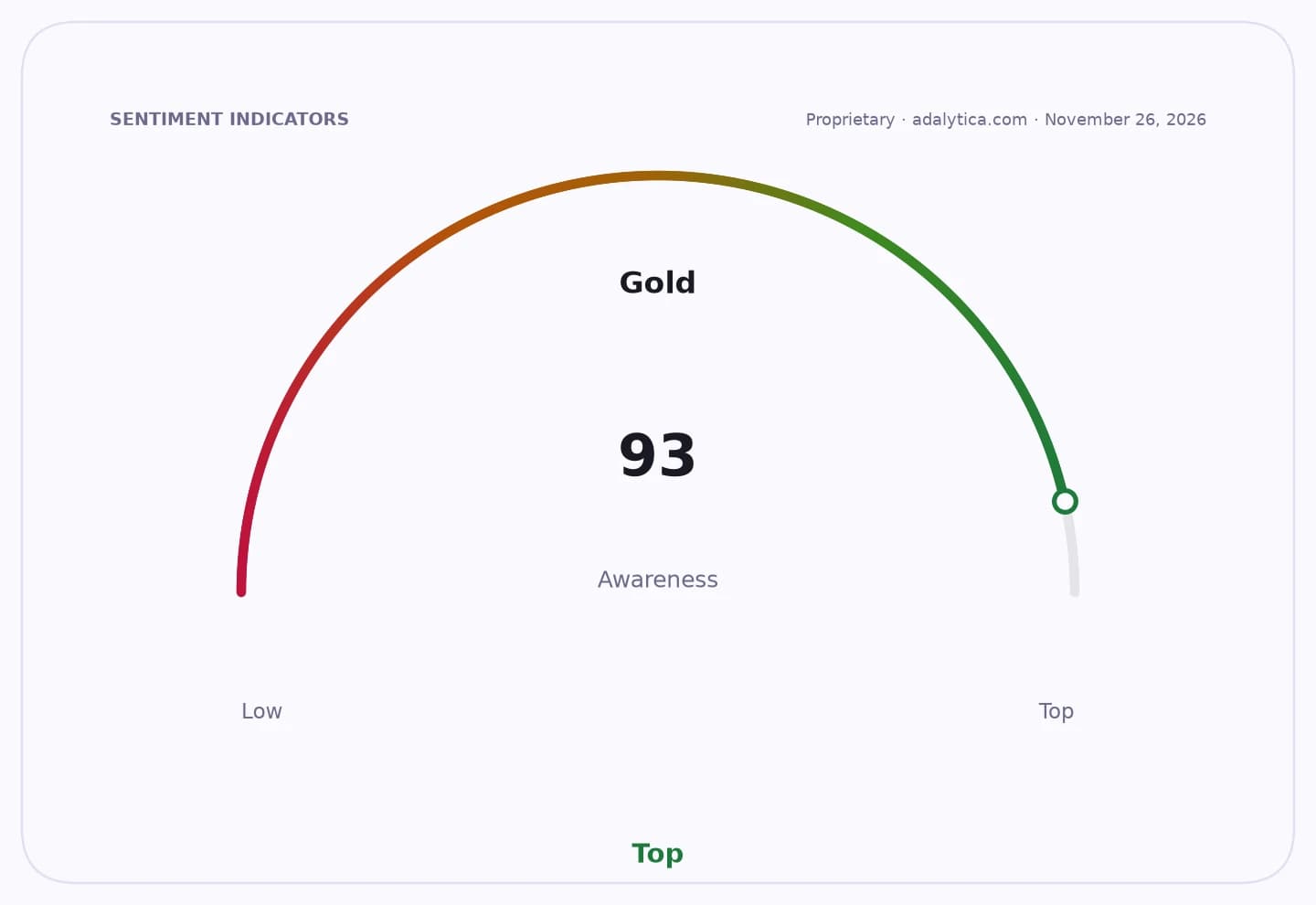
The positioning backdrop is already poor. Adalytica’s Bitcoin Fear & Greed Index is at 7, firmly in extreme fear territory, while its S&P 500 and U.S. dollar signals also point to stress across risk assets and the funding environment. Bitcoin’s own technical setup is weak as well. The cryptocurrency is trading below its 50-day and 200-day moving averages, with a 14-day RSI of 23.7, a level that indicates oversold conditions but also underscores how violent the recent drawdown has been. The market’s next support test is whether buyers can defend the mid-$50,000s, where the lower Bollinger Band sits.
The wider market backdrop helps explain why crypto is under particular pressure. Over the last 48 hours, U.S. markets have seen a broad de-risking, with equities alone shedding about $5.5 trillion in market value and the crypto market losing roughly $2.2 trillion, according to the context provided. Bitcoin’s fall below $56,000 earlier in the move, before a modest rebound, showed how quickly forced selling can cascade through leveraged markets. The combination of sticky inflation concerns, uncertainty over the Fed’s next move and renewed debate about whether policy may stay restrictive to cool asset prices has weakened the case for an immediate recovery.
Bitcoin — 30-day sentimentadalytica.com
Explore this data interactively — full history, time series and cross-market comparisons.
That macro stress is spilling into crypto-linked equities too. Coinbase shares have dropped to about $103.72 from $183.81 a month earlier, while Strategy, the company formerly known as MicroStrategy, has fallen to roughly $79.96 from $151.29 over the same period. Those declines matter because both names are used by investors as liquid proxies for Bitcoin exposure, and weakness there can reinforce the negative feedback loop in digital assets. For miners and exchanges, lower spot prices can also mean thinner trading volumes and reduced balance-sheet flexibility.
The bull case is that Bitcoin is approaching levels that have historically attracted dip buyers, especially if upcoming inflation data comes in softer than feared and the Fed tone turns less restrictive. A relief rally could be amplified by the oversold technicals and by investors who view the recent plunge as excessive relative to the longer-term adoption story. The bear case is more concerning: if PCE runs hot and the market starts to price a prolonged period of high rates, Bitcoin could remain trapped in a deleveraging cycle just as speculative appetite elsewhere is already fading.
For investors, the next two weeks are less about a single print than about whether macro confirmation can either stabilize risk sentiment or validate the move lower. If inflation stays sticky and the Fed keeps optionality for further tightening, Bitcoin’s recent decline may be seen less as a correction than as the start of a broader repricing across the crypto complex. If not, the market may get enough policy relief to stage a short-covering bounce — but without a change in macro tone, that would likely be a trade, not a trend.
| Entity | Gains | Losses |
|---|---|---|
| Short-term bears | ▲Volatility and downside momentum | ▼Long-only crypto holders |
| Bitcoin buyers on dips | ▲Potential oversold rebound | ▼Momentum traders |
| Coinbase and Strategy | ▲Higher volatility if recovery follows | ▼Lower BTC prices and sentiment |
| Fed hawks | ▲Tighter conditions may cool inflation | ▼Risk assets and crypto bulls |