Wall Street is heading into a shortened Thanksgiving week with investors fixated on whether inflation and growth data will confirm that the recent selloff has gone too far, or whether the market still has room to fall.
Wall Street Focuses on PCE, GDP, and Beige Book

That matters because the Dow Jones just finished a bruising week down about 6%, while the Nasdaq 100 dropped more than 7%, a reminder that this is no routine pause in trading but a test of how much faith investors still have in the Federal Reserve’s next move. The stakes are highest on Wednesday, when October PCE inflation arrives, followed by second-read GDP and the Fed’s Beige Book, all before the holiday closure on Thursday and an early close on Friday.
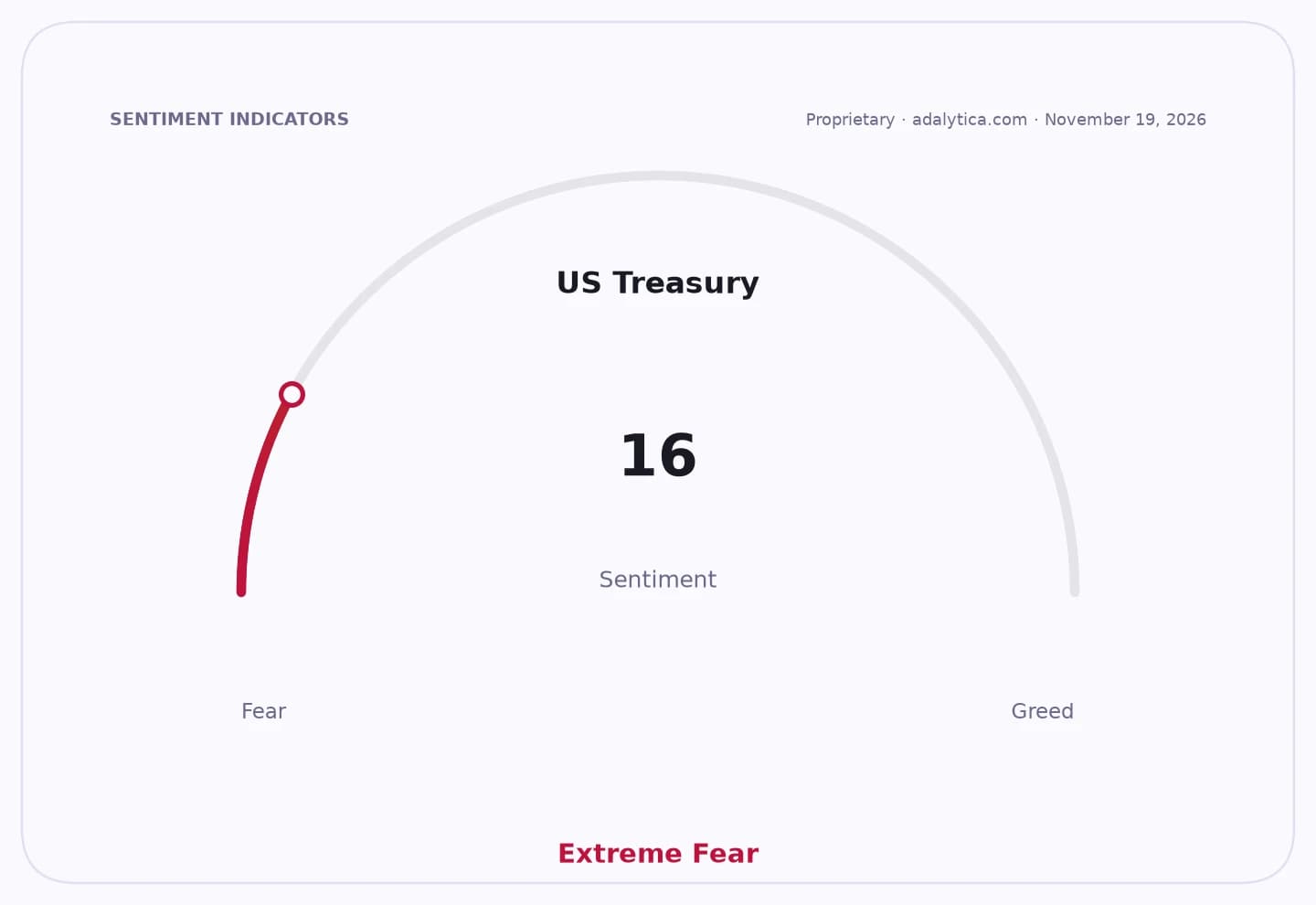
Sentiment Indicators

The PCE report is the main event. It is the Federal Reserve’s preferred inflation gauge, and the market is looking for another 0.3% month-over-month rise in both the headline and core measures. On a year-over-year basis, economists expect core PCE to hold around 3.2%, which would keep the Fed under pressure even after the recent equity reset. Michelle Bowman has said 3.3% is likely, while Oxford Economics sees the headline rate closer to 3.8%, showing there is still plenty of uncertainty around the inflation path.
For investors, that uncertainty goes straight to valuations. A hotter-than-expected PCE reading would likely reinforce the case for higher-for-longer rates, a bad backdrop for rate-sensitive growth stocks that have already been hit hard. The Adalytica S&P 500 trade snapshot shows “Extreme Fear,” while the U.S. dollar is flashing “Extreme Fear” on sentiment as well, a sign that the market is still processing stress rather than moving on from it. In bond markets, the 10-year Treasury yield has hovered just above 5%, leaving little room for disappointment.
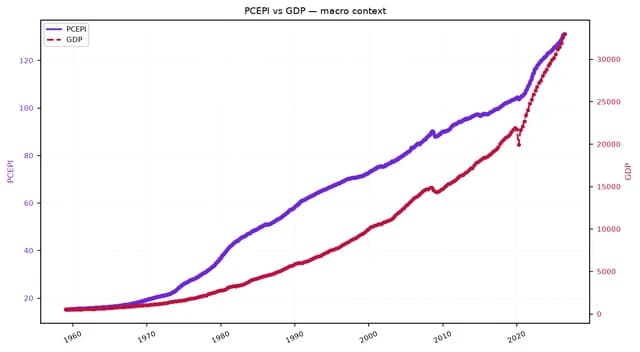
GDP is the other major checkpoint. The economy has remained resilient enough to keep growth expectations alive, with the latest forecast pointing to 1.34% annualized growth in the October quarter after 1.37% in the prior period. That is not recession territory, but it is not the kind of expansion that gives the Fed much cover to ease aggressively. For long-term investors, the message is simple: growth is slowing, but not collapsing, which keeps the policy debate alive and the market nervous.
The Fed’s Beige Book, due later Wednesday, could matter nearly as much as the data itself. If it shows cooling hiring, softer demand or tighter credit conditions, it may strengthen the argument that monetary policy is already restrictive enough. If it still points to stubborn price pressure, the market will have to continue digesting the possibility that cuts are farther off than hoped.
Corporate earnings will add another layer. Dell, HP, Workday, Autodesk, Medtronic and Deere are all on deck, and after the sharp selloff in artificial intelligence and hardware names, investors will be listening carefully for signs that AI spending on servers and data centers is still translating into durable demand. That is especially important for companies tied to enterprise software and computing equipment, because those businesses have been central to the market’s growth narrative this year.
The broader setup is classic late-November market psychology: thin liquidity, a holiday-shortened calendar and one or two economic surprises capable of changing sentiment quickly. The Dow’s 50-day moving average now sits well above its latest close, and the RSI on the DIA ETF proxy has fallen into oversold territory, showing just how fast risk appetite has cooled. Oversold, though, is not the same as cheap enough to ignore macro risk.
For investors with a multiyear horizon, the lesson is not to overreact to a single week. But this is exactly the kind of stretch when the next durable market trend begins to separate from the last one. If inflation cools and GDP stays positive, the recent pullback could prove to be a reset. If not, Wall Street may still have further to go before confidence returns. Either way, this is a week worth watching closely and keeping on your long-term radar.
| Entity | Gains | Losses |
|---|---|---|
| Inflation data | ▲Supports Fed caution if hot | ▼Rate-cut hopes |
| Bond investors | ▲Higher yields if growth holds | ▼Duration-heavy portfolios |
| Growth stocks | ▲A softer PCE reading | ▼Higher-for-longer rates |
| Long-term buyers | ▲Better entry points after selloff | ▼Market timing traders |