The Federal Reserve is still leaning toward tighter policy, with minutes showing nearly all officials expect more rate increases and some worried that the buildout of artificial intelligence could complicate the inflation fight. That matters because it keeps borrowing costs elevated for longer, pressures bond and rate-sensitive equities, and suggests the central bank sees upside risks to prices even as growth slows from earlier-cycle strength.
Fed Minutes Say More Rate Hikes May Be Needed
The minutes from the most recent meeting underscore a central problem for policymakers: inflation has eased from its peak, but it has not yet fallen far enough for the Fed to declare victory. Officials broadly backed additional tightening, with several favoring a hike as soon as March, while others preferred a slower pace. The debate is no longer about whether rates need to stay restrictive, but how aggressively the Fed should move to prevent re-acceleration in prices.
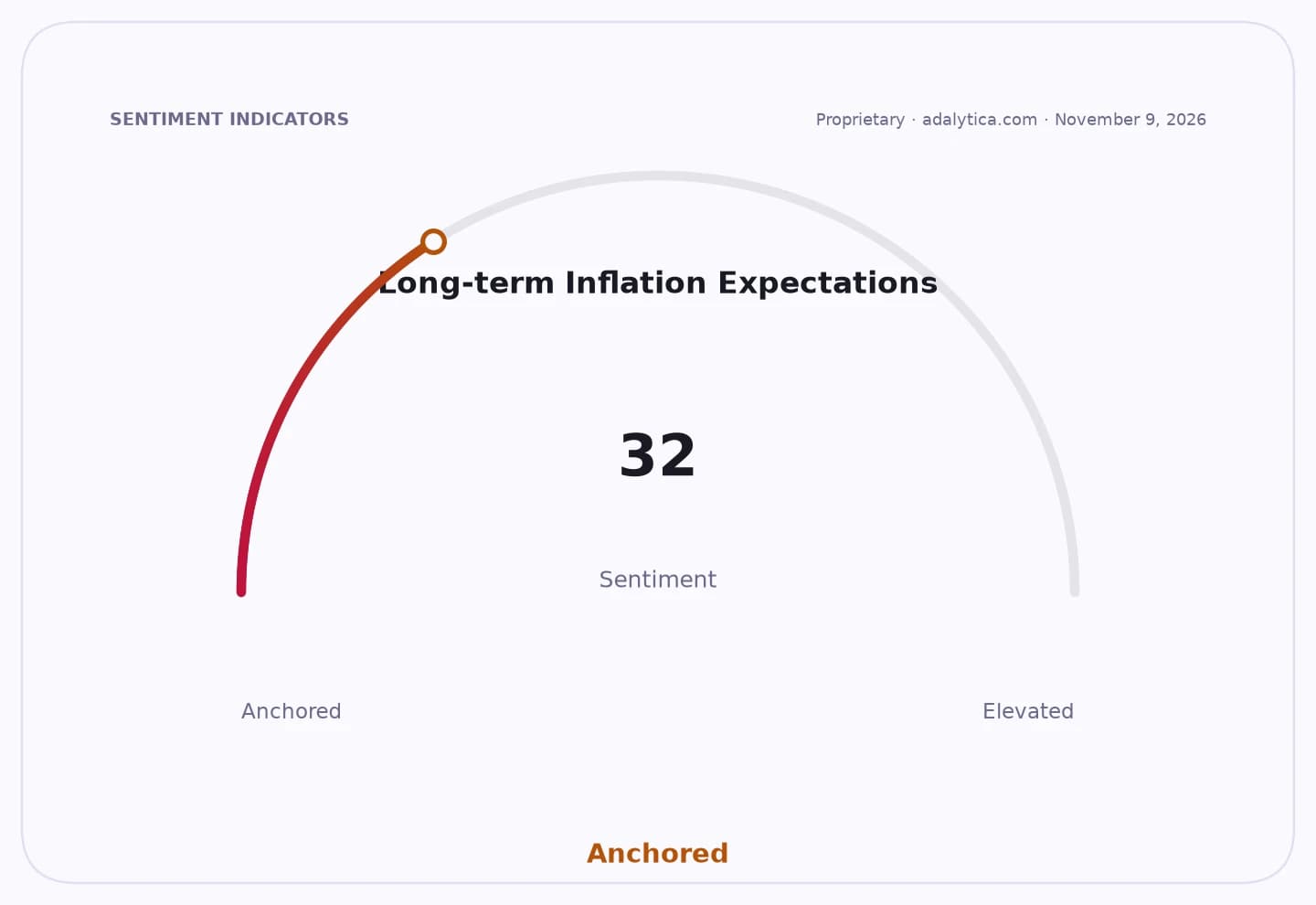
Sentiment Indicators
What gives the discussion a new edge is the Fed’s concern that AI investment may itself feed inflationary pressure. That is a striking shift in the policy conversation. Artificial intelligence is typically framed as a medium-term productivity boost, but in the near term it is also driving huge capital spending on chips, data centers, energy and cloud infrastructure. If that spending persists while supply chains remain tight in parts of the tech complex, it could add demand-side pressure to an economy that the Fed is still trying to cool.
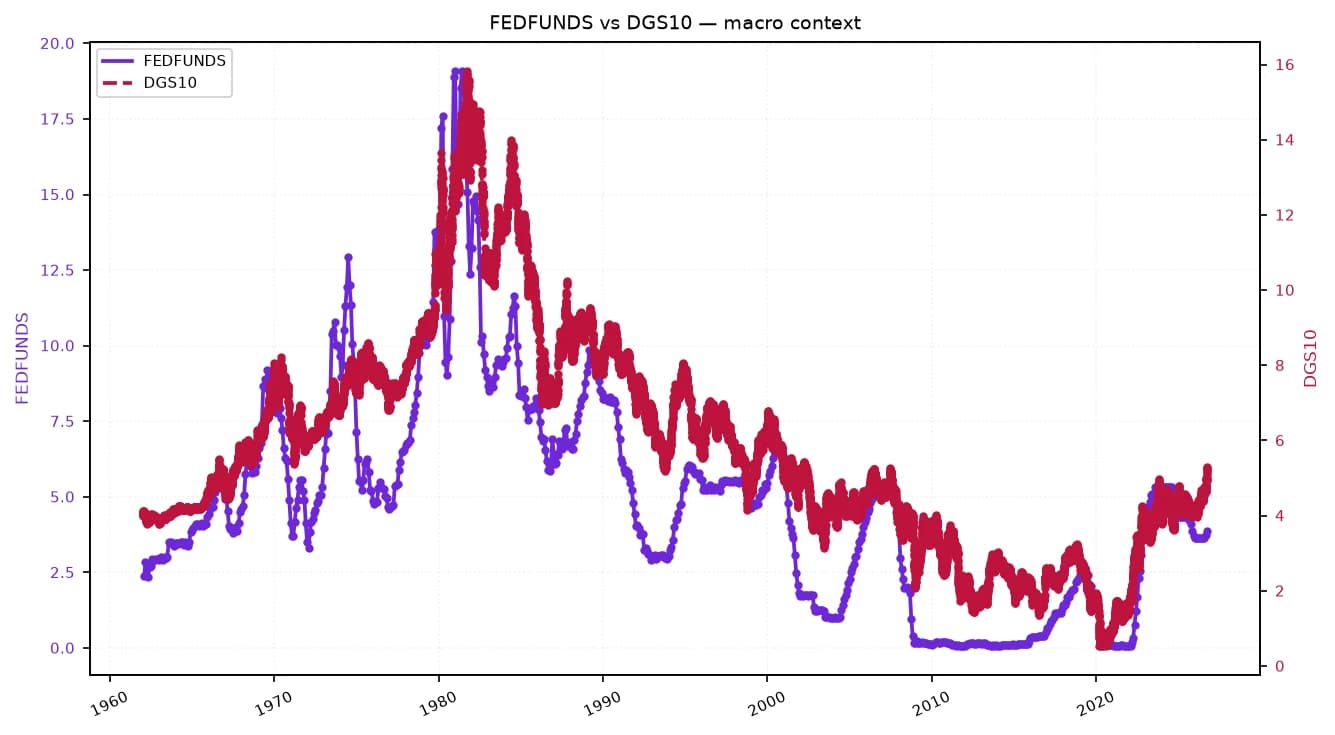
For investors, the implication is straightforward: the odds of an early pivot toward easier policy have fallen. Treasury prices had already been under pressure, and longer-dated yields remain elevated, with the 10-year yield around 5.1%. Exchange-traded funds tracking long-duration bonds have reflected that stress; TLT is still trading below both its 50-day and 200-day moving averages, while recent RSI readings show the fund has only partially recovered from oversold conditions. That combination points to a market that is still pricing a restrictive Fed path rather than an imminent easing cycle.
FEDFUNDS vs CPIAUCSL — macro contextadalytica.com
Explore this data interactively — full history, time series and cross-market comparisons.
Equities are also in the frame. Financial stocks tend to benefit from higher rates through wider net interest margins, and XLF has held up better than the broader market. By contrast, growth stocks remain sensitive to discount-rate assumptions, and QQQ has been volatile after a sharp drawdown, with its price still below the 200-day moving average. If the Fed signals that cuts are off the table and more hikes remain possible, that would likely keep pressure on richly valued technology shares even as AI spending continues to support the sector’s earnings story.
The challenge for the Fed is that AI may cut both ways. In the long run, automation could ease labor shortages and improve efficiency, which would help disinflation. But in the current cycle, the spending surge around AI infrastructure looks expansionary, not restrictive. That leaves policymakers trying to judge whether the technology’s net effect will be lower inflation through productivity, or higher inflation through investment and demand before those gains materialize.
Markets will now be focused on whether incoming data confirms the Fed’s caution. Inflation readings, wage trends and labor-market softness will matter most, but so will any sign that AI-related capital spending is lifting prices in energy, equipment and services. Until then, the minutes suggest the Fed is prepared to keep policy tight — and perhaps tighter than investors had hoped.
| Entity | Gains | Losses |
|---|---|---|
| Treasury yields | ▲Higher for longer pricing | ▼Bond prices, duration investors |
| Financials / XLF | ▲Wider lending margins | ▼Borrowers, rate-cut bettors |
| Growth tech / QQQ | ▲AI capex winners | ▼High-duration equity valuations |
| TLT / long bonds | ▲Tactical rebound on dovish surprises | ▼Holders if hikes continue |