Donald Trump’s accusation that the Federal Reserve is keeping borrowing costs elevated “to hurt me” lands at a moment when markets are already pricing a stubbornly hawkish policy path, with the 10-year Treasury yield pressing back toward 5% and the Fed funds rate still forecast near 3.89% in November 2026.
Trump criticizes Fed as yields rise near 5%
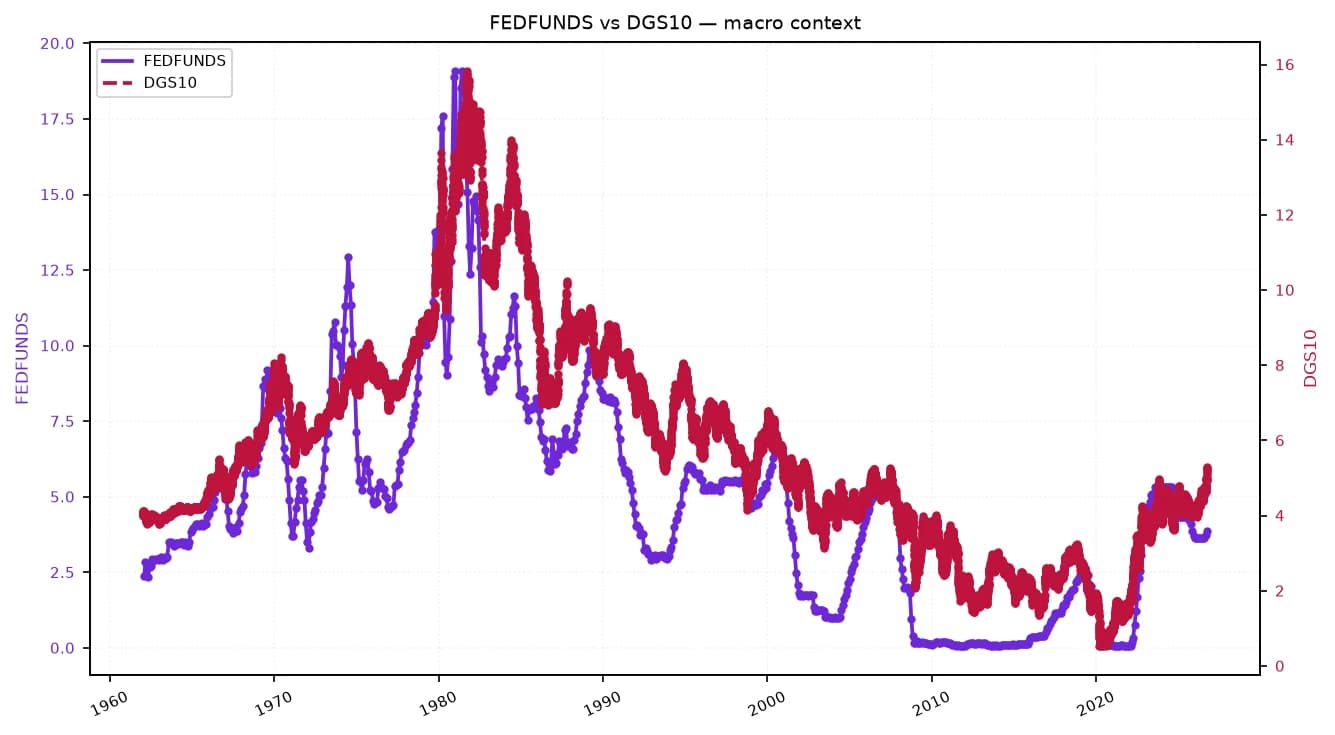
The economic importance is straightforward: higher-for-longer policy keeps credit conditions tight across the economy, from mortgages and corporate lending to equity valuations and refinancing costs. Even with the policy rate drifting lower from 3.88% to a forecast 3.89% in November, the direction of travel remains restrictive enough to weigh on growth-sensitive sectors, while long-dated yields around 5.1% show investors still expect the Fed to remain cautious. That leaves the central bank exposed to political criticism even as it tries to preserve credibility on inflation.
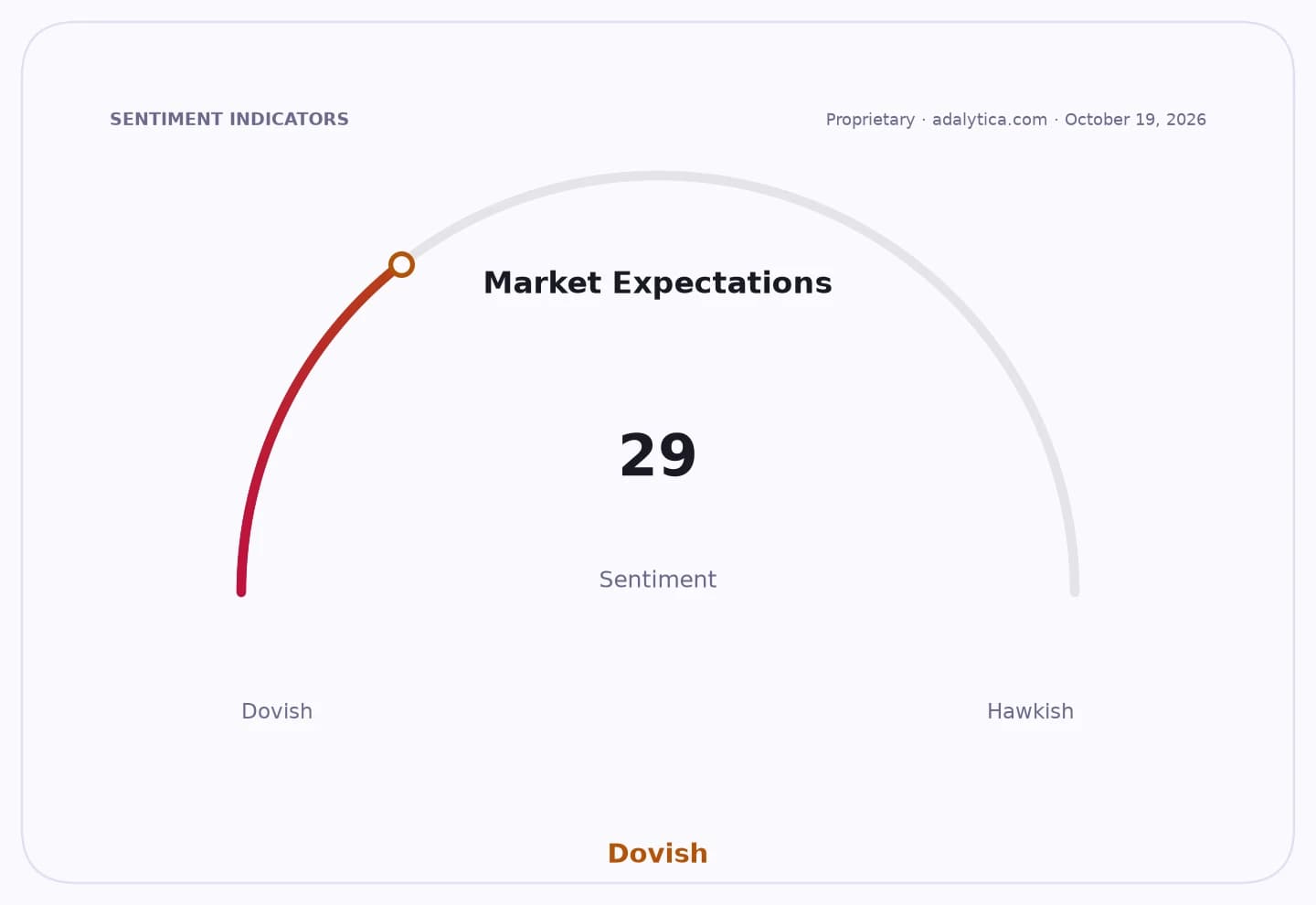
Sentiment Indicators
For investors, the key issue is not Trump’s grievance itself but the risk that political pressure complicates the Fed’s communication at a time when rate expectations are brittle. Adalytica’s market expectations gauge for Fed rate decisions shows “Extreme Fear,” while the Fed forward-guidance gauge also sits at “Extreme Fear,” underscoring how quickly sentiment has soured around the policy outlook. The credibility gauge is neutral, suggesting markets have not yet priced a full loss of confidence in the Fed, but they are clearly uneasy about the path ahead.
The bond market reinforces that caution. The 10-year yield has climbed from 4.88% on Nov. 9 to 5.10% on Nov. 12, while the 2-year/10-year spread remains barely positive at 27 basis points, a sign the curve is still close to inversion and investors expect growth to cool eventually. That combination — high front-end policy rates and elevated long-term yields — is the toughest backdrop for rate-sensitive assets because it compresses equity multiples and keeps financing costs high even if the economy avoids recession.
Treasury funds have reflected that tension. TLT, the long-duration bond ETF, closed at 79.38 on Nov. 13, below its 50-day moving average of 79.83 and well under its 200-day moving average of 82.71, while its RSI reading of 33.5 points to weak momentum. IEF, the intermediate Treasury ETF, also slipped to 90.04, below both its 50-day and 200-day averages. SPY, by contrast, remains above its 200-day average, but its recent pullback and negative MACD reading suggest equities are still sensitive to any further rise in yields.
The political narrative matters because the Fed is likely to resist the appearance that it is responding to the White House rather than to inflation and labor data. That leaves Trump’s criticism more useful as a market signal than as a policy lever: it highlights how difficult it will be for the Fed to justify another tightening step if employment remains firm and inflation does not cool fast enough. Some officials have already been weighing a larger half-point move, which would deepen the strain on borrowers but could also reinforce the central bank’s anti-inflation stance.
The biggest winners from that setup are banks with asset sensitivity to higher rates, while the clear losers are duration-heavy bond investors, rate-sensitive housing and leverage-dependent corporates. Unless incoming data soften enough to give the Fed cover to ease up, investors should expect the political crossfire to continue while borrowing costs stay restrictive into year-end.
| Entity | Gains | Losses |
|---|---|---|
| Banks | ▲Wider net interest margins | ▼Loan demand softness |
| Treasury bond holders | ▲None | ▼Capital pressure from higher yields |
| Rate-sensitive equities | ▲Limited benefit from lower rates expectations | ▼Valuation compression |
| Borrowers / housing | ▲None | ▼Higher financing costs |