Borrowing costs are climbing again for homeowners, and the immediate culprit is not just central bankers in Washington or Ottawa but the broader repricing of government debt that feeds straight into mortgage markets.
US Mortgage Rates Rise as Treasury Yields Climb

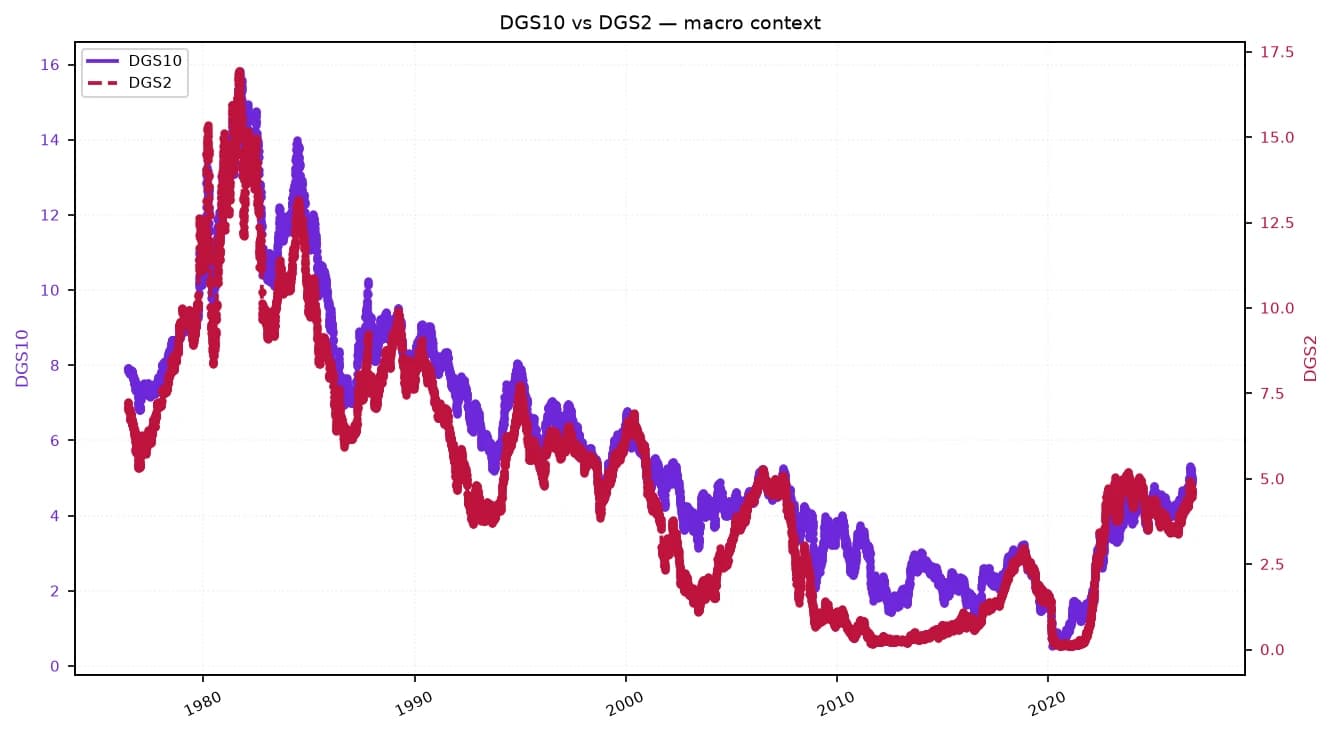
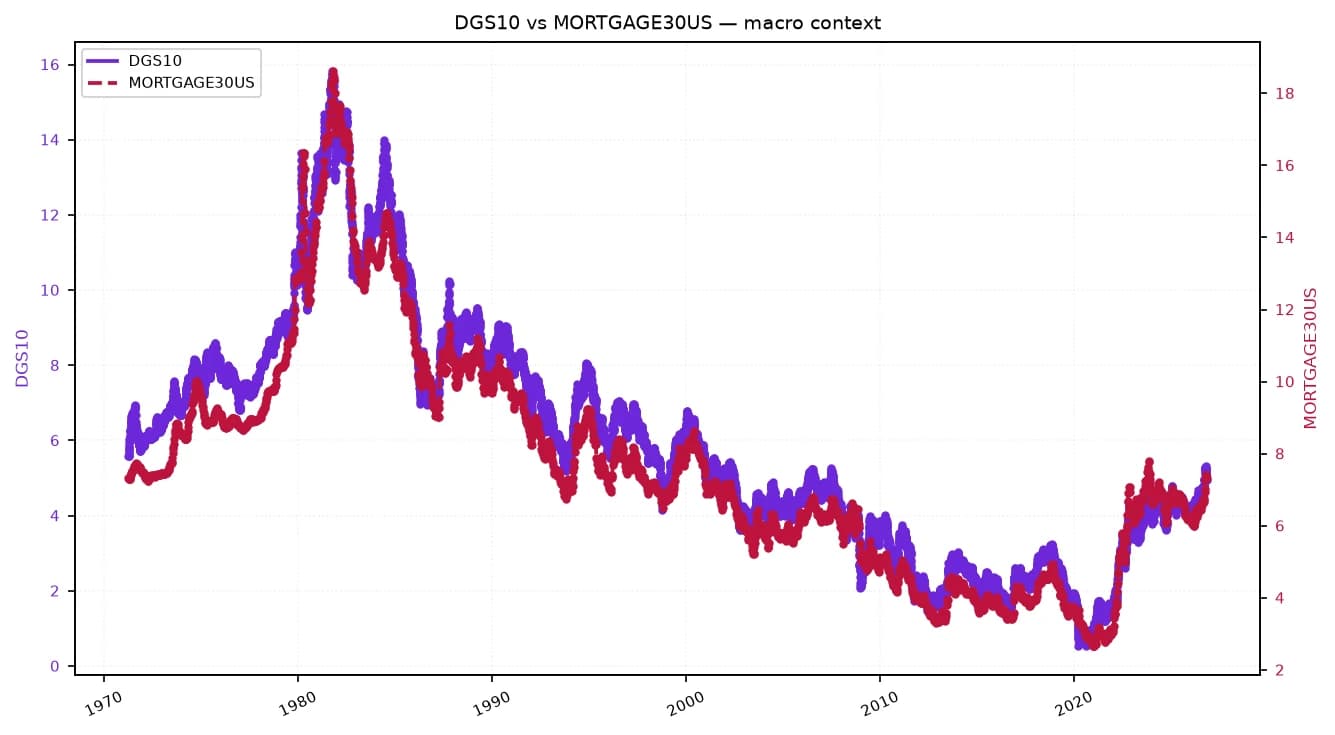
The US 10-year Treasury yield was at 4.84% in the latest reading, after touching 4.95% this week, while the 2-year note held near 4.46% and the federal funds rate sat at 3.88%, according to the data. That combination matters because mortgage pricing tends to track longer-dated bond yields, not just the policy rate, and it helps explain why borrowers can feel pain even when the Federal Reserve is no longer hiking aggressively. In plain terms, the market is keeping long-term borrowing costs elevated, and banks have room to pass that through.
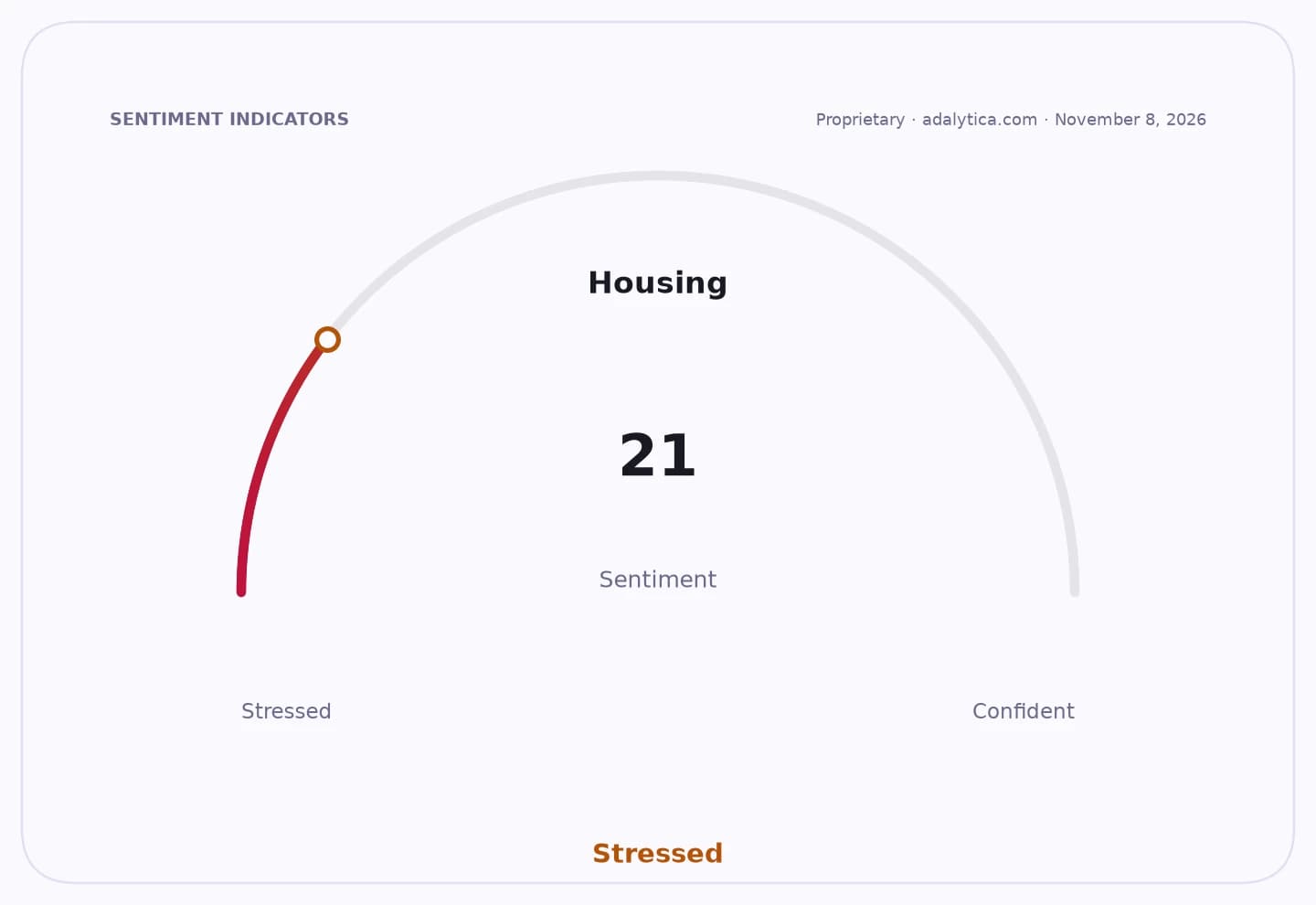
Sentiment Indicators
That is the economic backdrop behind the home-loan squeeze. When benchmark yields rise, lenders reprice variable and fixed mortgages, raising monthly repayments for households already under pressure from inflation and higher living costs. The effect is especially acute in highly leveraged housing markets, where even modest rate increases can absorb a large share of disposable income. For policymakers, that creates a difficult trade-off: fight inflation and support the currency, or ease conditions and risk reigniting prices.
Investors are reading the same signal through bond and equity markets. The iShares 20+ Year Treasury ETF, TLT, has traded around 81.92, still well below its 200-day moving average of 83.15, even after a recent rebound. That suggests the long-duration bond rally has not yet won a durable victory. TLT’s Adalytica trade signal shows “Extreme Greed,” but the price action says investors are still treating duration as fragile rather than secure. In other words, bond buyers are cautious even as sentiment has turned optimistic.
DGS10 vs FEDFUNDS — macro contextadalytica.com
Explore this data interactively — full history, time series and cross-market comparisons.
The same rate backdrop is also shaping sector performance. Financials, via XLF, have held up better than the bond market, closing around 57.16 and above both their 50-day and 200-day moving averages. Higher yields can support bank net interest margins, at least initially, which helps explain why lenders and parts of the financial sector can outperform even as mortgage borrowers suffer. Homebuilders, by contrast, remain exposed to any sustained rise in financing costs. ITB, the homebuilders ETF, has been volatile and has not fully recovered from earlier weakness, reflecting the sensitivity of housing demand to mortgage affordability.
For homeowners, the question of who to blame has a simple answer: partly the central bank, partly fiscal policy, and partly the market itself. Donald Trump’s tariffs, Joe Biden-era deficits, Jerome Powell’s inflation fight, Michele Bullock’s policy stance in Australia, and Jim Chalmers’ budget settings all feed into the inflation and yield environment that ultimately determines mortgage rates. But the clearest immediate driver is the bond market, which is now demanding a higher return for lending money over a decade or more.
That leaves borrowers with little room to maneuver and investors with a clearer map of the winners and losers. If long yields stay near current levels, mortgage stress will remain elevated, housing turnover will slow, and rate-sensitive assets are likely to lag. A sustained move lower in Treasury yields would ease the pressure quickly. Until then, the home loan squeeze looks set to persist.
| Entity | Gains | Losses |
|---|---|---|
| Treasury bond buyers | ▲Higher yields | ▼Lower bond prices |
| Banks and lenders | ▲Wider margins | ▼Borrowers face higher rates |
| Homeowners with mortgages | ▲Repricing clarity | ▼Higher monthly repayments |
| Homebuilders and housing stocks | ▲Stabilizing rates | ▼Slower demand and affordability pressure |