The U.S. dollar slipped against most major currencies as traders positioned for the outcome of the U.S. midterm elections, while Treasury yields fell, underscoring a market move toward less aggressive policy and lower U.S. rate expectations.
Dollar Falls as Treasury Yields Ease

The dollar index dropped 0.2% to 101.7, while the 10-year Treasury yield eased to 4.919%. The move matters because the dollar and U.S. yields remain the main global pricing anchors for everything from emerging-market currencies to equities and commodities. When both soften together, it usually signals a modest unwind of dollar-long positioning and a shift in demand toward duration and risk assets.
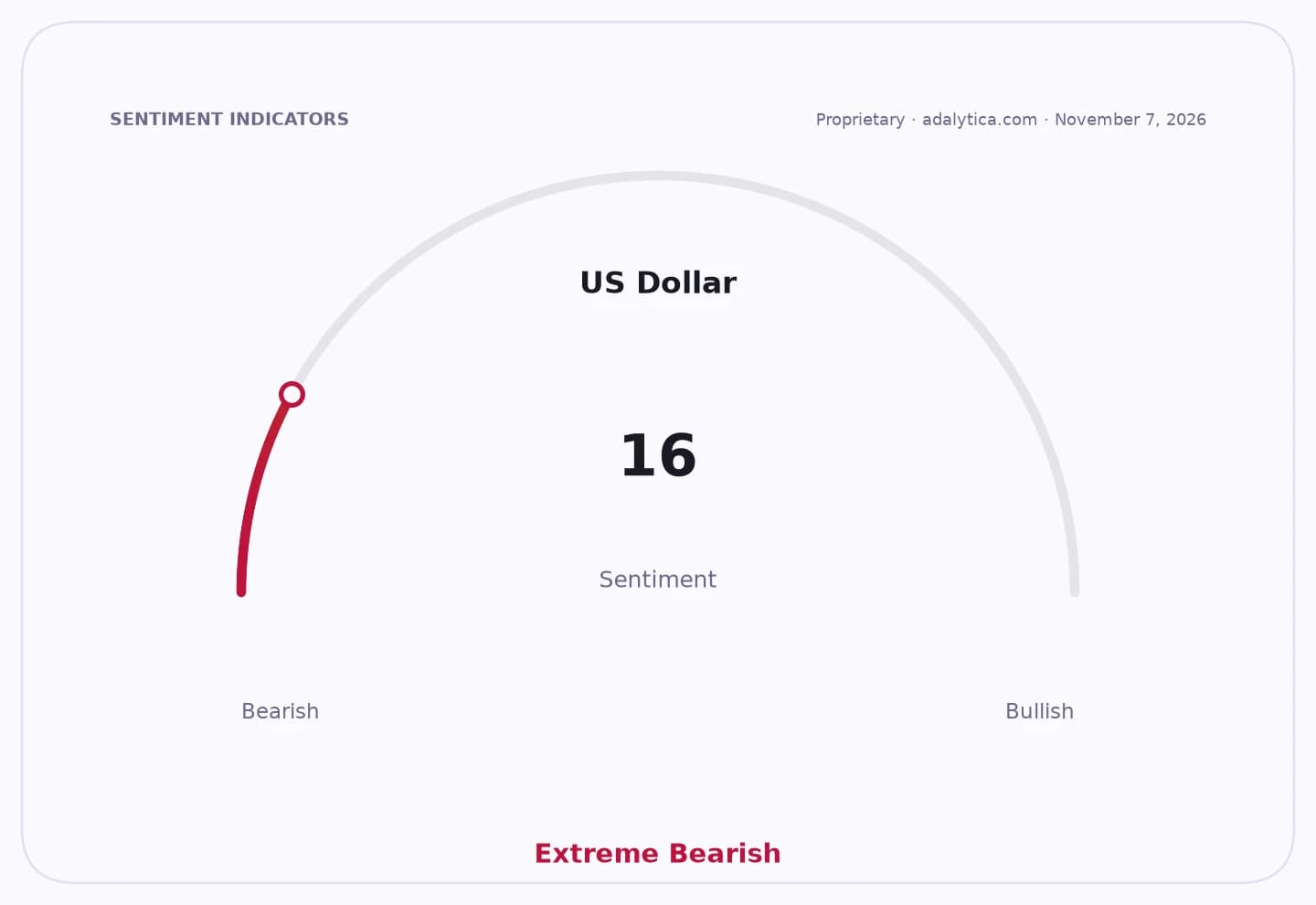
Sentiment Indicators

For investors, the immediate implication is a more supportive backdrop for non-U.S. assets and for interest-rate sensitive sectors. A weaker dollar tends to ease financial conditions outside the United States by reducing imported inflation pressure and the burden of dollar-denominated debt. Falling Treasury yields also improve the relative value of longer-dated bonds and can give relief to growth stocks and other assets whose valuations are most sensitive to discount rates.
The move was visible in currency-tracking funds and bond gauges. UUP, the Invesco DB US Dollar Index Bullish Fund, slipped to 28.92 after trading as high as 29.12 in recent sessions, while its 50-day average remained above the spot price, suggesting the dollar’s recent strength has not fully reversed. By contrast, UDN, the inverse dollar fund, held near 17.89, indicating that dollar weakness is still measured rather than disorderly. In Treasuries, the 10-year yield’s drift lower follows a period when markets had already pushed yields close to multi-year highs, reflecting the view that tighter financial conditions may eventually slow the economy.
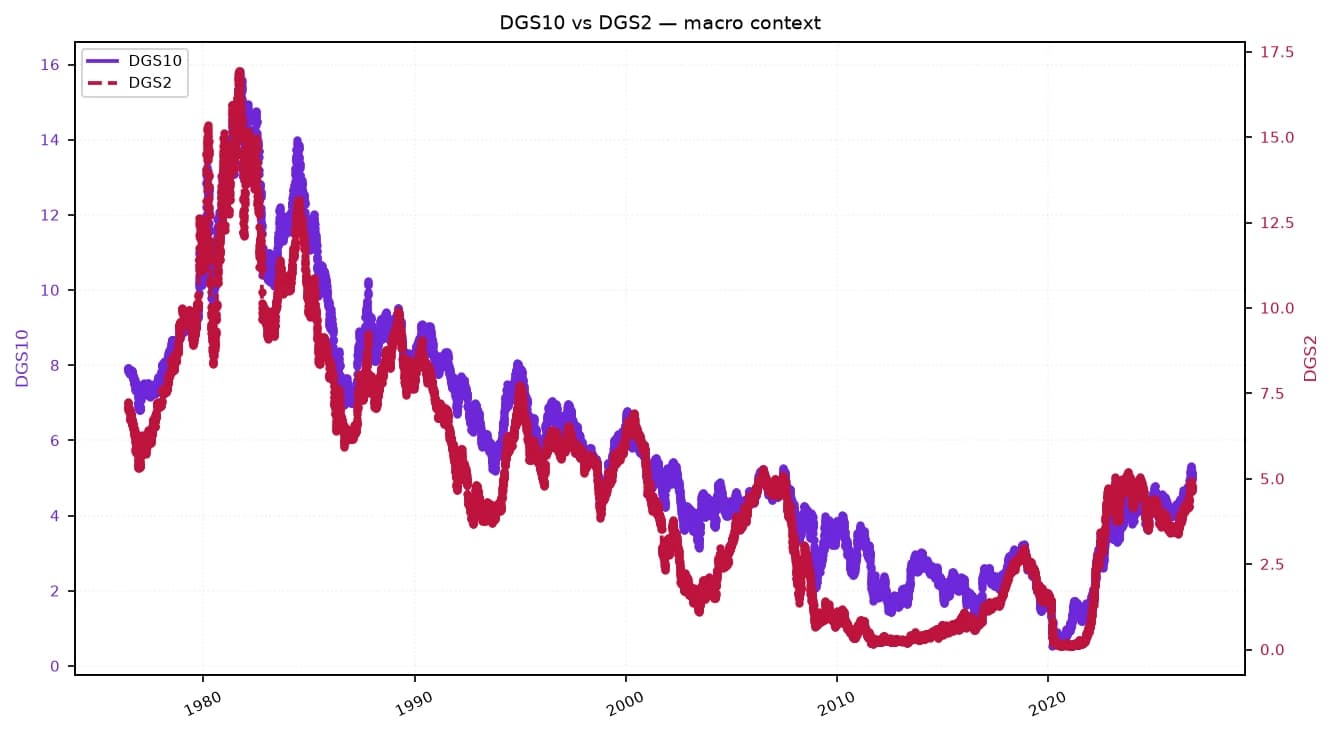
DGS10 vs DGS2 — macro contextadalytica.com
Explore this data interactively — full history, time series and cross-market comparisons.
US Dollar
Adalytica’s U.S. dollar trade signals showed sentiment at zero, labeled extreme fear, even as awareness remained elevated, a combination that points to a crowded and fragile positioning backdrop rather than a strong conviction bid for the currency. Treasury bond signals, by contrast, showed extreme greed, consistent with demand for duration as investors look for protection from slower growth or policy uncertainty.
The political backdrop matters because U.S. midterm elections can reshape expectations for fiscal policy, regulation and the balance of power in Washington. Markets typically treat the result less as a binary equity event than as a clue to how much policy gridlock or legislative change may follow. That, in turn, feeds into the outlook for deficits, Treasury issuance and the Federal Reserve’s room to keep tightening.
The bull case for the dollar is that U.S. yields remain far above those in Europe and Japan, and any sign of economic resilience could quickly revive demand for greenback assets. The bear case is that if the midterms produce more fiscal uncertainty or reinforce expectations for a slower pace of Fed tightening, the dollar’s yield advantage could narrow and support a broader correction in the currency.
For now, the market is reading the election risk through a macro lens: softer yields, a slightly weaker dollar and a cautious move into assets that benefit from a less aggressive U.S. policy path. What happens next will depend on whether the election result changes fiscal expectations enough to alter the Treasury curve and, by extension, the dollar’s grip on global markets.
| Entity | Gains | Losses |
|---|---|---|
| Non-U.S. borrowers | ▲Easier dollar funding | ▼Higher local refinancing costs fade |
| U.S. exporters | ▲More competitive pricing abroad | ▼Imported inputs stay costly |
| Treasury bulls | ▲Higher bond prices | ▼Yield-holders on the wrong side |
| Dollar bears | ▲Relief on positioning | ▼Dollar longs face mark-to-market pressure |