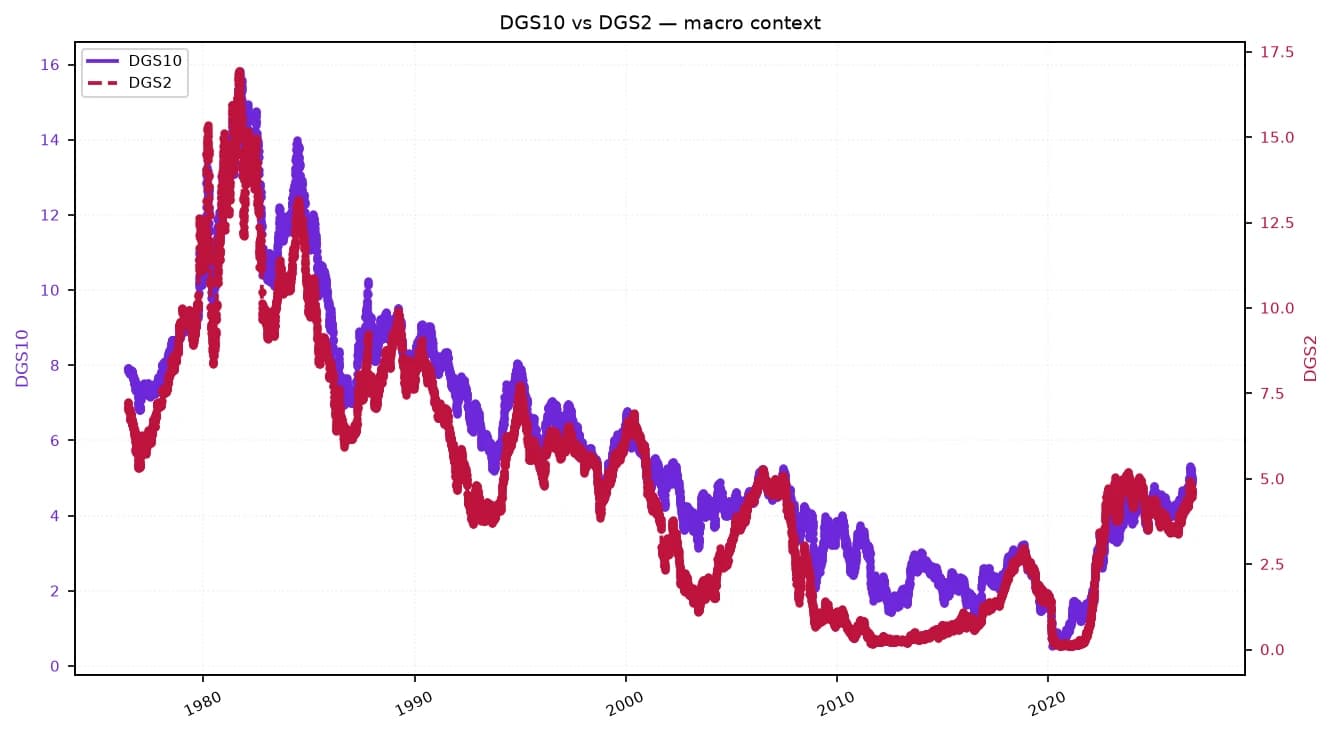
Global government bond yields are climbing back to levels that directly shape what households and companies pay to borrow, with U.S. 10-year Treasuries near 4.83% and the Fed funds rate around 3.89%, keeping pressure on mortgages, student loans and credit cards.
U.S. 10-year yield nears 4.84% as TLT falls
That matters because government bond rates are the benchmark for almost every major type of consumer and corporate financing. When Treasury yields rise, lenders can demand higher returns across the curve, from fixed-rate home loans to auto debt and revolving credit, raising monthly payments and tightening financial conditions even if central banks are not actively hiking policy rates.
Sentiment Indicators
The move is showing up in bond markets and investor positioning. The iShares 20+ Year Treasury Bond ETF, TLT, was trading at $81.92 on Friday after a volatile week, while the 10-year yield, at 4.84%, remains well above the 3.89% fed funds rate, underscoring how much compensation investors still want for locking up money in long-dated government debt.
Adalytica’s Treasury-bond trade signal shows extreme greed on TLT, a reading that points to heavy demand for duration even as yields stay elevated. At the same time, the U.S. dollar’s awareness score is in extreme-greed territory, while the S&P 500’s signal is neutral, reflecting a market that is still balancing rate pressure against the appeal of safer assets after a tech sell-off.
Higher sovereign yields are not just a Wall Street problem. In India, the Reserve Bank raised the interest rate on its FRB 2034 bond to 7.26%, boosting returns for holders over the next six months and reinforcing how central banks and debt managers are using bond pricing to steer funding conditions.
For investors, the key tradeoff is straightforward: higher yields improve income for bond buyers but increase discount rates across assets and push up borrowing costs for consumers and businesses. Banks with large loan books can benefit from wider net interest margins, as recent filings from lenders including Capital One, Bank of America and U.S. Bancorp show stronger loan growth and improving margins, but those gains can come with greater credit risk if financing costs keep rising.
The next catalyst is whether yields keep drifting higher or settle back as growth, inflation and Treasury demand shift. For now, bond markets are still doing what they always do first: setting the price of money for everyone else.
| Entity | Gains | Losses |
|---|---|---|
| Bondholders | ▲Higher income on new purchases | ▼Mark-to-market volatility |
| Borrowers | ▲Shorter-duration refinancers only | ▼Mortgages, cards, student loans |
| Banks | ▲Wider net interest margins | ▼Higher credit stress risk |
| Equity investors | ▲Defensive flows into cash-rich stocks | ▼Rate-sensitive sectors, high valuations |