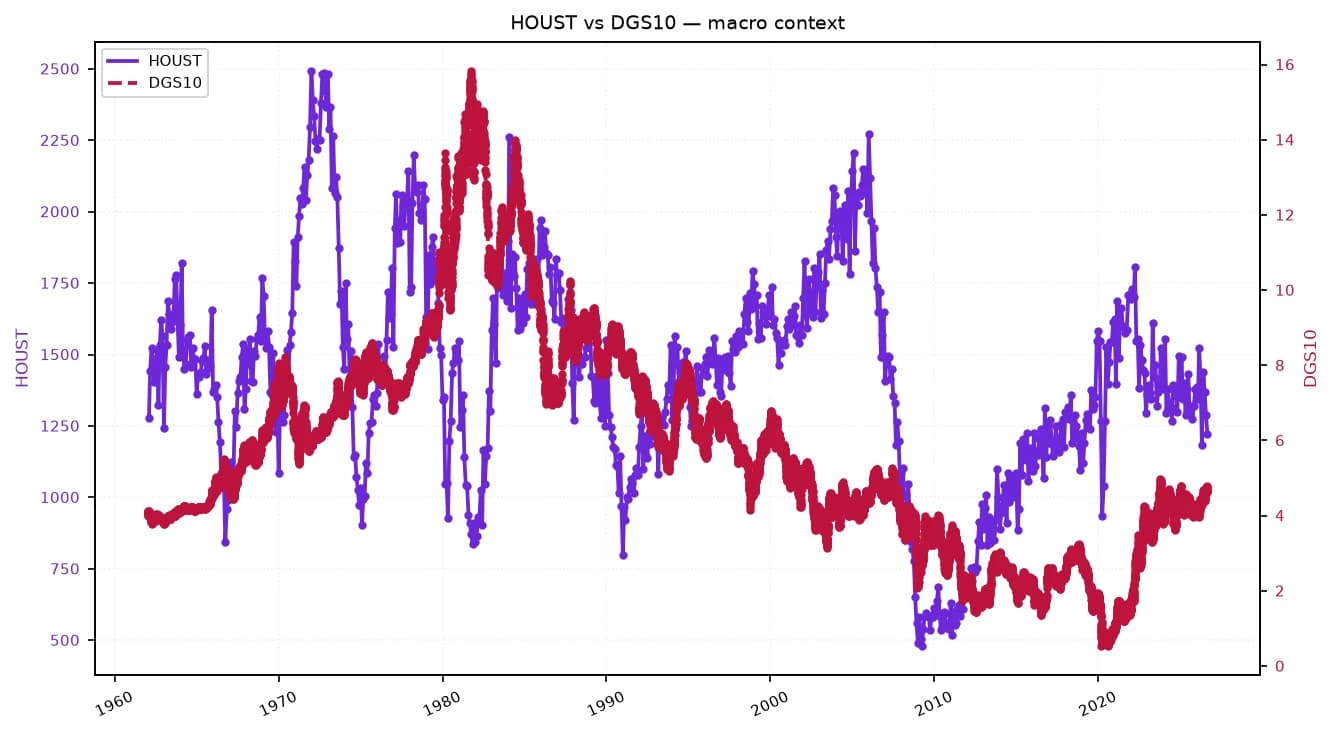
Rising mortgage rates are knocking the U.S. housing market back just as affordability emerges as a defining political issue before the midterm elections.
U.S. housing sales fall as mortgage rates rise
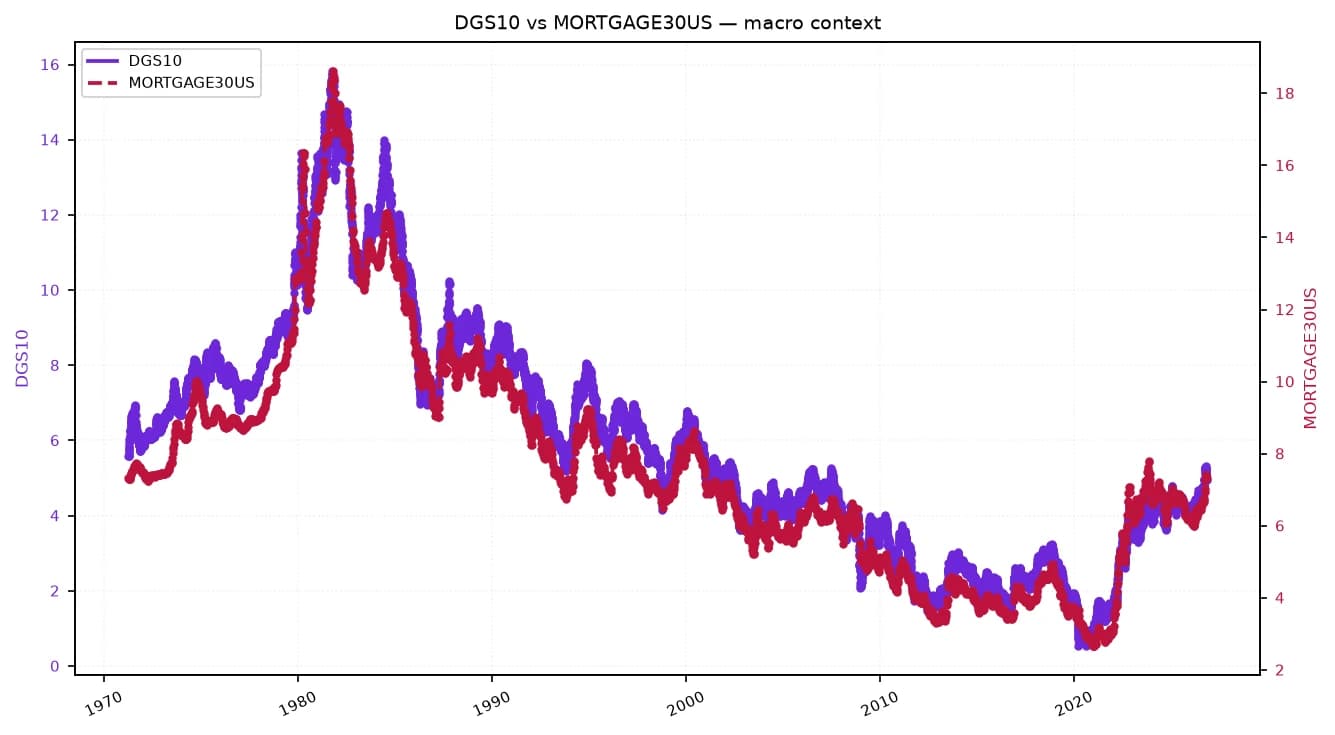
Pending home sales fell 7.3% in September from August and 11.3% from a year earlier, according to National Association of Realtors data, a decline that tracked a sharp move higher in borrowing costs. Mortgage rates started the month near 6.8% and climbed to 7.6% by the end of September, while Freddie Mac’s average 30-year rate later hit 7.40%, the highest since November 2023.
Sentiment IndicatorsⓘProprietary · adalytica.com · October 25, 2026
This is a snapshot — live sentiment, awareness and momentum for 130+ markets update continuously in the dashboard.Open AlphaPulse
That matters economically because housing is one of the economy’s most rate-sensitive sectors: when mortgage costs jump, purchasing power falls even if home prices stop rising. The median existing-home price rose to $417,500 in September, the highest for that month on record, adding to the squeeze on buyers already stretched by inflation and sticky borrowing costs. The combination is slowing turnover, locking existing owners into their low-rate mortgages and cooling one of the biggest channels for household wealth creation and consumer spending.
The latest data show a market that is not simply short of supply, but trapped by affordability. Existing-home sales did edge up 1.5% in September to a 3.99 million annualized pace, but they were still 2.2% below a year earlier and inventory rose to 1.60 million homes, the highest since November 2019. That suggests sellers are not getting the pricing power they enjoyed during the pandemic boom, even as buyers remain reluctant to move. Realtor.com said 20.8% of listings carried a price cut in September, the highest share for any month since October 2022.
For investors, the pressure is likely to ripple beyond housing itself. Builders are already signaling stress: the National Association of Home Builders’ October sentiment index fell to a 14-year low, with current sales, expected sales and buyer traffic all weakening. That points to softer order books, more incentives and less pricing power for publicly traded homebuilders such as D.R. Horton, Lennar and PulteGroup. Real-estate platforms and mortgage lenders face a different mix of risks and opportunities: lower transaction volumes hurt brokerage and loan origination activity, but price cuts and rising inventory can improve engagement for listing platforms if buyers return.
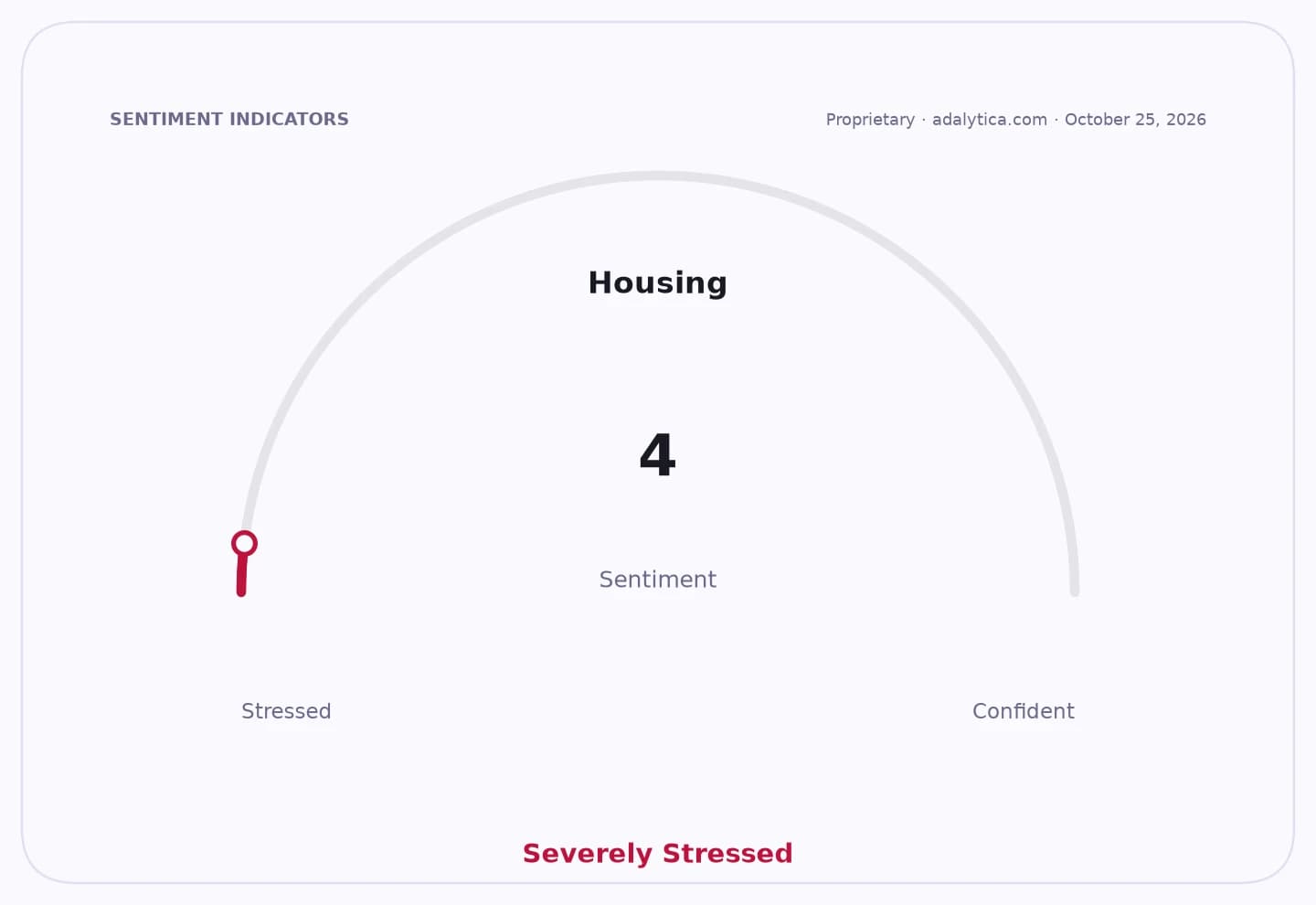
Adalytica’s housing and rent inflation gauge points to extreme fear around the sector, while U.S. Treasury bond signals suggest investors are still treating the rate backdrop as an unresolved risk. Conventional technical indicators on bond ETFs such as TLT also point to a volatile rates market, with the fund’s price recently moving above its 50-day moving average while momentum remained stretched, underscoring how quickly mortgage costs can swing when long-term yields rise.
Politically, the timing is awkward for President Donald Trump and congressional Republicans, who campaigned on easing household costs but are confronting a housing market still struggling under a 7%-plus mortgage rate. Pew data show the economy is central to voters’ decisions, and housing is especially salient for younger voters, making affordability more than a niche issue. If rates remain near current levels into the election, the housing slump could deepen a broader sense that inflation relief has not reached households where it matters most.
The key variable now is whether long-term yields and mortgage rates ease enough to stabilize demand, or whether buyers remain sidelined into year-end. Without a meaningful drop in borrowing costs — or a larger correction in home prices — housing is likely to stay a drag on activity, sentiment and, in an election year, on the political fortunes of the party in power.
| Entity | Gains | Losses |
|---|---|---|
| Homebuyers | ▲More price cuts, better negotiating power | ▼Higher monthly payments |
| Homebuilders | ▲Inventory clears if demand returns | ▼Lower traffic, more incentives |
| Mortgage lenders / brokers | ▲Refinance rebound if rates fall | ▼Fewer purchase loans now |
| Republicans / Trump | ▲Potential relief if rates ease before vote | ▼Political damage from affordability pain |