US homebuying demand sank to its weakest level on record in September as mortgage rates pushed borrowing costs sharply higher, deepening the slump in an already fragile housing market and threatening to keep new-home sales, homebuilders and related lenders under pressure.
US pending home sales fall to record low in September
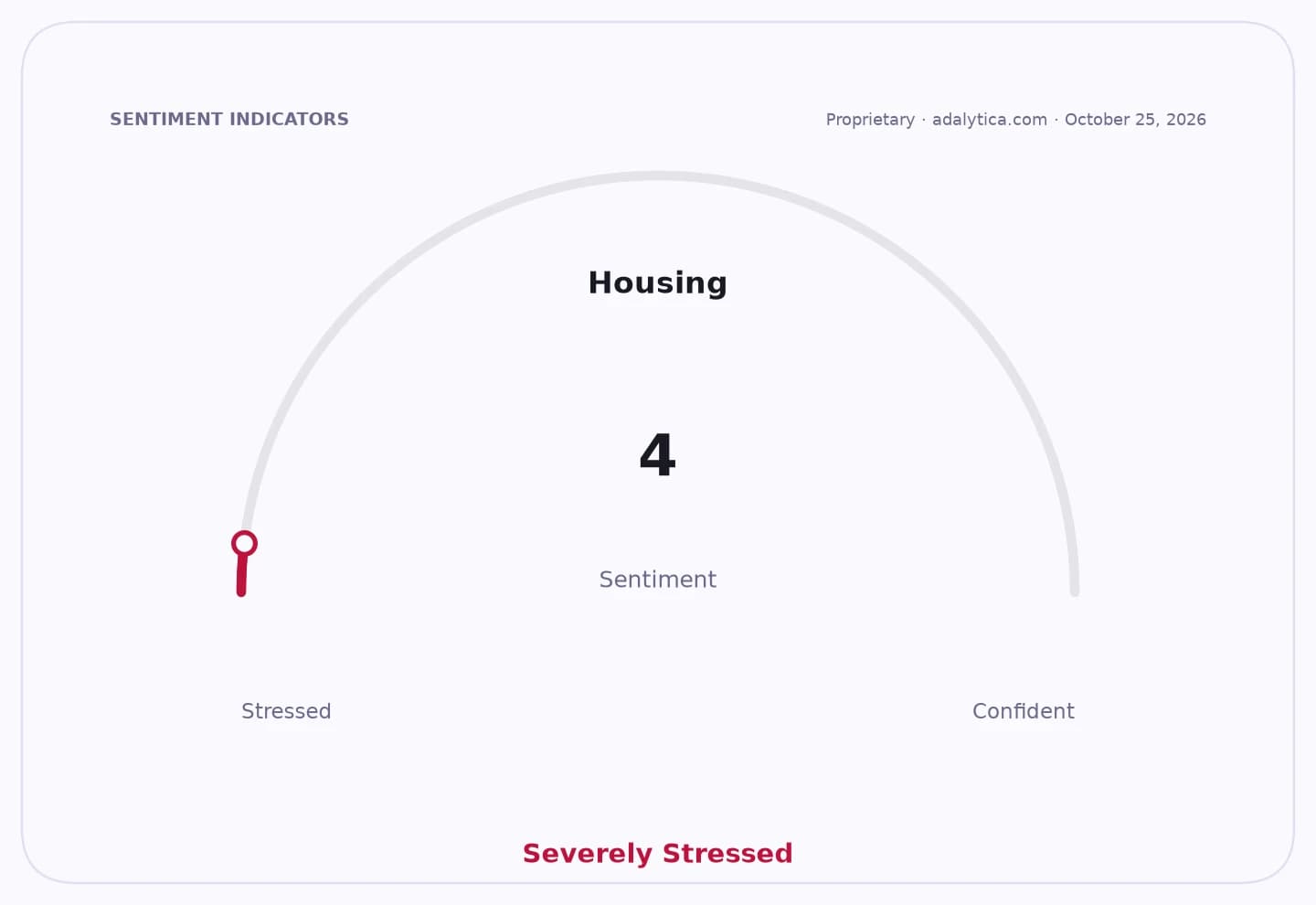
The National Association of Realtors said its pending home sales index fell 7.3% to 66.0, the lowest since the series began in 2001 and far below the 0.5% decline economists had expected. Contracts to buy existing homes, which typically turn into sales one to two months later, dropped in all four US regions and were down 11.3% from a year earlier.
Sentiment IndicatorsⓘProprietary · adalytica.com · October 25, 2026
This is a snapshot — live sentiment, awareness and momentum for 130+ markets update continuously in the dashboard.Open AlphaPulse
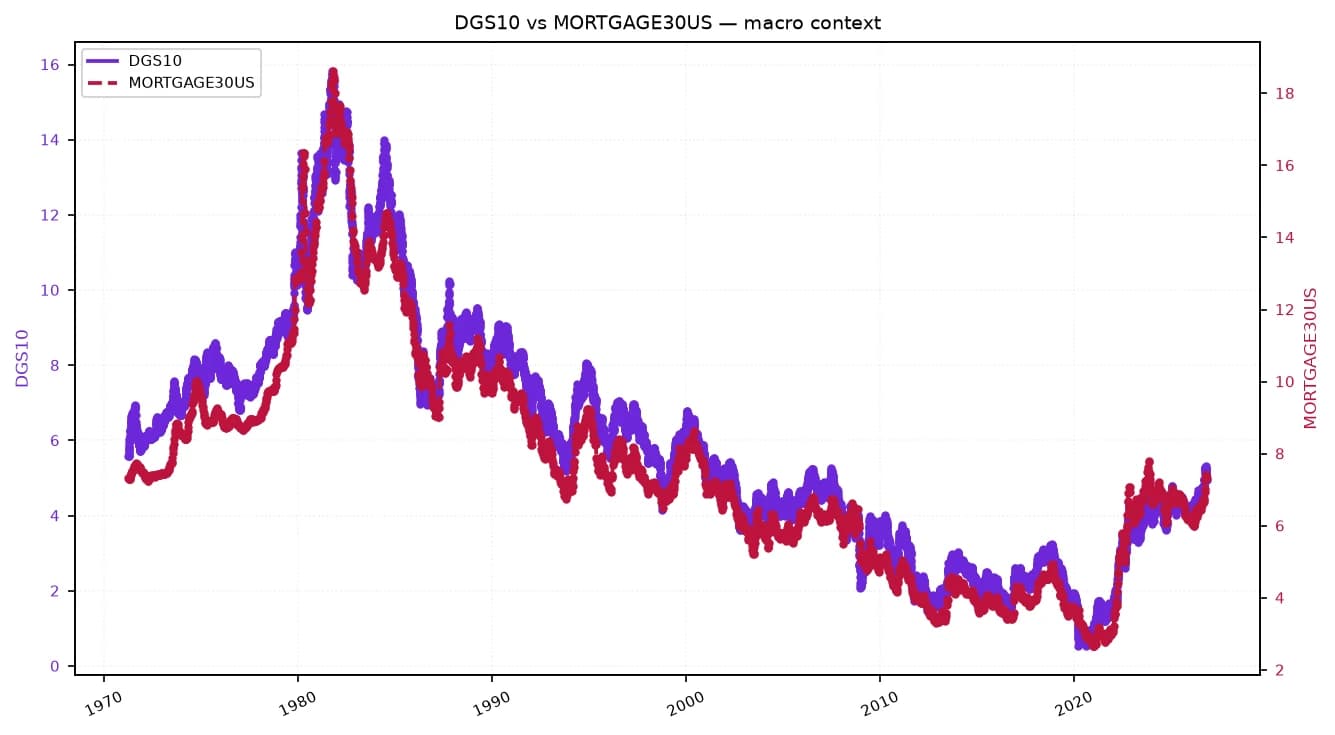
The main driver is financing cost. Freddie Mac said the average rate on a 30-year fixed mortgage reached 7.40% last week, the highest in nearly three years, after Treasury yields climbed. That has squeezed affordability just as inflation risks have picked up again, with market attention on how the Israel-Iran conflict feeds energy prices and keeps longer-term yields elevated.
For investors, the data reinforces a two-speed housing market: supply remains constrained, but demand is being choked by the cost of money. That is a negative for builders, mortgage originators and home-related retailers, while it can support rental demand if would-be buyers stay sidelined. Public builders such as D.R. Horton and Lennar were already showing stress in recent trading, with Lennar’s stock still below its 200-day moving average even after a sharp rebound.
DGS10 vs MORTGAGE30US — macro contextadalytica.com
Explore this data interactively — full history, time series and cross-market comparisons.Open AlphaPulse
The weakness also matters for the broader economy because housing is one of the first sectors to react to tighter financial conditions. A sustained drop in existing-home activity can slow transaction-related spending, weigh on commissions and curtail the wealth effect from turnover, even if home prices themselves remain relatively firm.
With mortgage rates now the key swing factor, the next read on housing will depend on whether Treasury yields stabilize or climb further. If borrowing costs stay near current levels, October and November sales could remain soft and keep pressure on the sector into year-end.
| Entity | Gains | Losses |
|---|---|---|
| Renters | ▲more leasing demand | ▼less chance to buy |
| Homebuilders | ▲limited resale competition | ▼affordability headwind |
| Mortgage lenders | ▲refinancing volume can rise if rates fall | ▼purchase originations weaken |
| Existing homeowners | ▲fewer bidding wars in some markets | ▼lower transaction activity |