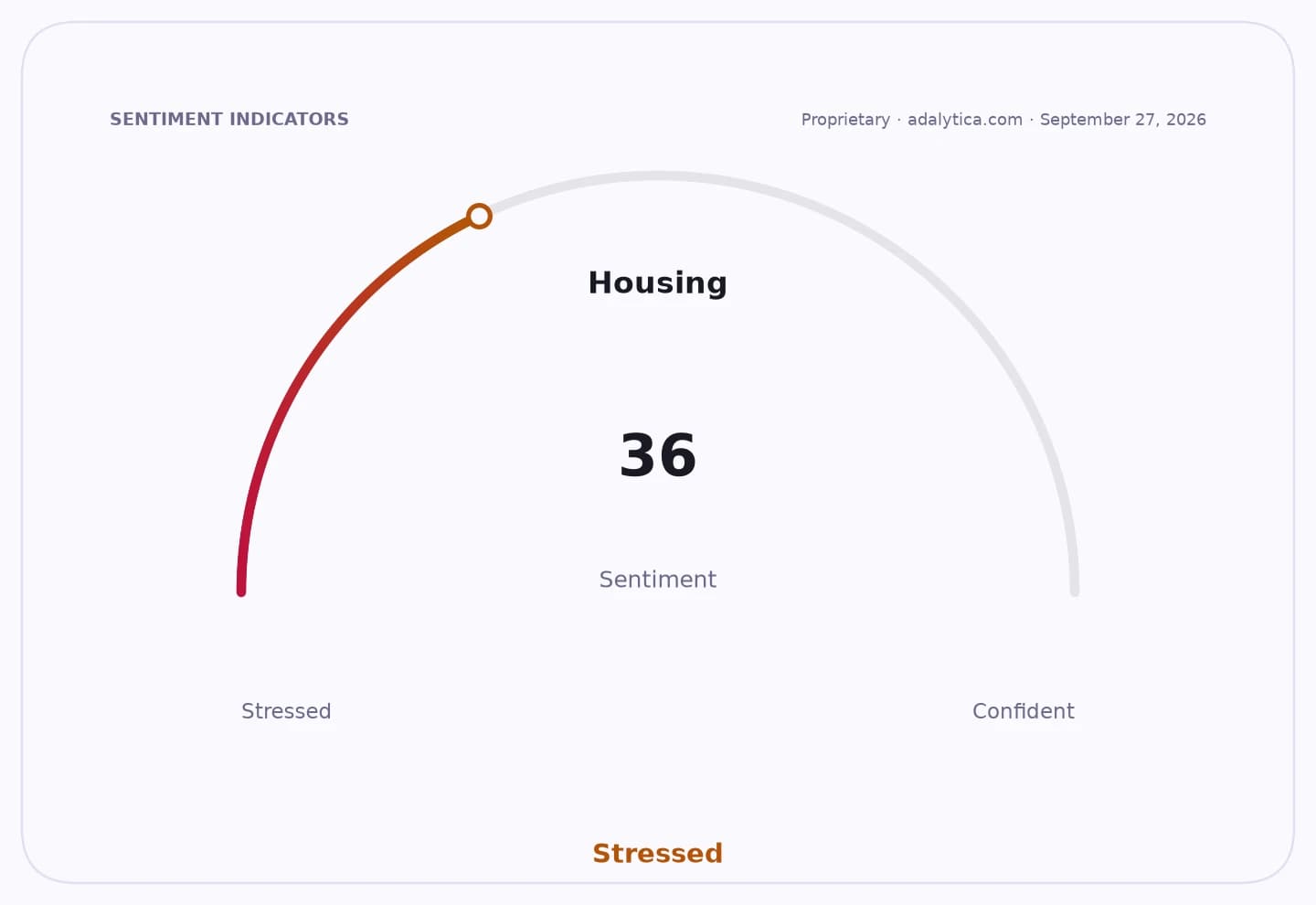
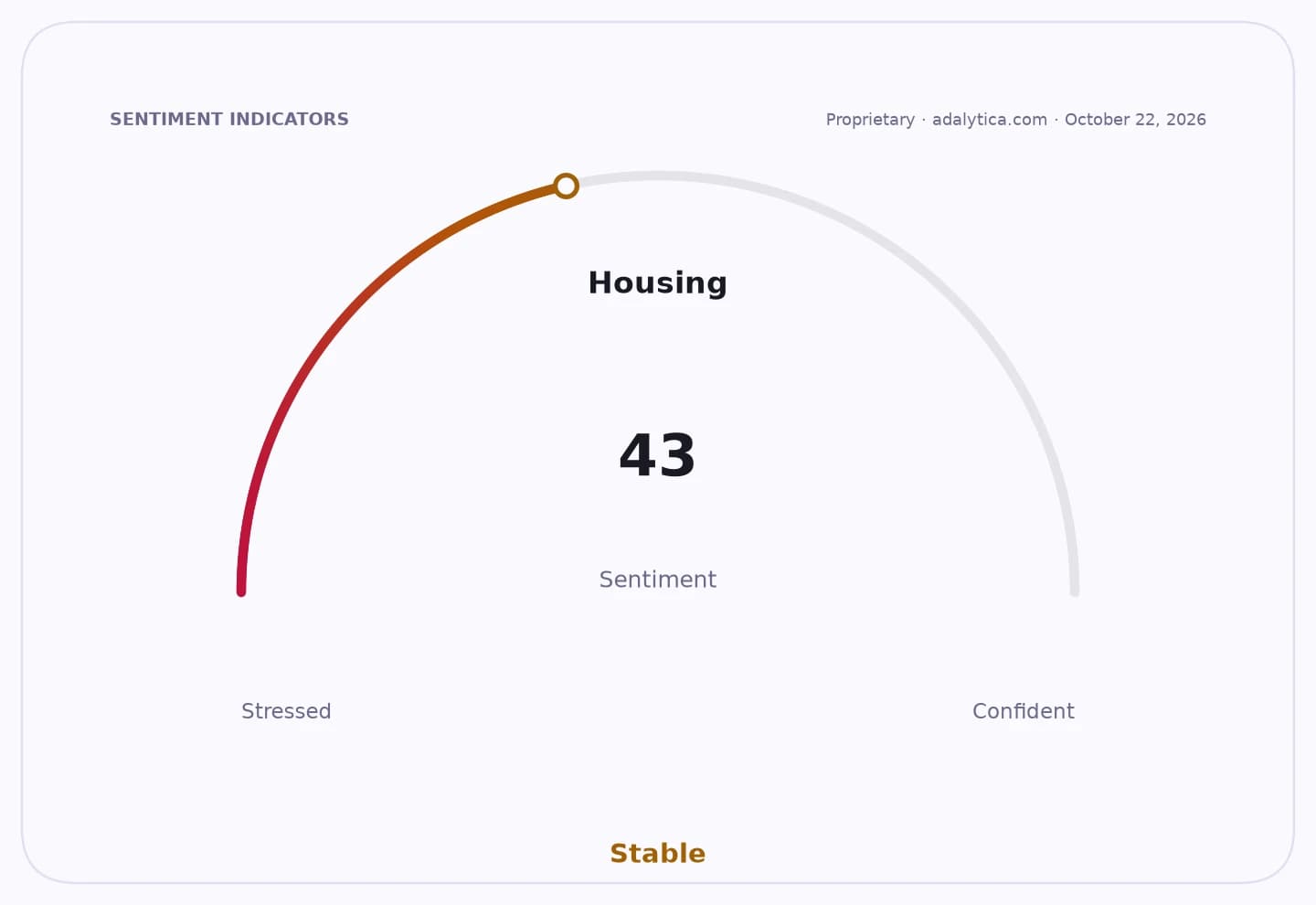
U.S. mortgage rates have eased for the first time in weeks, but the small decline is nowhere near enough to revive a housing market still under pressure from high borrowing costs and weak affordability.
U.S. mortgage rates fall to 7.32%
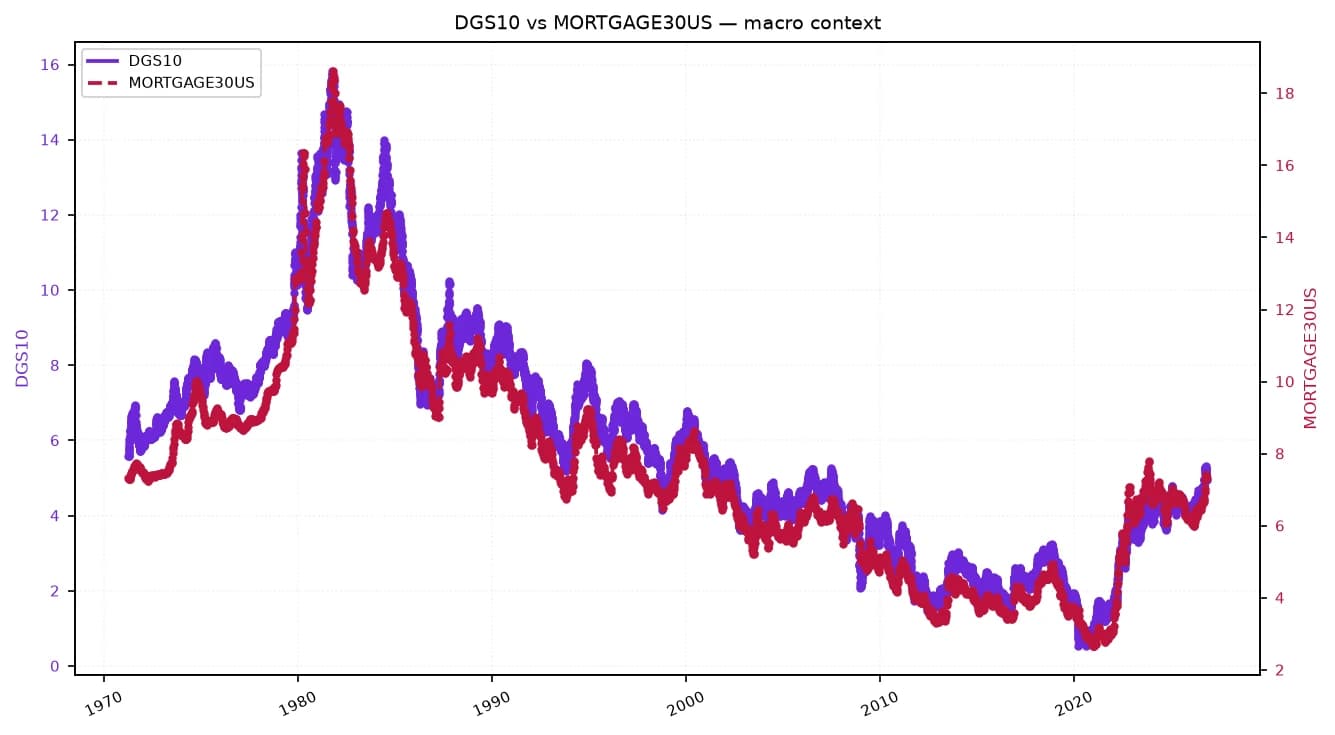
The average 30-year fixed mortgage rate fell to 7.32% from 7.40% a week earlier, according to the latest data, marking the first drop since late August. That brings some relief to buyers and lenders after a punishing run-up in financing costs, but the market is still operating at a level that effectively freezes many first-time buyers out of the market.
Sentiment IndicatorsⓘProprietary · adalytica.com · October 24, 2026
This is a snapshot — live sentiment, awareness and momentum for 130+ markets update continuously in the dashboard.Open AlphaPulse
Why it matters economically is simple: housing is one of the biggest transmission channels for interest-rate policy. When mortgage costs stay above 7%, monthly payments remain elevated even if home prices stop rising, which suppresses turnover, slows transaction volumes and keeps pressure on construction, brokers, home-improvement spending and related consumer activity. The latest data also show demand remains soft, with homebuyer activity down 7%, underscoring that this is still a affordability problem, not yet a recovery.
For investors, that means the mortgage-sensitive trade is still in play. Lower rates would be a tailwind for mortgage originators, refinancers, real-estate transactions and housing-linked equities, but the current move is too modest to justify a broad rerating. The bigger opportunity is in companies that can gain share or monetize pent-up demand once borrowing costs begin to fall more decisively. Rocket Companies, for example, remains highly levered to any refinancing cycle, though its latest trading shows the market is still treating this as a volatile, rate-driven story rather than a clean recovery.
The broader setup suggests the market is underestimating how long affordability will remain constrained even if rates ease gradually into year-end. Treasury yields have been choppy, and a softer rate backdrop can quickly reverse if inflation expectations re-accelerate. That leaves housing in a holding pattern: not collapsing, but not recovering in a meaningful way either.
The investable thesis is straightforward. If you believe rates drift lower into the holidays, the best setup is not in the homebuyer itself, but in the picks-and-shovels around financing, brokerage and transaction volume. If rates stay elevated, the winners are the balance-sheet survivors and the lenders with the strongest distribution. Either way, the mortgage market remains one of the clearest high-conviction ways to express the next move in U.S. rates.
| Entity | Gains | Losses |
|---|---|---|
| Mortgage lenders | ▲Potential refinance volume | ▼Margin pressure if rates stay high |
| Homebuyers | ▲Slight payment relief | ▼Still unaffordable borrowing costs |
| Rocket Companies (RKT) | ▲More refinance activity | ▼Weak housing turnover |
| Existing homeowners | ▲Optionality if rates fall further | ▼Locked-in affordability trap |