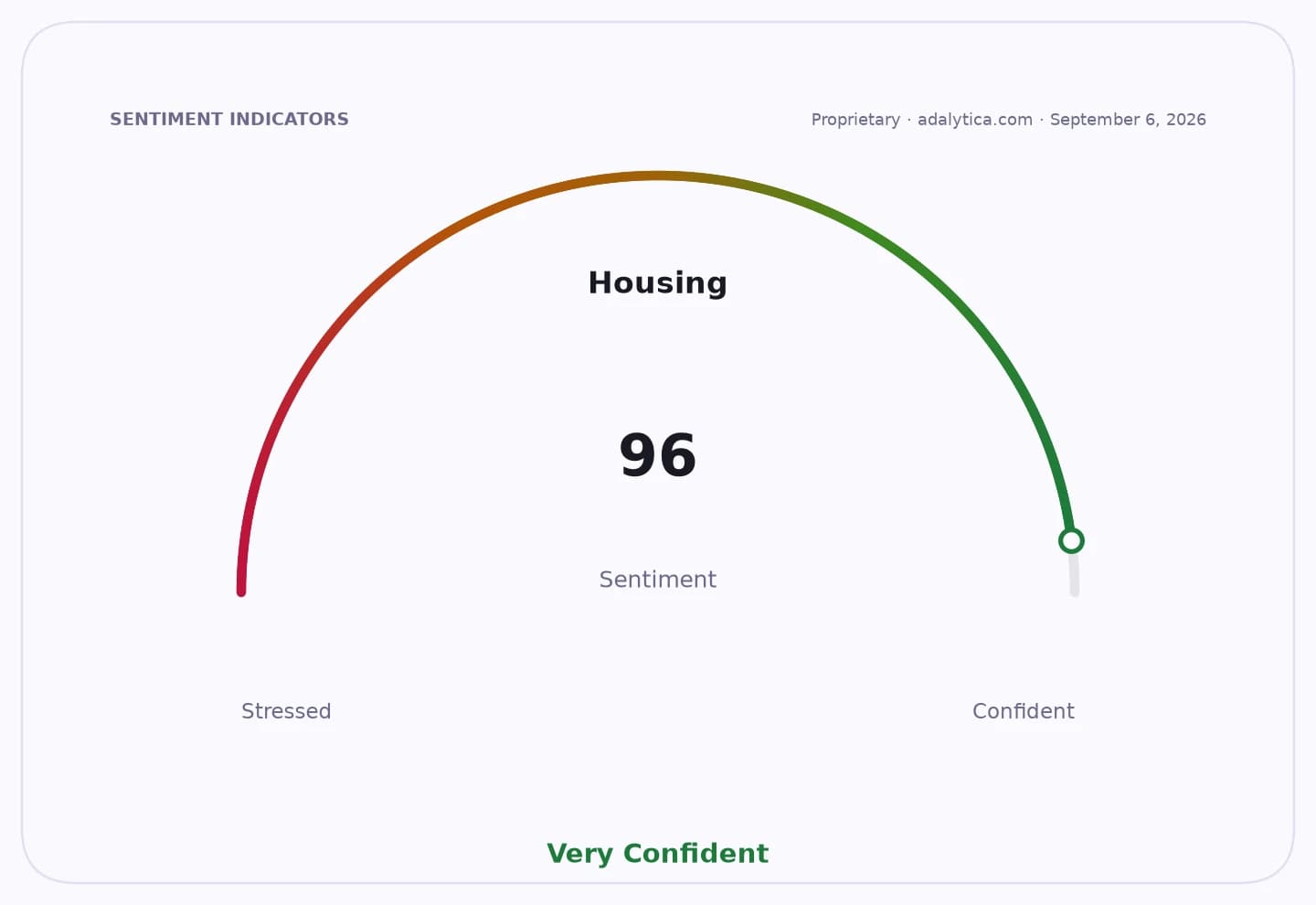
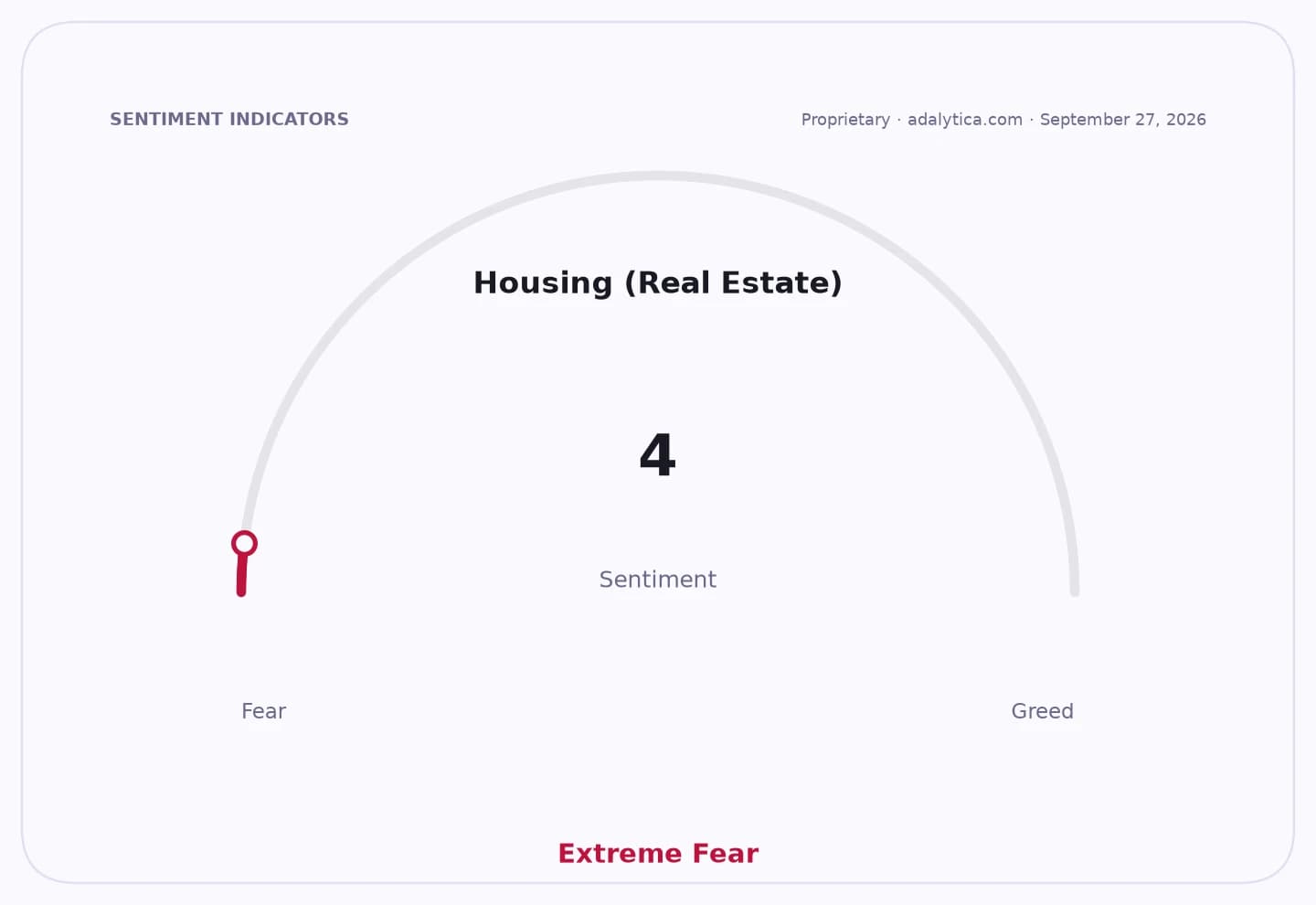
Mortgage rates eased slightly Tuesday, but the move is too small to change the central investment story: borrowing costs are still high enough to choke off affordability, suppress refinancing and keep the U.S. housing market from normalizing.
U.S. Mortgage Rates Ease as Housing Stays Pressured
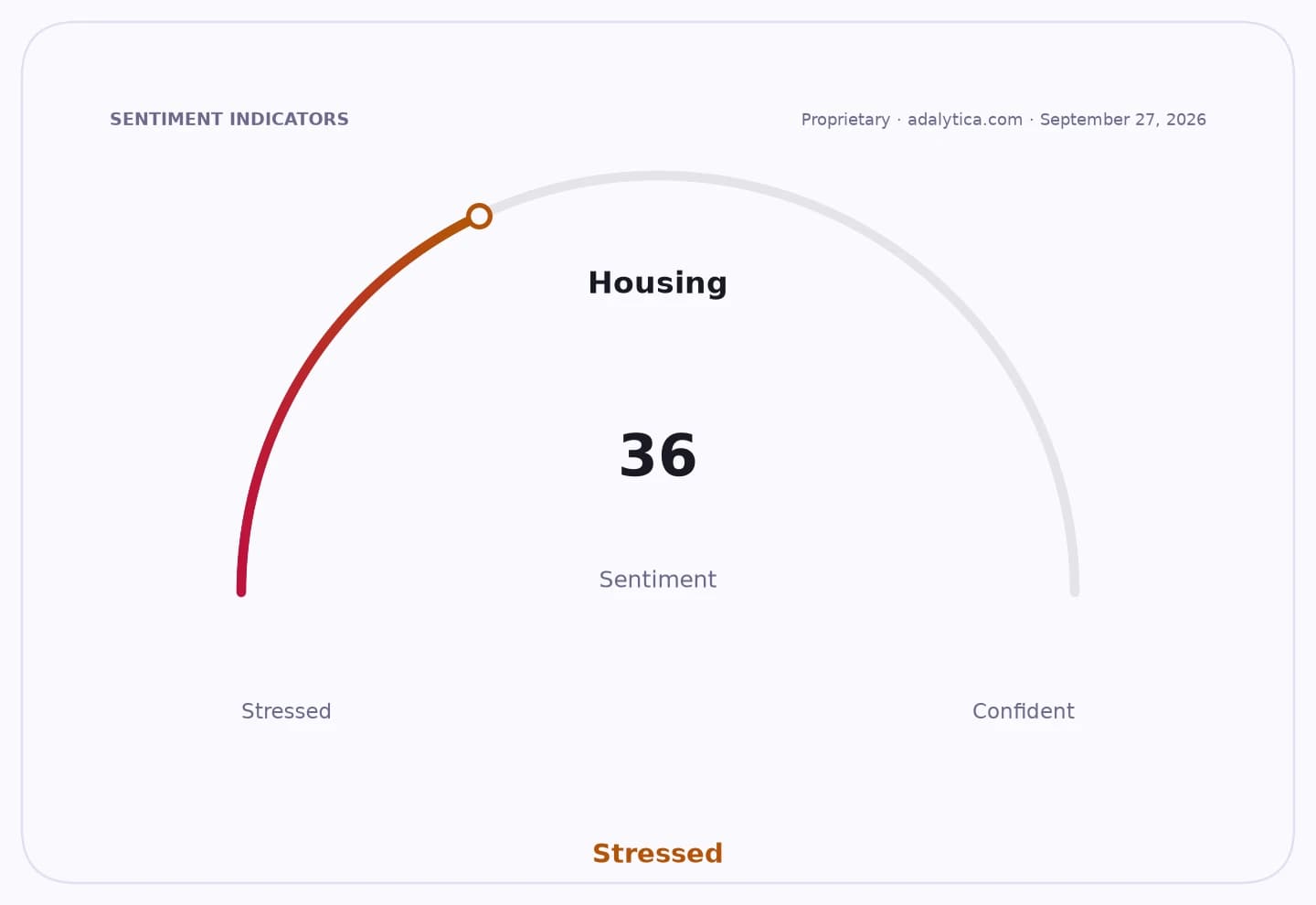
According to Zillow lender data, the average 30-year fixed mortgage rate fell 1 basis point to 7.03%, while the 15-year fixed dropped 6 basis points to 6.50% and the 5/1 ARM declined 10 basis points to 6.94%. Refinance rates remain even more punitive, with the 30-year refinance average at 7.10%, a level that keeps most borrowers trapped in low-rate loans originated earlier in the cycle.
Sentiment IndicatorsⓘProprietary · adalytica.com · September 27, 2026
This is a snapshot — live sentiment, awareness and momentum for 130+ markets update continuously in the dashboard.Open AlphaPulse
That matters because housing is still one of the most rate-sensitive parts of the U.S. economy. A 7%-plus 30-year mortgage keeps monthly payments elevated, crimps move-up demand and weakens transaction volumes just as builders, lenders and real-estate platforms need a cleaner rebound. The latest data on housing starts point to a market that is still struggling for traction, with August starts near 1.28 million annualized — hardly the backdrop for a broad recovery in housing activity.
The economic fallout is bigger than the headline move suggests. High mortgage rates slow existing-home turnover, delay home purchases, and pressure related spending on furniture, appliances and renovations. They also keep demand uneven across the mortgage complex, where originators and servicers benefit from spread opportunities but face a weak refinance pipeline. For investors, that creates a clear divide: companies tied to origination volume and housing turnover remain under pressure, while those that earn through servicing or by owning mortgage-related assets can still find selective support.
DGS10 vs MORTGAGE30US — macro contextadalytica.com
Explore this data interactively — full history, time series and cross-market comparisons.Open AlphaPulse
That split shows up in public housing and mortgage names. Rocket Companies, United Wholesale Mortgage and Annaly Capital Management all trade with heavy sensitivity to rate direction and refinancing activity, while the big homebuilders continue to battle an affordability ceiling that has not broken. Zillow’s own data underline the problem: even the 15-year fixed rate is still 6.50%, a level that keeps many would-be buyers on the sidelines instead of trading up.
Adalytica’s US Treasury Bonds trade signal shows greed around Treasuries but only neutral sentiment on bond pricing, a reminder that the market is still leaning toward eventually lower yields — not a rapid relief rally in housing finance. Until the 10-year yield falls decisively and mortgage spreads narrow, the industry is stuck in a high-rate holding pattern.
For investors, the message is straightforward: this is not a housing breakout, it is a filtering process. Stay cautious on rate-dependent home sales and refinance-sensitive lenders, and look for the strongest servicers, balance-sheet lenders and infrastructure-style housing beneficiaries that can endure a prolonged period of 7% mortgages.
| Entity | Gains | Losses |
|---|---|---|
| Mortgage servicers | ▲Steady fee income | ▼Rate-cut upside limited |
| Homebuyers | ▲Slightly lower quotes | ▼Affordability still poor |
| Homebuilders | ▲Selective demand holds | ▼Traffic and closings stay weak |
| Refi-sensitive lenders | ▲Niche opportunities | ▼Refinance volumes remain depressed |