Many homeowners and investors are being pushed to sell property after promotional mortgage periods end and floating loan costs jump sharply, exposing how a prolonged rate shock is turning housing from a store of wealth into a liquidity problem.
Vietnam Homeowners Face Higher Floating Mortgage Costs
The immediate economic significance is not just higher monthly payments. It is the way those payments are forcing distressed exits, deepening price cuts in secondary housing and slowing transactions across an already weak market. In Vietnam’s major cities, borrowers who locked in low introductory rates are now facing floating mortgage costs of 11.6% to 15% a year, a jump large enough to overwhelm household budgets and investment cash flow.
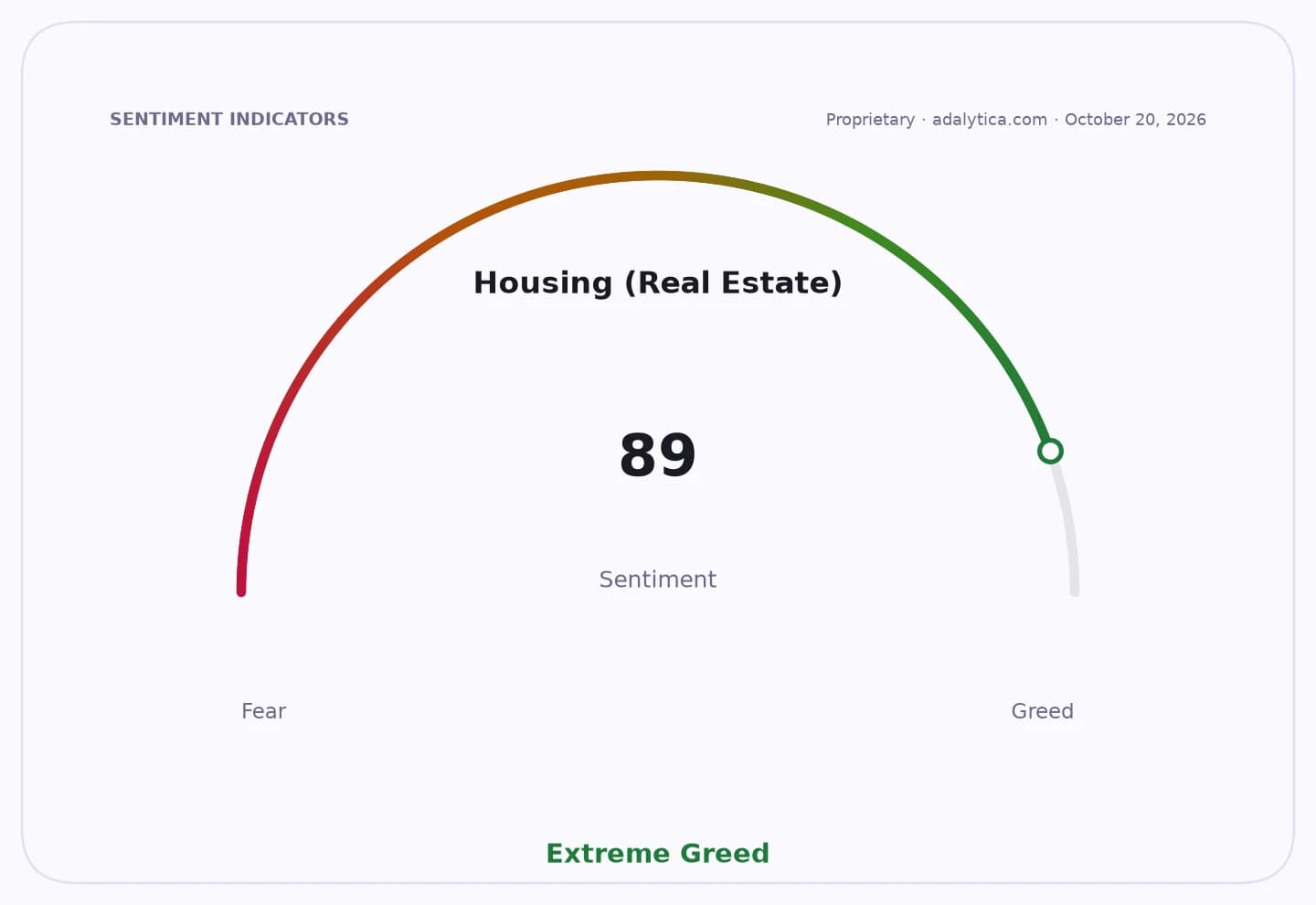
Sentiment IndicatorsⓘProprietary · adalytica.com · October 20, 2026
This is a snapshot — live sentiment, awareness and momentum for 130+ markets update continuously in the dashboard.Open AlphaPulse
One couple in Ho Chi Minh City said their monthly housing payment rose from about 24 million-25 million dong to 35 million dong after a two-year subsidy expired, leaving them with little room to save and forcing a sale. Another borrower said the interest bill alone on a 6 billion dong loan climbed to about 58 million dong a month once the promotional rate ended, pushing the family to list a 12 billion dong apartment and move to a cheaper home. These are not isolated cases so much as a pattern: borrowers who stretched for larger homes or leveraged investment properties are running into the same reset.
That matters for the broader economy because housing carries through to consumer spending, bank credit quality and construction activity. When households devote most of their income to debt service, discretionary spending falls. When owners sell under pressure, secondary-market prices soften. And when buyers see floating rates reset sharply higher, demand weakens further. Knight Frank said home purchase demand in the first nine months of the year fell 50% to 60% from a year earlier, underscoring how high financing costs are freezing activity.
The pricing damage is already visible. DXS-FERI found typical discounted mortgage rates of 9.8% to 11.5% in the first year before floating up to 13% to 16%, while DKRA Consulting said fixed rates over 12 to 24 months were running close to 11% to 12% and could later rise to 14% to 16%. Agents in Ho Chi Minh City said sellers are increasingly cutting asking prices by 15% to 20% to move stock, with some listing assets 30% to 40% below expectations to secure quick sales. Secondary home prices have fallen an average 10% to 15%, according to the reports cited in the story.
For investors, the implication is that leverage is now the weak point in a market that had previously been supported by easy financing and long repayment horizons. The risk is especially acute for speculative buyers holding properties that are not yet cash-flowing, because they must either refinance, inject more equity or sell at a discount. In that sense, the market is favoring cash buyers and well-capitalized owners while punishing leveraged flippers and households that bought at the top of the cycle.
The dynamic also echoes the wider global housing backdrop, where higher mortgage rates are suppressing turnover and affordability. In the U.S., mortgage rates near 7.5% have helped keep existing-home sales at multi-decade lows, while listed U.S. housing names such as Zillow, Rocket Companies and Opendoor have shown how sensitive the sector remains to rate shifts and housing liquidity. In Vietnam, the same mechanism is now working through a different channel: not just weaker demand, but forced supply from borrowers who can no longer carry floating debt.
The next phase will depend on whether rates ease enough to relieve refinancing pressure or whether more borrowers are forced to sell before that happens. For now, the clearest message for homeowners and investors is that the financing structure matters as much as the property price. If monthly debt service outgrows income growth, the asset can quickly become a liability.
| Entity | Gains | Losses |
|---|---|---|
| Cash buyers | ▲Better bargaining power | ▼Fewer discounted opportunities if rates fall |
| Leveraged homeowners | ▲Debt relief after sale | ▼Lower sale prices and lost equity |
| Leveraged property investors | ▲N/A | ▼Higher carrying costs and forced exits |
| Secondary housing market | ▲More supply for buyers | ▼Weaker prices and slower turnover |