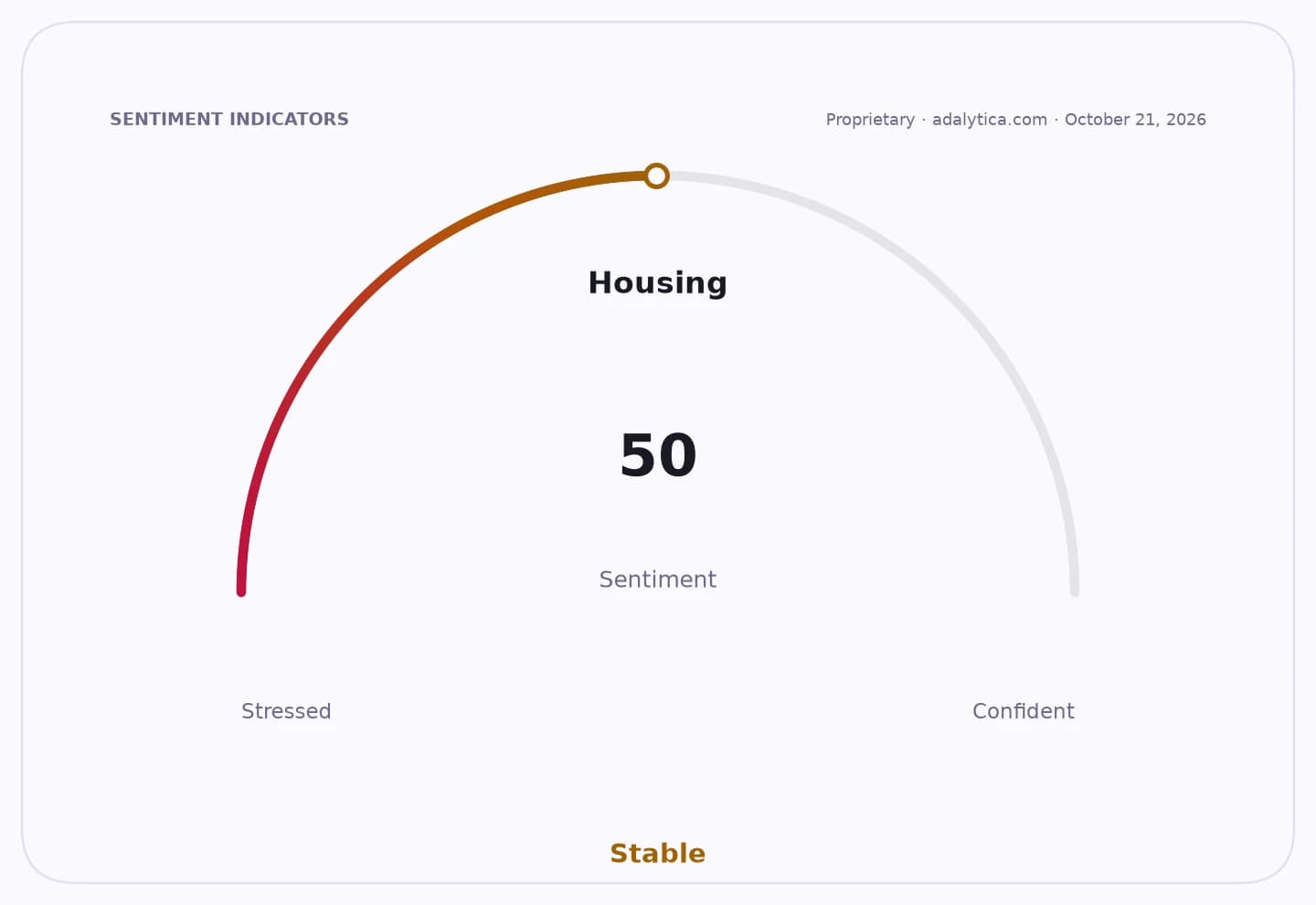
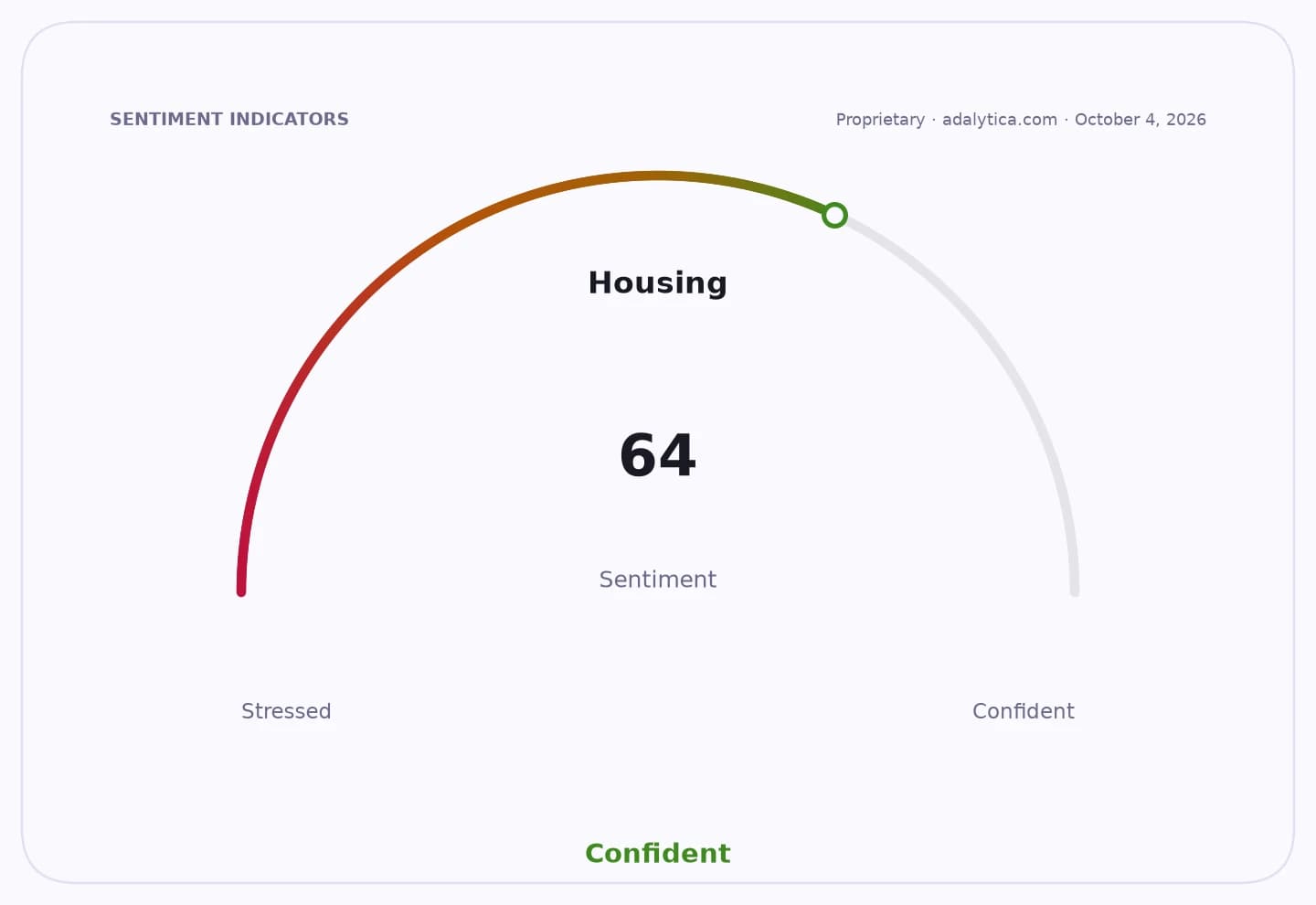
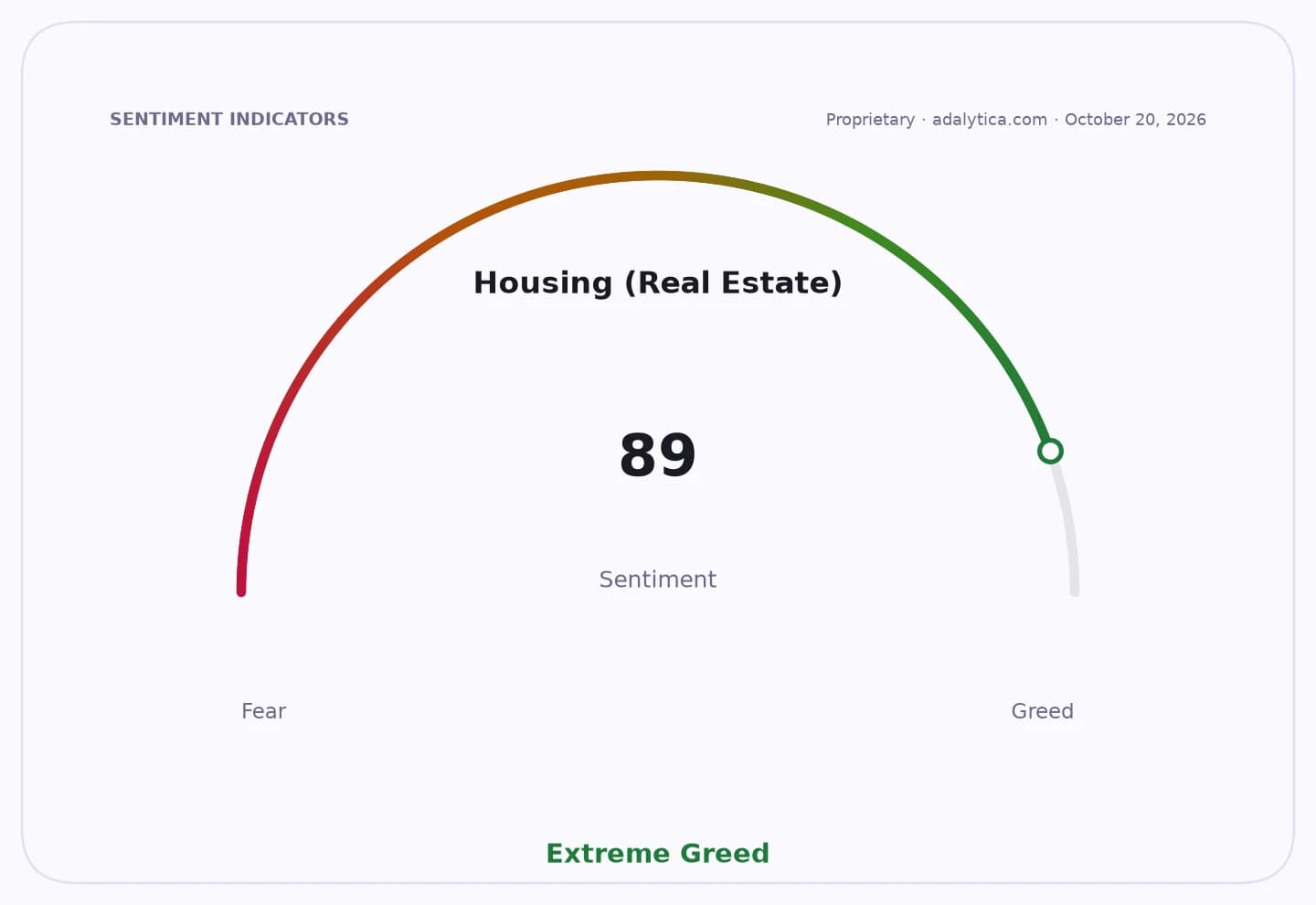
High mortgage rates are forcing U.S. home sellers to do what the market no longer allows them to do on price alone: buy down borrowers’ monthly payments.
U.S. home sellers use mortgage buydowns as rates rise
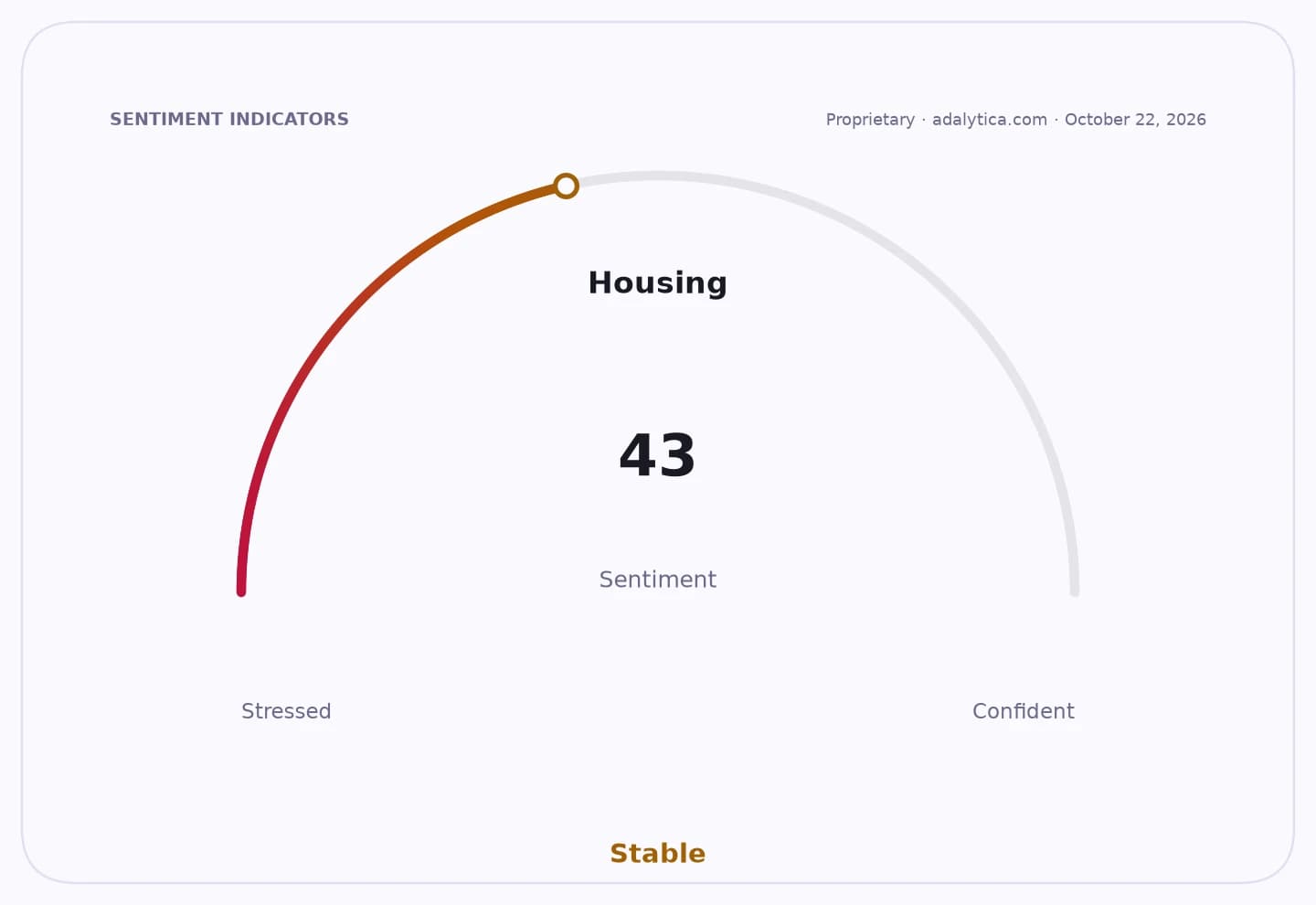
That matters because affordability, not inventory, is now the binding constraint in housing. When sellers and builders have to subsidize financing just to get deals done, it is a sign that the market has moved from a pricing cycle to a payments cycle — and that usually means slower turnover, thinner margins and a longer stretch of subdued housing activity.
Sentiment IndicatorsⓘProprietary · adalytica.com · October 22, 2026
This is a snapshot — live sentiment, awareness and momentum for 130+ markets update continuously in the dashboard.Open AlphaPulse
The clearest evidence is showing up in corporate filings. D.R. Horton said home sales gross margin fell as it leaned on incentives, including mortgage interest rate buydowns, to support affordability. Lennar has also said higher incentives are weighing on near-term margin even as it tries to preserve sales pace. The message is consistent across the sector: buyers are there, but only at a price structure that fits today’s mortgage math.
That is why the rate backdrop matters so much. U.S. mortgage rates have been hovering near a one-year high, keeping monthly payments elevated even as home prices cool in some markets. In that environment, sellers can no longer rely on modest price cuts to clear inventory. Instead, they are effectively financing demand themselves, handing buyers temporary relief in exchange for a closed sale.
For investors, the shift creates clear winners and losers. Homebuilders with strong balance sheets and scale can use buydowns to defend volume, but it comes at the cost of margin compression. Mortgage lenders and housing platforms that depend on transaction volume, including Zillow, face a tougher setup if high rates continue to suppress existing-home turnover. The latest trading action in Zillow underscores the strain: the stock has swung sharply lower over the past year even as technical readings suggest volatility remains high.
The larger investment lesson is that high rates are not just slowing the housing market — they are changing how the industry markets and finances homes. The market underestimates how long these incentives can persist if mortgage rates stay elevated. Until rates ease meaningfully, expect more buydowns, more margin pressure and a housing recovery that remains stuck in neutral.
For investors, that means favoring the picks-and-shovels and the best-capitalized builders over the rate-sensitive middle of the housing stack. If mortgage costs stay pinned near current levels, affordability support will remain a competitive weapon — and a margin tax.
| Entity | Gains | Losses |
|---|---|---|
| Home sellers/builders | ▲More closings | ▼Lower margins |
| Homebuyers | ▲Lower monthly payments | ▼Less negotiating power |
| Mortgage lenders | ▲Some refinance/loan activity | ▼Slower purchase volume |
| Zillow and housing platforms | ▲Traffic from rate-shopping | ▼Weaker transaction volume |