Home sales across Lake Houston, Humble and Kingwood fell by nearly 20 in September from a year earlier, underscoring how elevated borrowing costs are still muting demand even as some neighborhoods hold prices and faster-moving listings.
Lake Houston Home Sales Fall as Rates Stay High

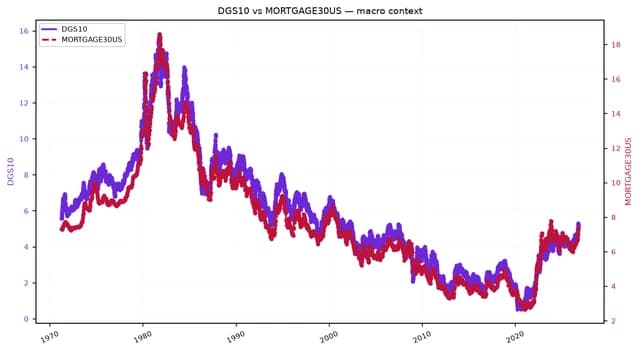
The slowdown matters because residential turnover is one of the cleanest gauges of local economic momentum. With 30-year mortgage rates at 7.4% in early October and the Federal Reserve's benchmark rate still above 5%, affordability remains stretched for move-up buyers and first-time purchasers alike. That is keeping transaction volumes under pressure in a market that has been relatively resilient on pricing but vulnerable on liquidity.
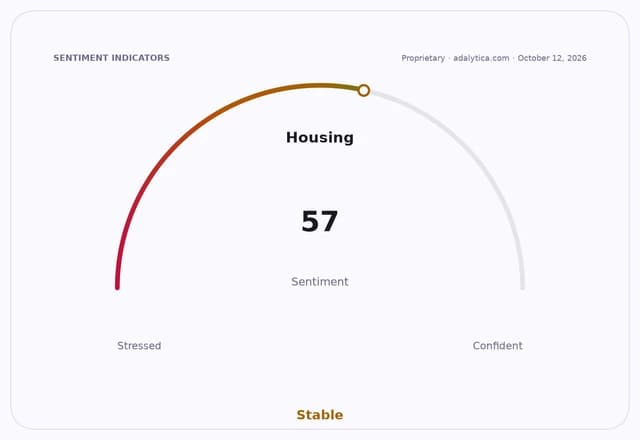
Sentiment IndicatorsⓘProprietary · adalytica.com · October 12, 2026
This is a snapshot — live sentiment, awareness and momentum for 130+ markets update continuously in the dashboard.Open AlphaPulse
The data show a split market rather than a broad collapse. Median prices rose in ZIP codes 77338, 77339 and 77346, while homes sold faster on average in 77338, 77346 and 77396. More than 70% of sales landed in the $200,000 to $399,999 range, pointing to a market still anchored by mid-priced inventory and by buyers who can qualify despite high financing costs.
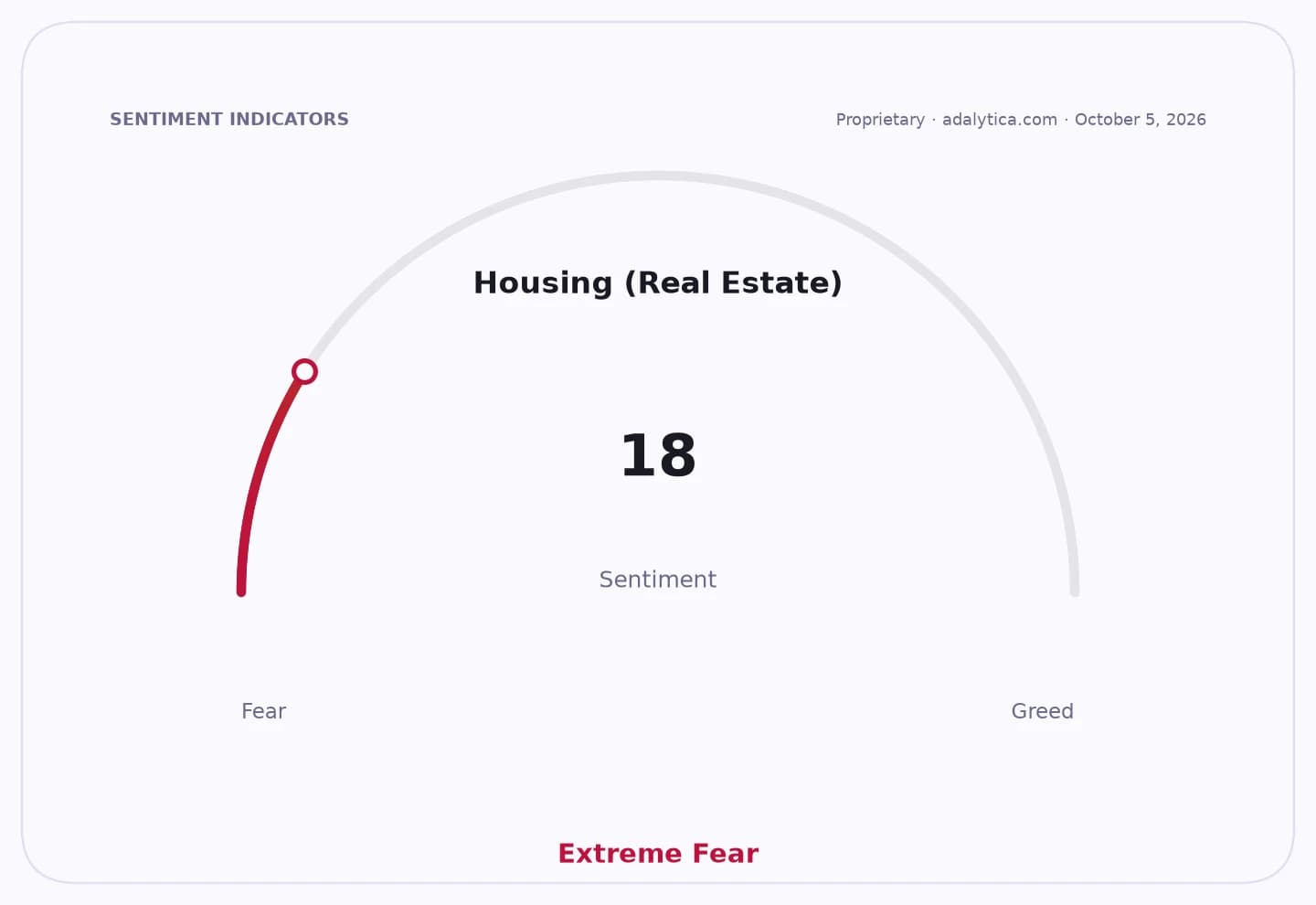
That pattern is consistent with a housing sector that is not frozen, but selective. The SPDR S&P Homebuilders ETF, which tracks builders and closely tied housing sentiment, has been sliding, and its recent technical profile has weakened, with the fund below both its 50-day and 200-day moving averages and its RSI sinking into oversold territory. At the same time, Adalytica's Housing Fear & Greed Index shows "Extreme Greed" at 93, suggesting sentiment can turn quickly when rates ease or inventory improves, but the underlying market remains fragile in the face of financing pressure.
For investors, the message is mixed. Homebuilders and mortgage-sensitive stocks still have support from chronic housing undersupply and the concentration of demand in affordable price bands. But as September's Lake Houston figures show, higher mortgage costs are still suppressing volumes even when prices stay firm, which can limit earnings leverage for builders, brokers and lenders.
If borrowing costs remain near current levels, the market is likely to keep favoring well-priced homes in established suburbs while sidelining higher-end listings and discretionary movers. A sustained drop in mortgage rates would probably be the clearest catalyst for a broader pickup in sales activity, but until then, Lake Houston looks more like a market balancing than a market accelerating.
| Entity | Gains | Losses |
|---|---|---|
| Mid-priced home sellers | ▲Firmer pricing | ▼Lower transaction volume |
| Buyers with strong credit | ▲Access to tighter inventory | ▼High monthly payments |
| Homebuilders and brokers | ▲Selective demand in affordable bands | ▼Slower turnover |
| Mortgage-rate relief | ▲Higher sales activity | ▼Current affordability pressure |