US mortgage rates have climbed to a three-year high, and the market is finally feeling the full weight of that move: fewer buyers, weaker turnover and mounting pressure on homebuilders that have been leaning on discounts and mortgage-rate buydowns to keep sales moving.
US mortgage rates hit three-year high

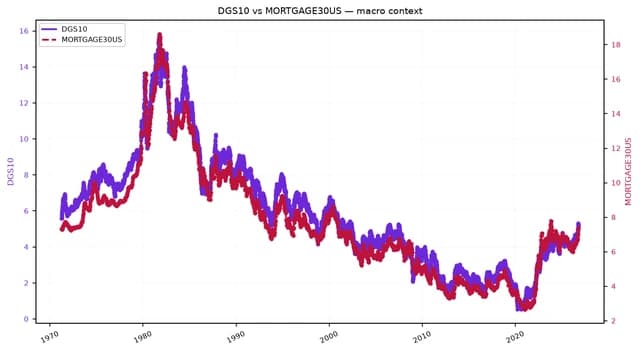
Freddie Mac said Thursday that the average 30-year fixed mortgage rate rose to 7.4% from 7.28% a week earlier, the highest since November 2023 and more than a full percentage point above the 6.3% level seen a year ago. That may sound like a modest change, but in housing it is a blunt affordability shock, especially when home prices are still rising.
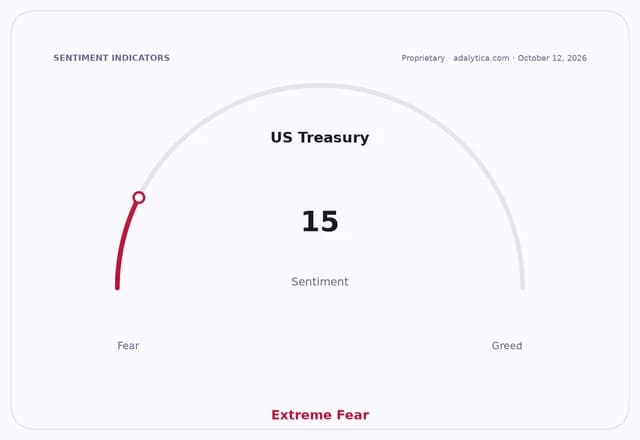
Sentiment IndicatorsⓘProprietary · adalytica.com · October 12, 2026
This is a snapshot — live sentiment, awareness and momentum for 130+ markets update continuously in the dashboard.Open AlphaPulse
The Federal Housing Finance Agency said national home prices were up 2.6% in July from a year earlier, extending the squeeze on would-be buyers who are already facing the most expensive borrowing costs in years. Zillow now expects existing-home sales to fall 3.5% year on year in the fourth quarter, while the National Association of Realtors said August existing-home sales were already down 1.2% from a year earlier.
This is the core investment story: housing is not just slowing, it is being structurally repriced by the combination of higher borrowing costs, sticky home values and rising ownership expenses. Oxford Economics estimates that 2.5 million to 3 million people have been priced out of the market, a reminder that the problem is no longer cyclical noise but a hard affordability ceiling.
The damage is spreading beyond buyers. Sellers are pulling back, with new listings down 3.9% in September from August, according to Zillow, because many homeowners are unwilling to trade away older ultra-low mortgage rates for today’s financing costs. That lock-in effect keeps supply tight, but it also reduces transaction volume — a bad mix for brokers, lenders, title companies and anyone paid on turnover.
The pressure is also visible in homebuilder behavior. Public builders have already been warning that affordability is forcing them to use incentives and mortgage-rate buydowns to move inventory, which squeezes margins even when unit volumes hold up. That is why the latest rate spike matters for stocks: the market can tolerate slower growth, but not a prolonged squeeze on both volumes and profitability.
Bond markets are reinforcing the message. The 10-year Treasury yield climbed to 5.36%, its highest since 2002, adding more pressure to mortgage pricing and signaling investors are demanding more compensation for inflation risk. In this setup, the path to relief runs through lower inflation and softer yields, not a quick fix from housing itself.
For investors, that creates a clear split. Homebuilders with scale, land discipline and the ability to use incentives flexibly can still outperform, but the broader housing complex faces a tougher demand backdrop. Exchange-traded funds such as ITB and XHB have already been under pressure, while mortgage-backed securities funds like MBB are being buffeted by the same higher-rate regime that is cooling demand.
The bigger thesis is that housing is becoming a late-cycle affordability story, not a simple supply story. Until rates ease materially, the market underestimates how long first-time buyers may stay sidelined, how reluctant existing owners will be to list, and how much pricing power will shift from sellers to lenders and builders with the balance sheets to subsidize demand.
For now, the message is straightforward: elevated mortgage rates are not just slowing housing activity, they are reshaping the winners and losers across the entire residential real estate chain. Investors should favor the strongest builders and the most rate-sensitive finance beneficiaries, while remaining cautious on the wider housing trade until Treasury yields and inflation finally roll over.
| Entity | Gains | Losses |
|---|---|---|
| Homebuilders with scale | ▲Manageable volumes | ▼Margin pressure from incentives |
| First-time buyers | ▲Potential future relief | ▼Current affordability |
| Existing homeowners | ▲Lock-in of low-rate mortgages | ▼Less ability to trade up |
| Housing ETFs (ITB, XHB) | ▲Selective stock picking | ▼Broad sector sentiment |