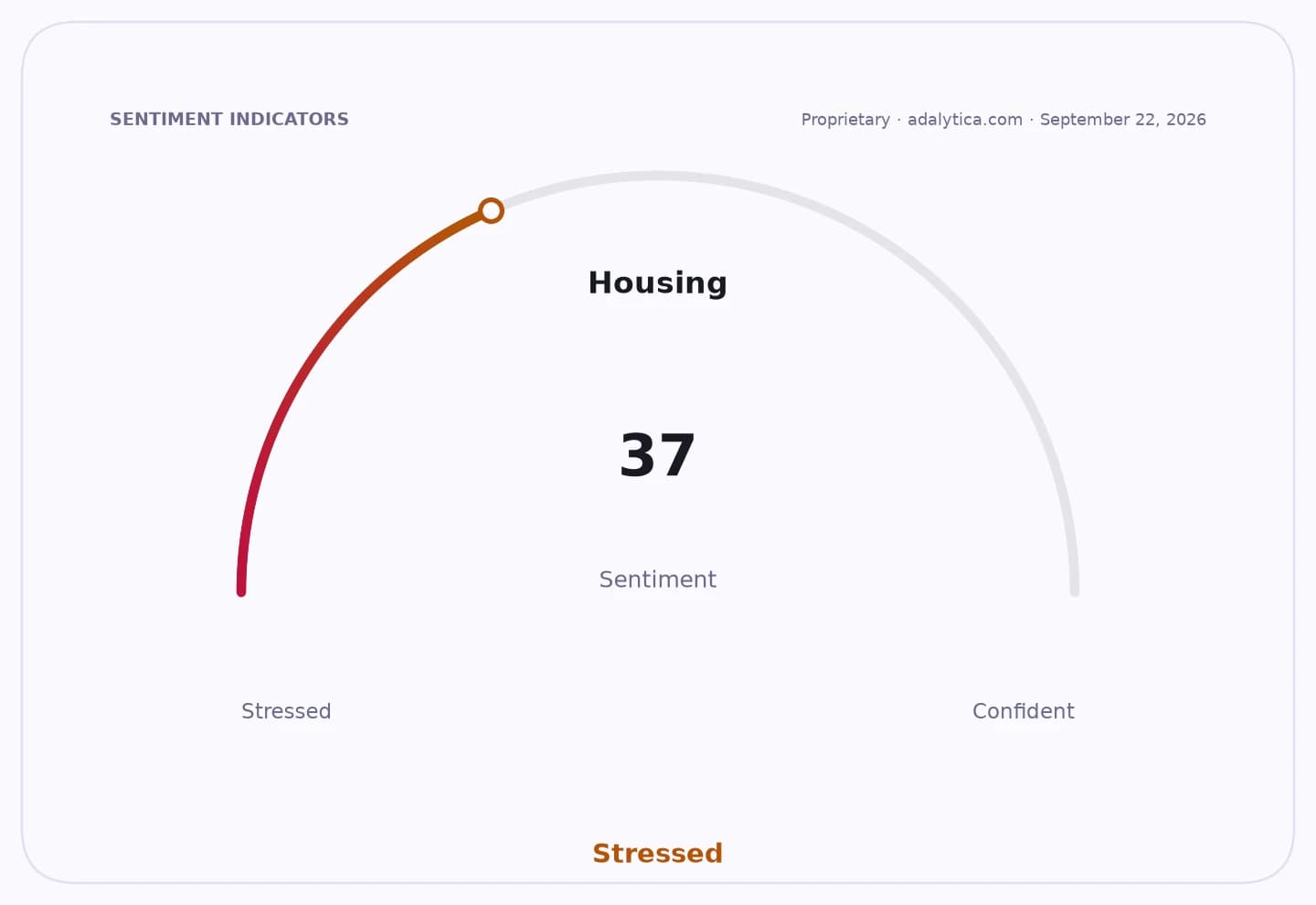
Mortgage rates have surged to a three-year high, pushing the average 30-year fixed loan above 7.5% and deepening the squeeze on U.S. homebuyers already facing record prices and stubborn inflation.
U.S. mortgage rates top 7.5% as yields rise
The jump matters because it lifts monthly payments further out of reach for many households and threatens to slow an already fragile housing market. On Bankrate’s survey, the 30-year fixed rate averaged 7.53% with 0.33 discount and origination points, while the monthly principal and interest payment on a median-priced existing home of $429,100 would run about $2,407 with 20% down — roughly 27% of median family income.
Sentiment IndicatorsⓘProprietary · adalytica.com · October 13, 2026
This is a snapshot — live sentiment, awareness and momentum for 130+ markets update continuously in the dashboard.Open AlphaPulse

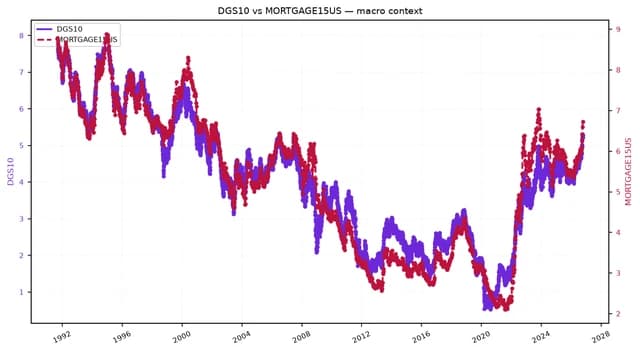
The move tracks a sharp rise in benchmark borrowing costs. The 10-year Treasury yield has climbed to 5.36% from 4.66% in just six weeks, its highest level since April 2002, as investors digest sticky inflation, higher oil prices and a still-restrictive Fed. Housing economists now say a drop below 6% in mortgage rates is unlikely anytime soon, and even a return below 7% looks distant.
That is a direct hit to housing demand. Higher rates, combined with a national median home price that is still rising 1.6% from a year earlier, are likely to keep existing-home sales under pressure and cool activity in formerly hot markets where prices are beginning to soften.
The pain is uneven across the housing complex. Mortgage originators such as Rocket Companies and UWM Holdings face a tougher affordability backdrop that can curb purchase volume, while holders of mortgage servicing rights tend to benefit when higher rates slow refinancing and lengthen loan lives. For borrowers and homebuilders, though, the message is clear: financing costs are moving in the wrong direction faster than incomes.
The latest rate spike also reinforces a global tightening theme, with central banks from the Reserve Bank of Australia to the U.S. Federal Reserve still battling inflation. For investors, the next catalyst is whether Treasury yields stabilize or extend their climb; another leg higher would likely put more pressure on housing stocks, mortgage lenders and rate-sensitive consumer spending.
| Entity | Gains | Losses |
|---|---|---|
| Treasury bears | ▲Higher yields, weaker bond prices | ▼Longer-duration bond holders |
| Mortgage servicing rights holders | ▲More valuable servicing cash flows | ▼Refinancing volumes |
| Homebuyers | ▲None | ▼Higher monthly payments |
| Mortgage originators/homebuilders | ▲None | ▼Lower demand, fewer closings |