Goldman Sachs says America’s housing market will stay stuck through 2027, and that matters because the freeze is now shaping wealth creation, family formation and the next leg of consumer spending.
Goldman sees U.S. housing stuck through 2027
The bank’s economists see existing-home sales at just 3.9 million in 2027, about 26% below 2019 levels, as “lock-in” keeps millions of homeowners tethered to mortgages well below current rates. More than 95% of American mortgage borrowers already pay less than today’s market rate, and 65% are at least 2 percentage points below it, making a move financially painful even if borrowing costs ease from here.
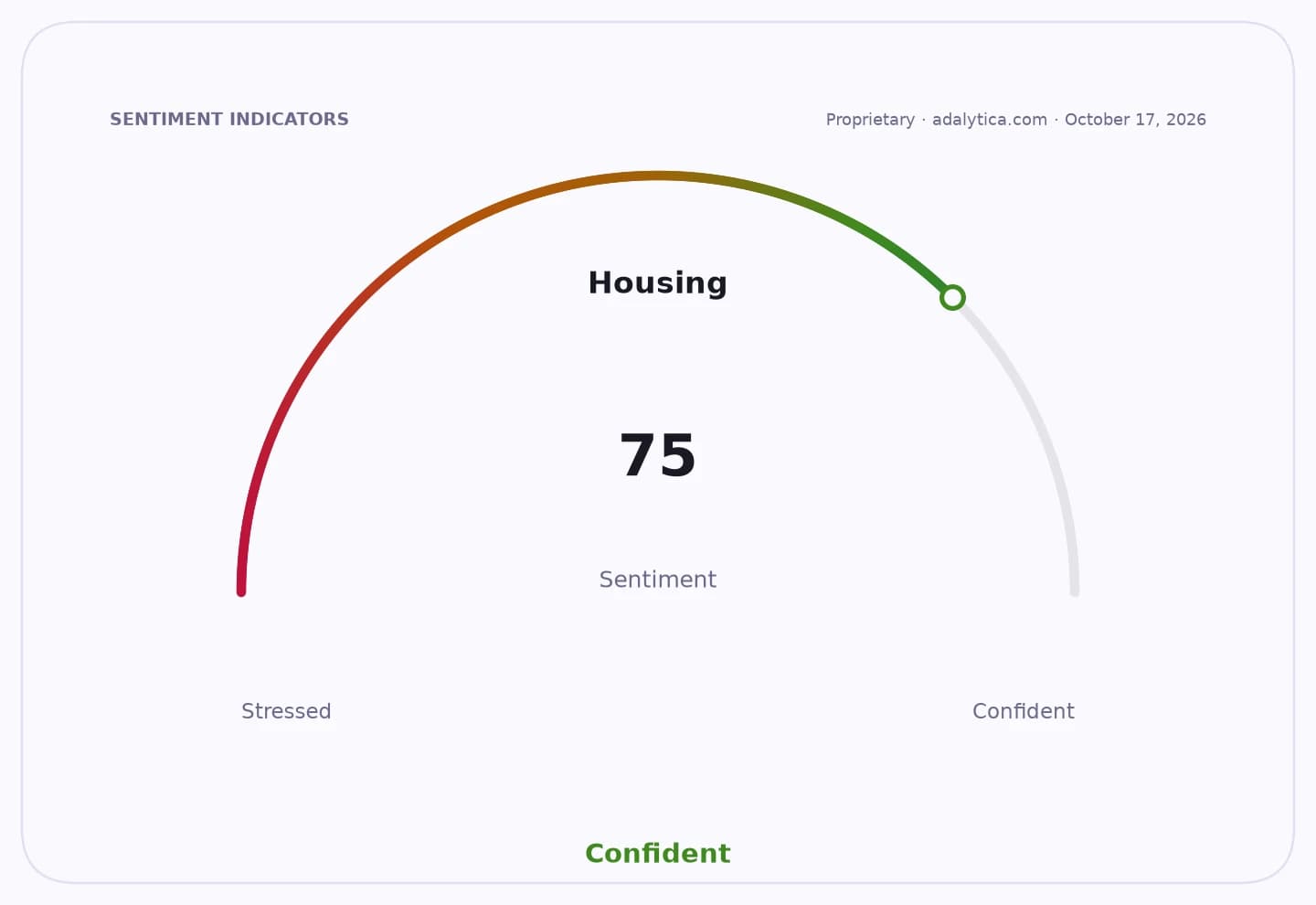
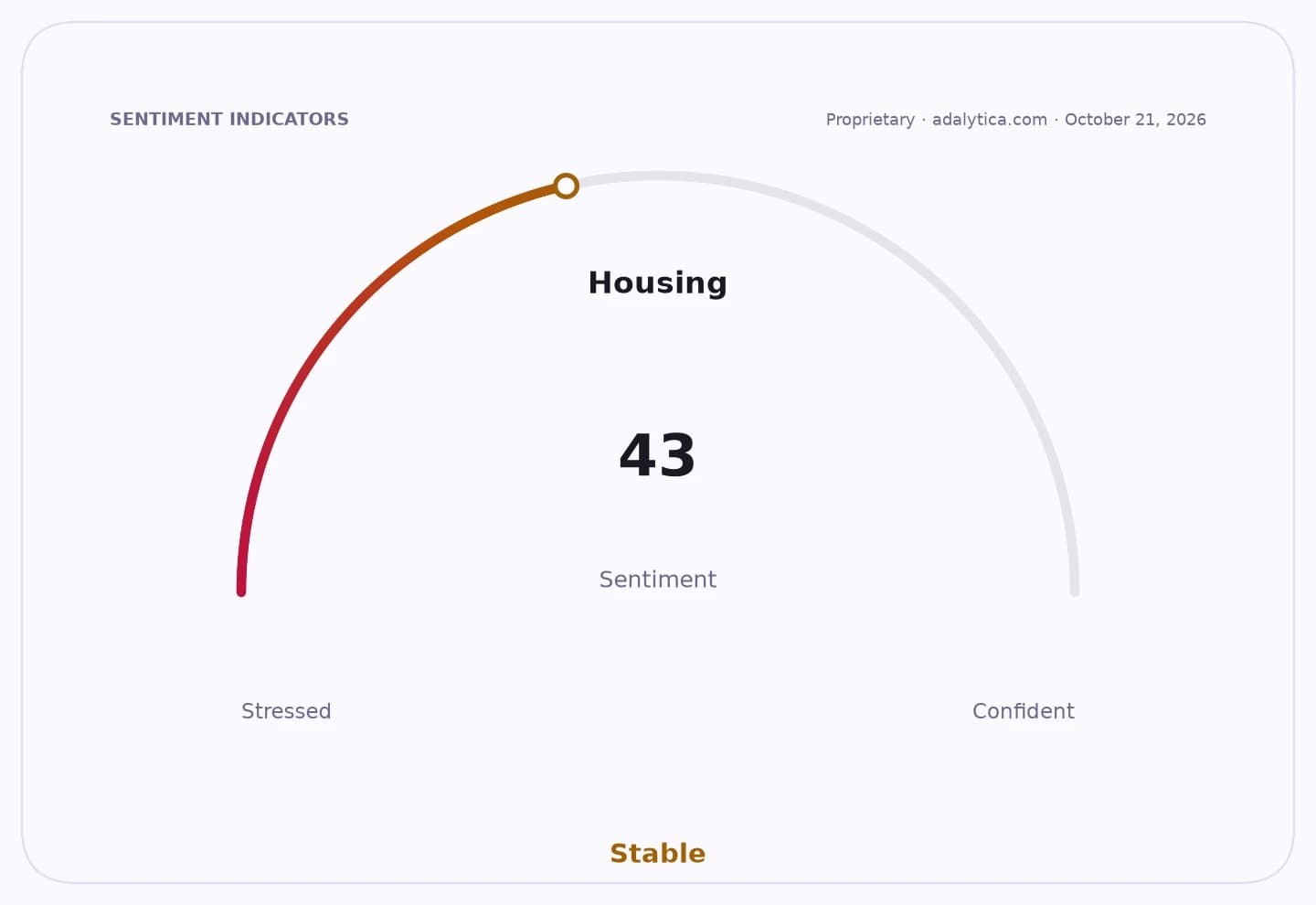
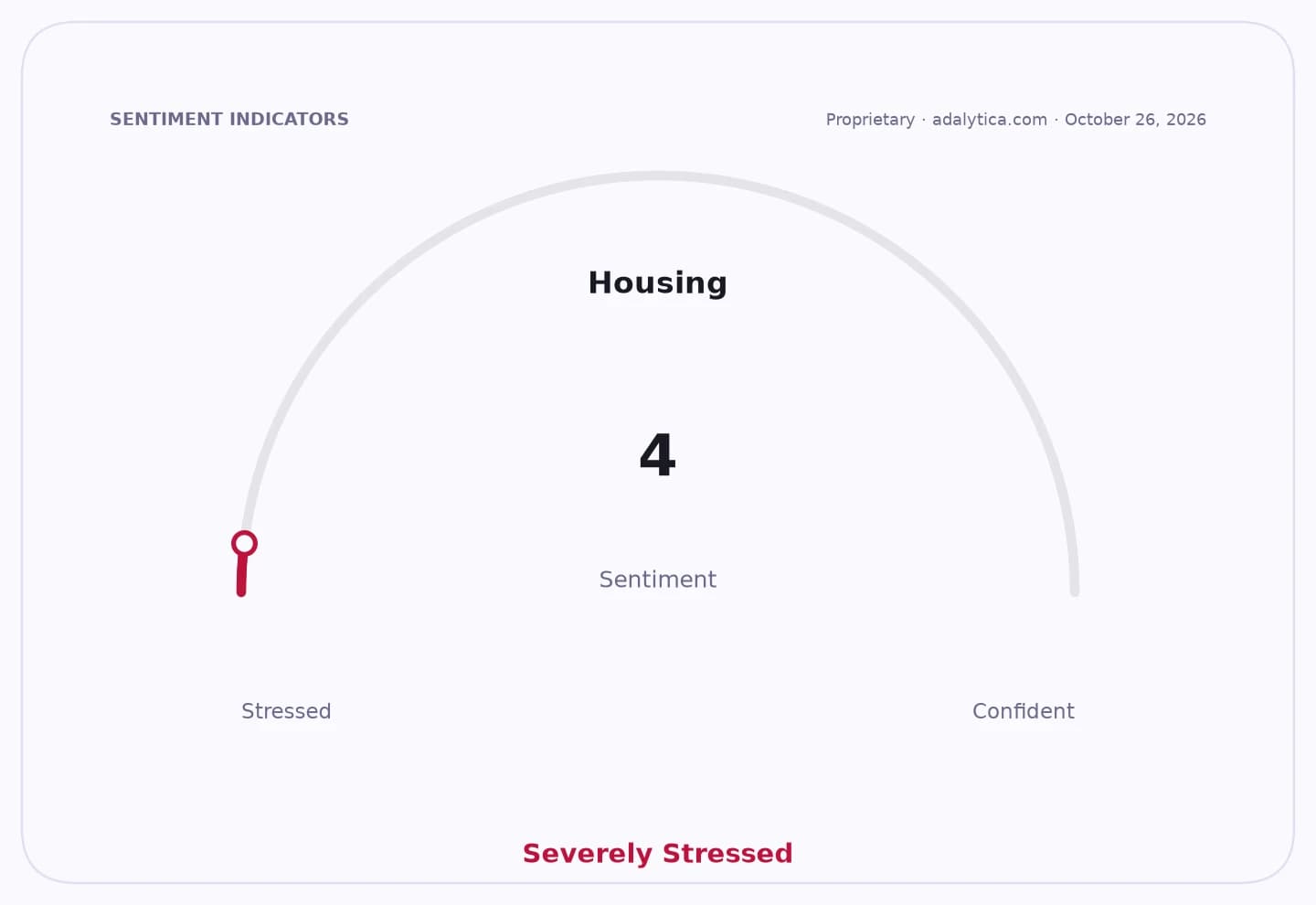
Sentiment IndicatorsⓘProprietary · adalytica.com · October 25, 2026
This is a snapshot — live sentiment, awareness and momentum for 130+ markets update continuously in the dashboard.Open AlphaPulse
That is the real economic punchline: this is no longer just a housing affordability problem, it is a balance-sheet divide. Goldman expects 30-year mortgage rates to slip to 6.4% by the end of 2027, but that still leaves affordability historically stretched after rates climbed to roughly 7.4%, or 140 basis points above their February trough. With prices forecast to rise just 0.8% in 2027 after similarly muted gains in 2025 and 2026, owners are not getting the usual appreciation tailwind, and buyers are not getting meaningful relief.
The market consequence is a two-speed America. Homeowners who refinanced in 2020 and 2021 are sitting on cheap debt and substantial equity, while younger households face high financing costs, thin inventory and rising barriers to entry. Goldman’s call lands squarely on the split inside the millennial cohort: older millennials, now the highest-earning buyers with a median household income of $132,700 in 2024, are turning into move-up owners, while younger millennials are still getting squeezed out. The median first-time homebuyer is now 40, the oldest on record.
HOUST vs CSUSHPINSA — macro contextadalytica.com
Explore this data interactively — full history, time series and cross-market comparisons.Open AlphaPulse
That divide has huge implications for investors. The beneficiaries are the homeowners, move-up buyers, builders with pricing power and long-duration assets tied to rent and shelter inflation. The losers are first-time buyers, rent-sensitive consumers and sectors that depend on household formation accelerating. It also helps explain why homebuilder ETFs have been volatile rather than collapsing outright: builders can still find demand, but only with incentives, smaller lots and tighter inventory management.
The bigger story is that housing is delaying the next American lifecycle step. Research cited in the data links rising housing costs to lower fertility and later parenthood, reinforcing a broader macro pattern: fewer moves, later family formation and slower household creation. That matters because it restrains demand not just for homes, but for furniture, appliances, autos and a wide swath of consumer goods that depend on new household starts.
For investors, the trade is not to bet on a quick housing rebound. It is to position for a prolonged freeze that keeps equity concentrated with incumbents and extends the runway for rental demand, housing infrastructure, and selective builders with the best land and financing discipline. If Goldman is right, the most important housing bull market through 2027 may be in companies serving the households that still can’t buy.
| Entity | Gains | Losses |
|---|---|---|
| Existing homeowners | ▲Cheap mortgage lock-in | ▼Limited mobility |
| First-time buyers | ▲Slower price gains | ▼High rates, low inventory |
| Homebuilders | ▲Persistent demand base | ▼Incentives and margin pressure |
| Landlords / rental REITs | ▲Strong rental demand | ▼Slower transition to ownership |