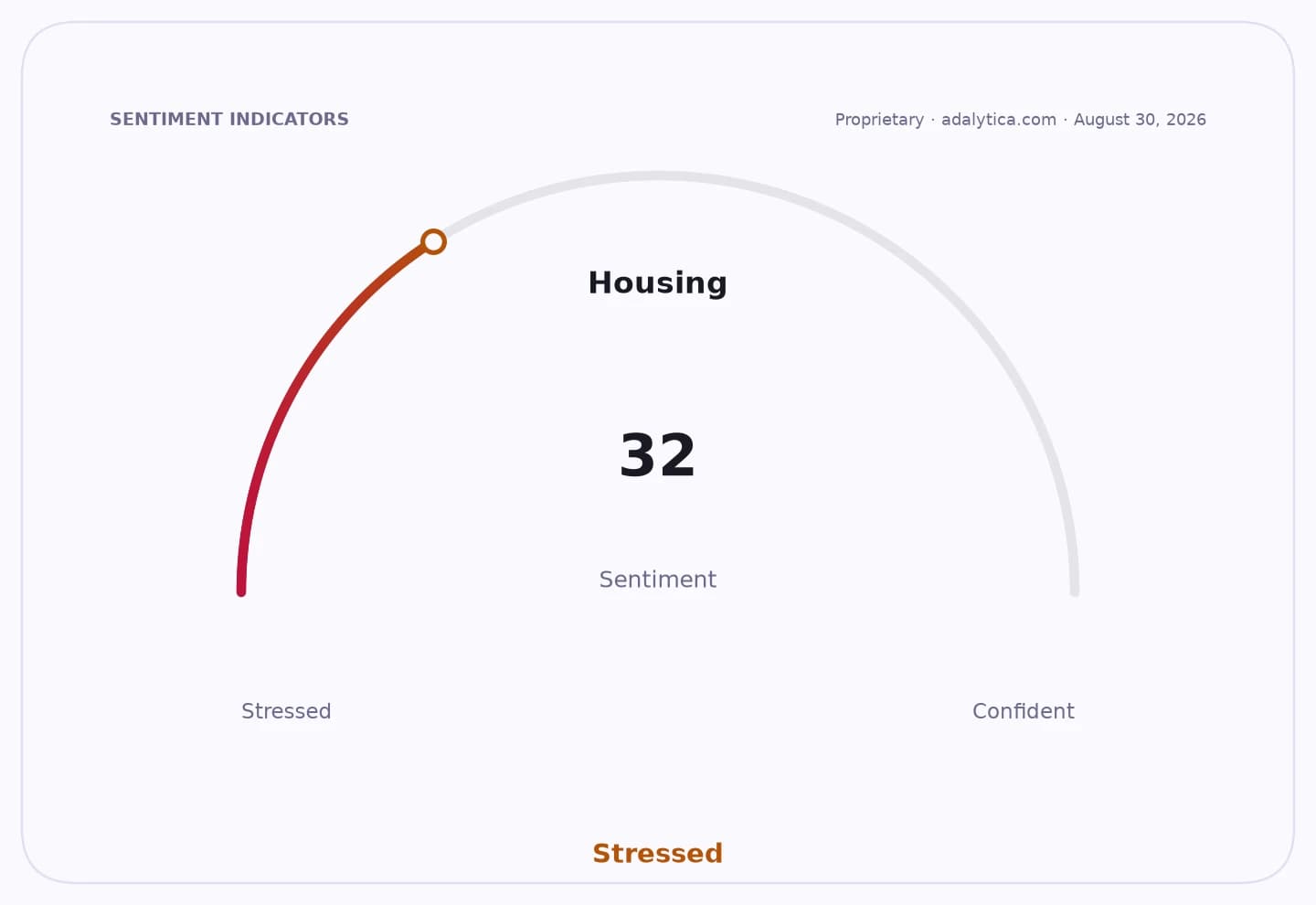
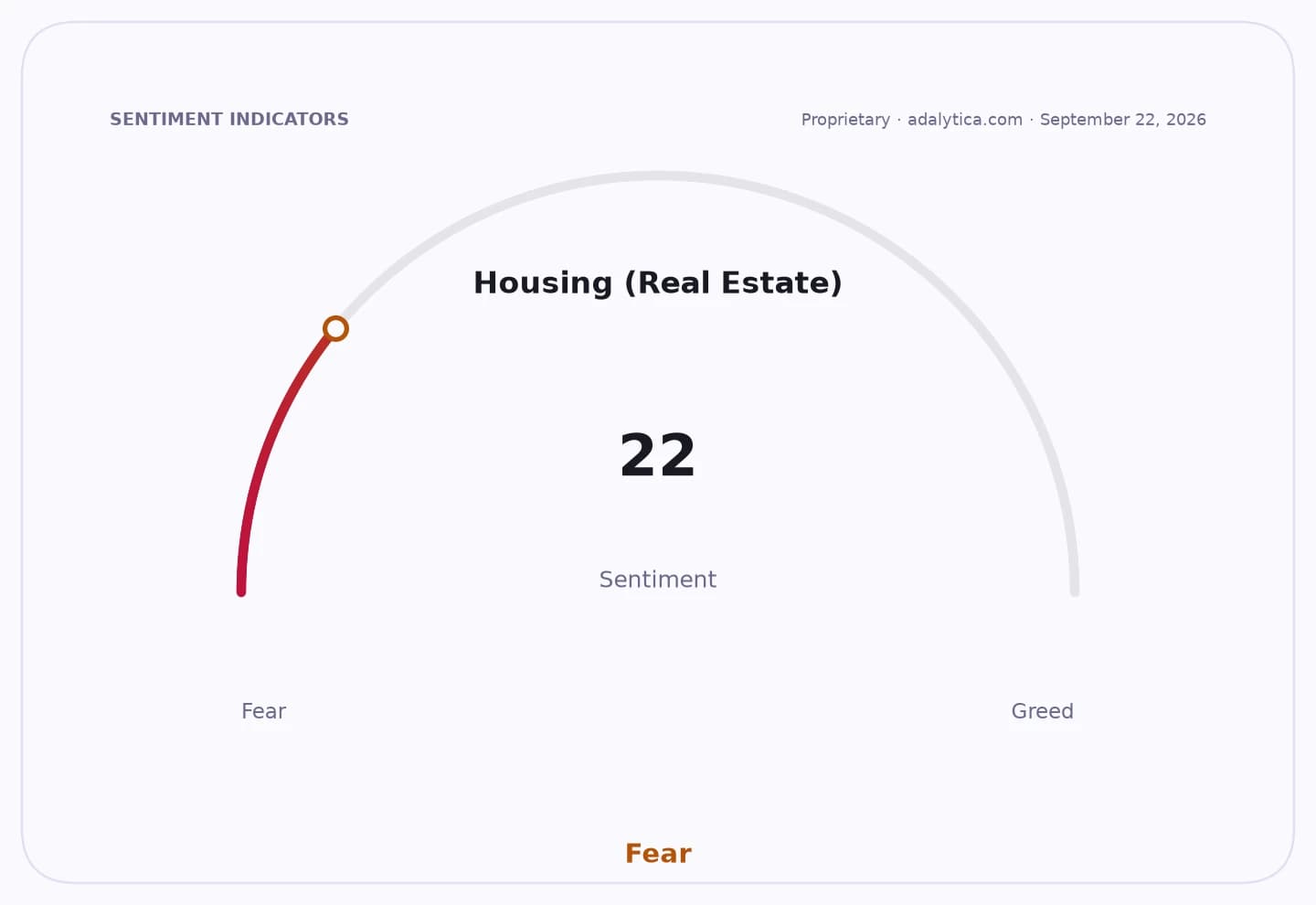
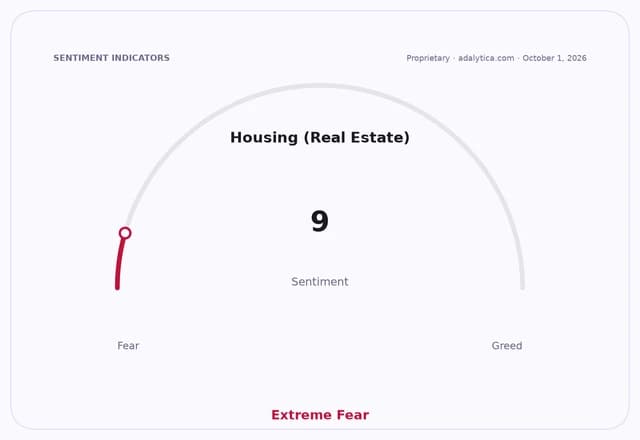
The U.S. housing market is sliding deeper into a shortage-driven affordability crisis, and that is showing up in both builder sentiment and homebuilder stocks. With the Adalytica Housing Fear & Greed Index for XHB at 9, or “Extreme Fear,” investors are clearly pricing in more pain for a sector already struggling with weak demand, strained supply chains and a shortage of construction workers.
XHB Falls on Housing Shortage and Weak Momentum

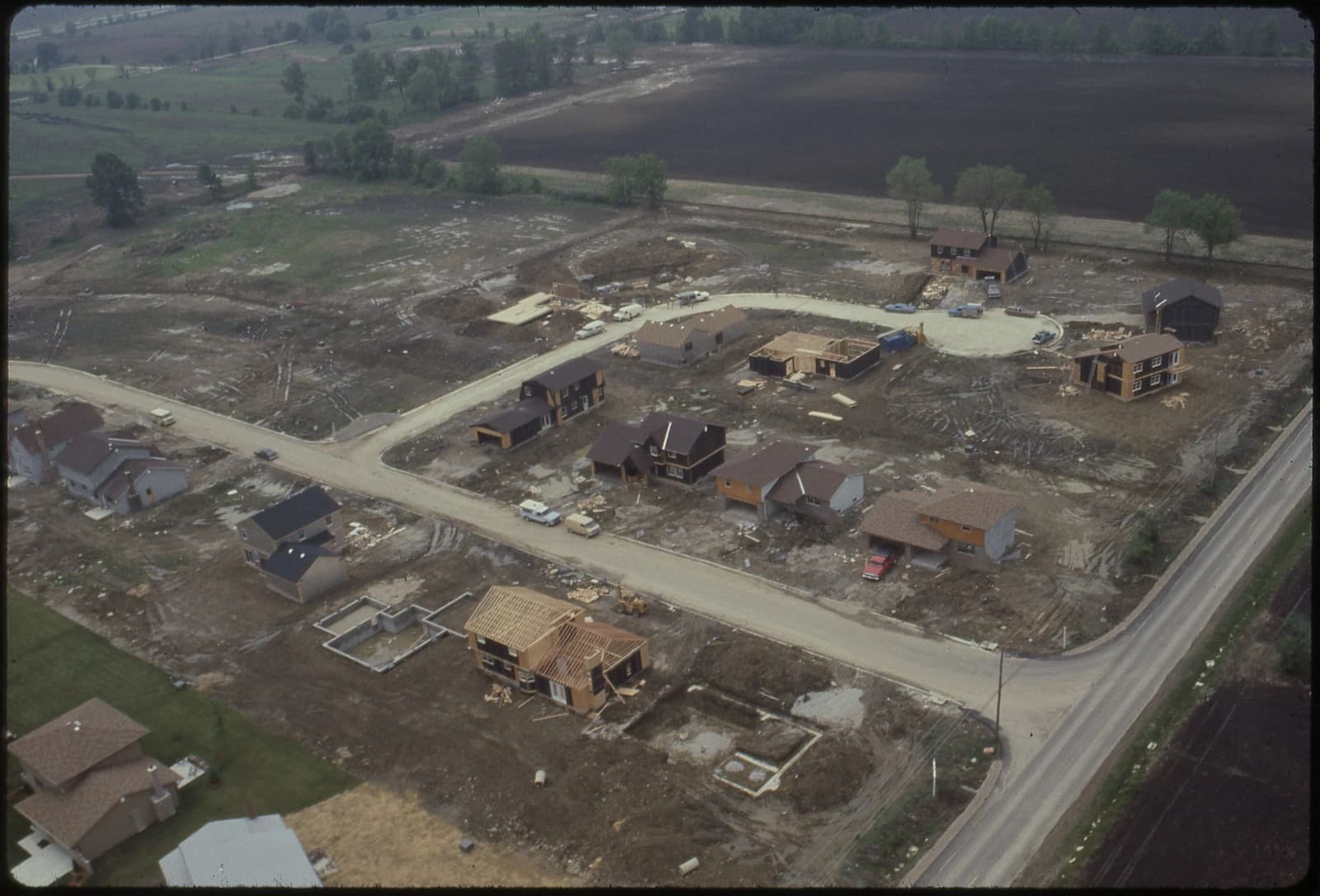
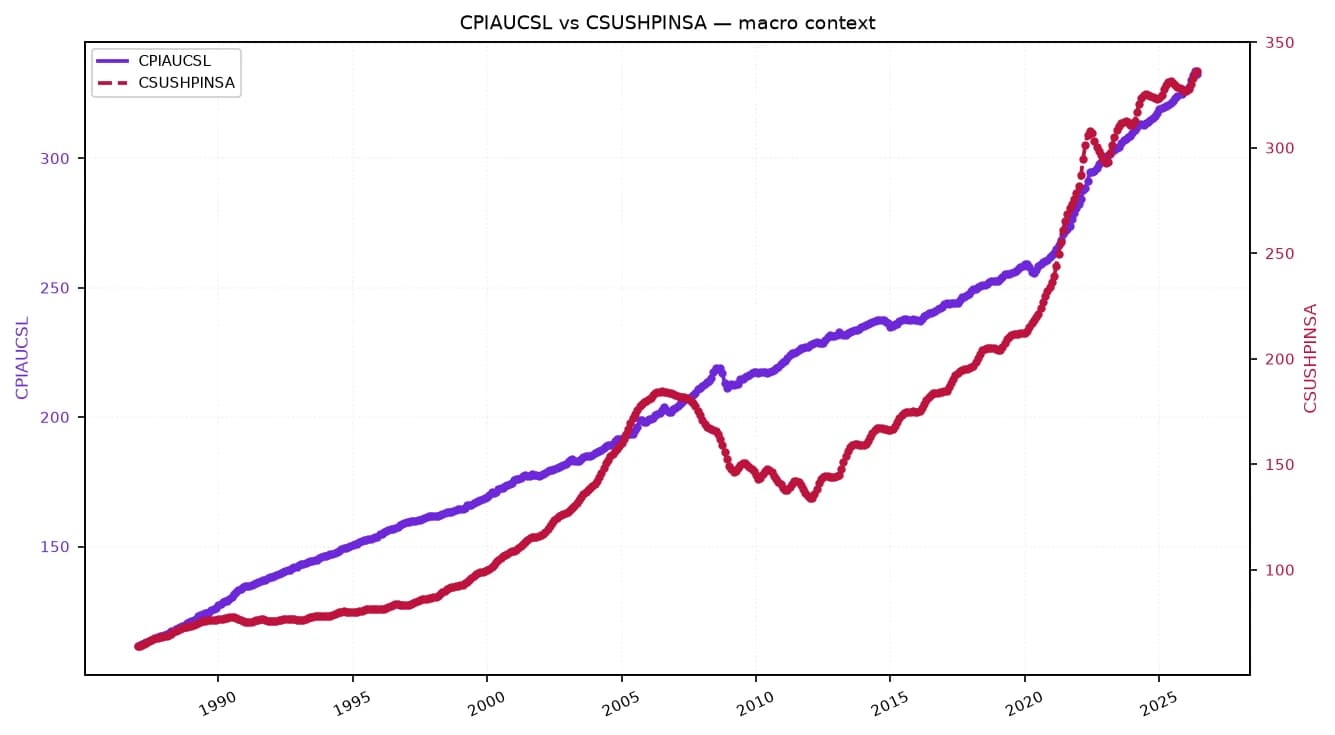
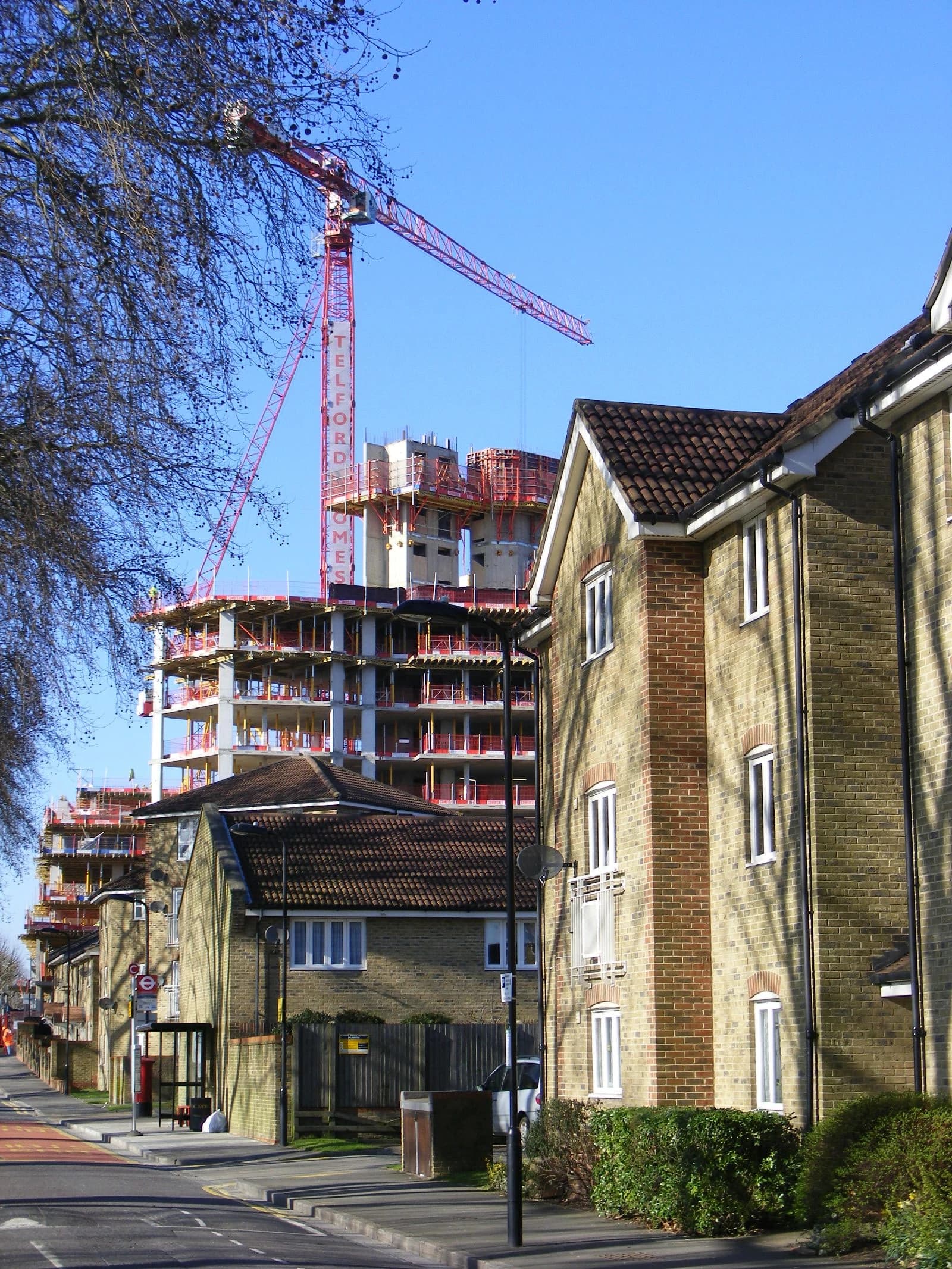
That matters because housing is one of the economy’s biggest transmission mechanisms. When builders cannot add supply fast enough, prices stay elevated, rents remain sticky and households are forced to spend more on shelter instead of other goods and services. The latest data on housing starts underscore the problem: new construction remains well below the levels needed to meaningfully relieve pressure, even after years of volatility in mortgage rates, materials costs and labor availability.
Sentiment IndicatorsⓘProprietary · adalytica.com · October 1, 2026
This is a snapshot — live sentiment, awareness and momentum for 130+ markets update continuously in the dashboard.Open AlphaPulse

The shortage of construction workers is a particularly stubborn bottleneck. It slows project timelines, raises labor costs and limits the pace at which builders can respond to demand. For the broader economy, that means the housing shortage does not just persist — it compounds. Families delay moves, first-time buyers get priced out and landlords keep pricing power. For policymakers, it means the usual interest-rate tools can cool demand, but they cannot quickly create more homes.
Markets are reacting accordingly. The SPDR S&P Homebuilders ETF, XHB, has fallen back near the lower end of its recent range, while technical readings show the fund trading below its 50-day moving average and near its 200-day average. The Relative Strength Index has softened into neutral territory after earlier swings, and the MACD remains negative, suggesting momentum has faded. That is the kind of setup investors often see when a cyclical group is moving from optimism to caution.
HOUST vs CSUSHPINSA — macro contextadalytica.com
Explore this data interactively — full history, time series and cross-market comparisons.Open AlphaPulse
Yet for long-term investors, the bigger lesson is not just that housing stocks are under pressure. It is that the U.S. still needs a multi-year buildout in homes, apartments and supportive infrastructure. That creates opportunity for patient investors who can look past the near-term gloom and focus on companies with durable land banks, strong balance sheets and disciplined capital allocation. Homebuilders may struggle in the short run, but the structural need for more supply does not disappear.
The pain is also spreading beyond builders. Owners such as Realty Income and Simon Property Group are facing a housing backdrop shaped by stretched consumers, higher financing costs and uneven tenant demand, even as they benefit from the scarcity of well-located real estate. In other words, the crisis is not isolated to one niche of the market; it is affecting the full real estate chain, from construction to rentals to retail spending.
For investors, the key question is not whether housing is in trouble — it clearly is. The question is which businesses can keep compounding despite that trouble. In a market defined by fear, the best long-term winners are often the ones that solve scarcity rather than merely react to it. Housing remains one of those secular needs, making the space worth watching, especially for investors willing to think in years, not weeks.
| Entity | Gains | Losses |
|---|---|---|
| Homebuilders with strong balance sheets | ▲Long-term supply need | ▼Near-term margins and sales |
| Renters and first-time buyers | ▲More political focus on affordability | ▼Higher shelter costs |
| Landlords and REITs with pricing power | ▲Sticky rents and scarce supply | ▼Consumer strain and slower demand |
| Short-term housing bulls | ▲— | ▼Weak momentum and fear-driven selling |