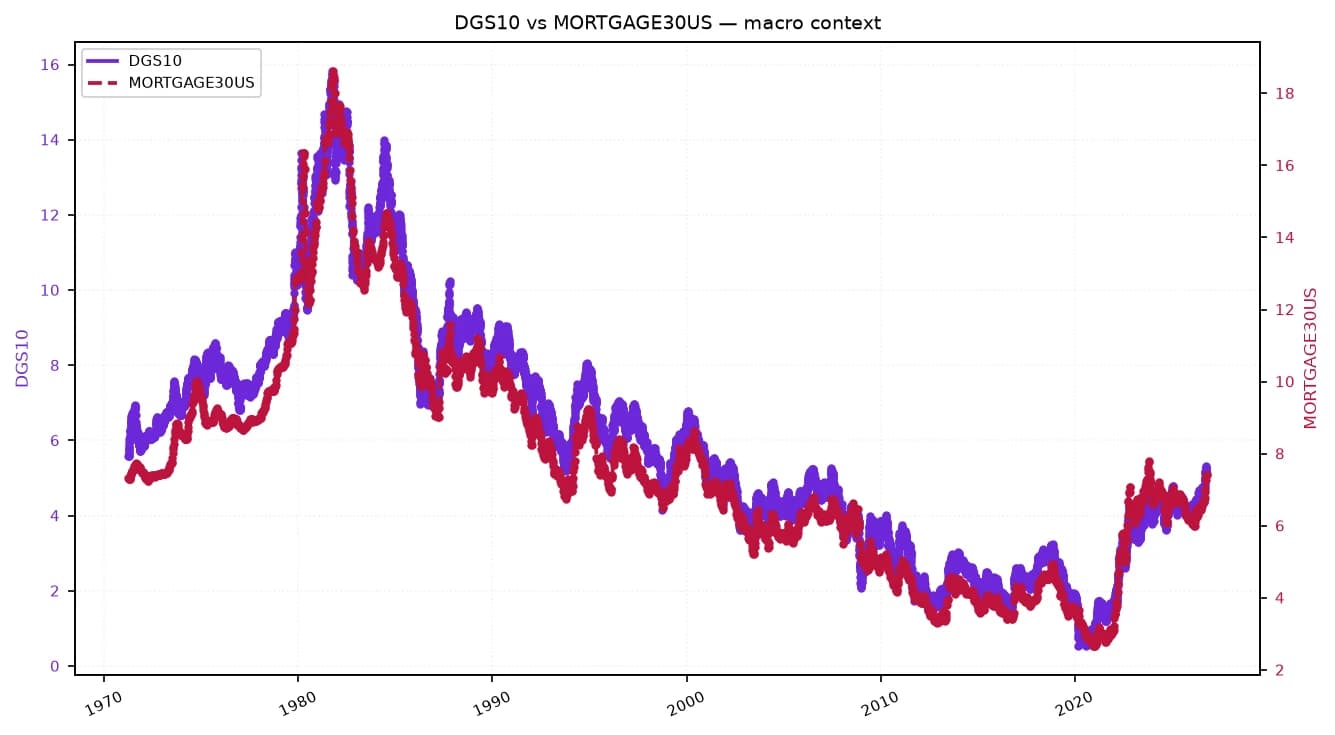
The U.S. housing market is still being squeezed by mortgage rates that are hovering around 5%, a level that keeps monthly payments too high for many buyers and is now showing up in weaker homebuilder stocks.
U.S. housing market stalls as mortgage rates stay high
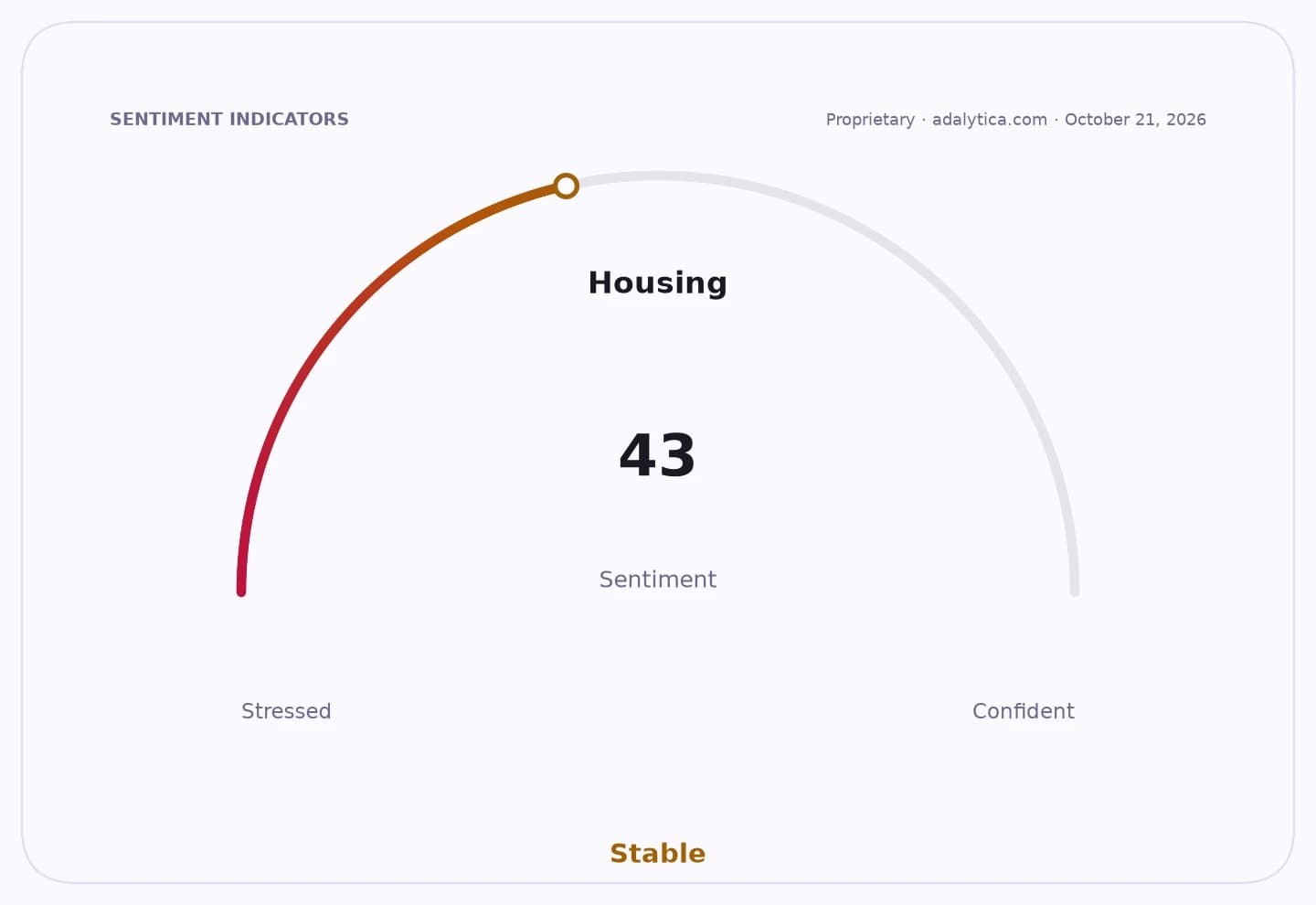
That matters because housing is one of the economy’s most interest-rate-sensitive sectors. When borrowing costs stay elevated, buyers wait, sellers sit tight, and builders lose pricing power. The result is a slower turnover of homes, softer construction activity and less momentum for everything from lumber suppliers to mortgage lenders.
Sentiment IndicatorsⓘProprietary · adalytica.com · October 21, 2026
This is a snapshot — live sentiment, awareness and momentum for 130+ markets update continuously in the dashboard.Open AlphaPulse
The latest data point to a market that is not collapsing so much as stalling. New home sales are forecast to rise only modestly to 1,277.9 in October from 1,221 in September, while U.S. home prices have continued to grind higher, with the S&P CoreLogic Case-Shiller index at 337.306 in July, up just 0.12% from a month earlier. In other words, affordability is still doing most of the work in suppressing demand, even as prices remain far above pre-pandemic levels.
That’s the core of the problem for investors: a frozen market is bad for volume, bad for transaction growth and often bad for sentiment across the housing complex. The SPDR S&P Homebuilders ETF, XHB, has fallen to 96.22 from above 110 in January and sits below its 50-day and 200-day moving averages. The RSI at 50.6 suggests the selloff is not yet an extreme washout, but the trend still looks weak. The iShares U.S. Home Construction ETF, ITB, is in even rougher shape, closing at 87.32 after trading as high as 104.26 in January, with its 50-day average now below its 200-day average and RSI near 50.8.
HOUST vs CSUSHPINSA — macro contextadalytica.com
Explore this data interactively — full history, time series and cross-market comparisons.Open AlphaPulse
There are pockets of weakness deeper down the chain too. Zillow, whose shares have slid to 32.24 from 72.61 late last year, remains far below its 200-day moving average and is still digesting a brutal housing slowdown. Rocket Companies has also been hit hard, though the stock bounced to 11.25 on Oct. 20 after sinking toward 10.71 two days earlier. Mortgage-related businesses can rebound sharply when rates ease, but right now they are still living with a market that is reluctant to move.
The long-term investment lesson is straightforward: housing usually rewards patience, not panic. When mortgage rates are high, the best-run builders, brokers and online platforms can still gain share, but the industry needs lower borrowing costs, steadier affordability and better confidence before demand really re-accelerates. If rates do drift lower next year, the setup for homebuilders and housing-adjacent stocks could improve quickly. Until then, investors should expect a slow, uneven recovery and keep housing names on the watchlist rather than assuming a quick turnaround.
| Entity | Gains | Losses |
|---|---|---|
| Homebuyers | ▲Better negotiating power | ▼Higher monthly payments |
| Homebuilders | ▲Share gains for strong operators | ▼Slower sales and weaker pricing |
| Mortgage lenders | ▲Refinance upside if rates fall | ▼Thin loan demand now |
| Housing ETFs like XHB and ITB | ▲Potential rebound if rates ease | ▼Ongoing bearish price trend |