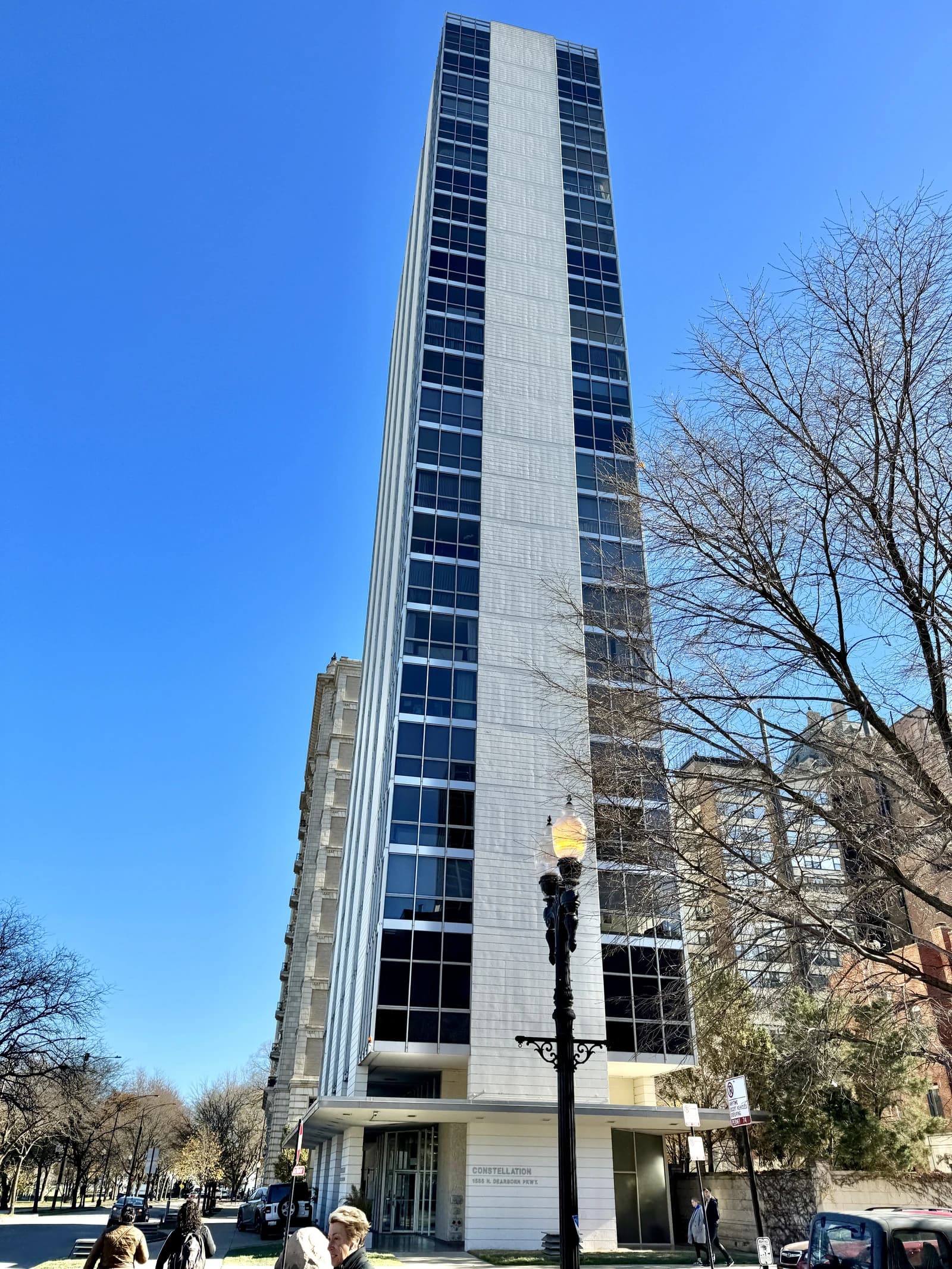
A new residence built around water-saving design in a tight real-estate market points to the same economics driving U.S. housing stocks: buyers are still willing to pay for homes that solve scarce-resource problems, even as the broader housing complex struggles with affordability and uneven demand.
XHB and ITB Fall as VNQ Holds Up

That matters because housing is no longer just a story about rates and resale prices. It is increasingly about product differentiation, local constraints and who can profit from building around them. In markets where land, water and infrastructure are tight, builders that can package lower operating costs or sustainability features may preserve pricing power even as the sector overall remains under pressure from affordability and slower turnover.
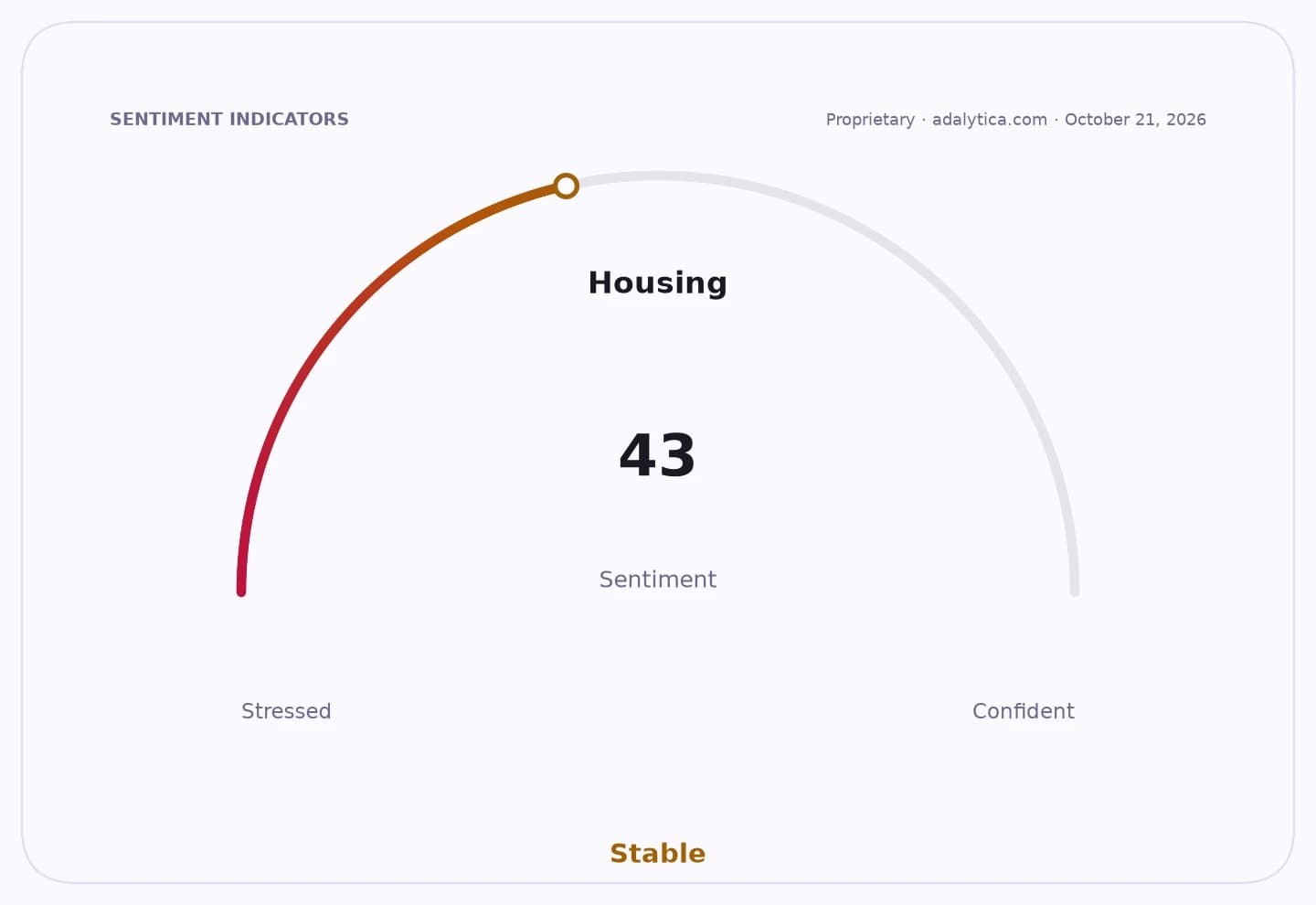
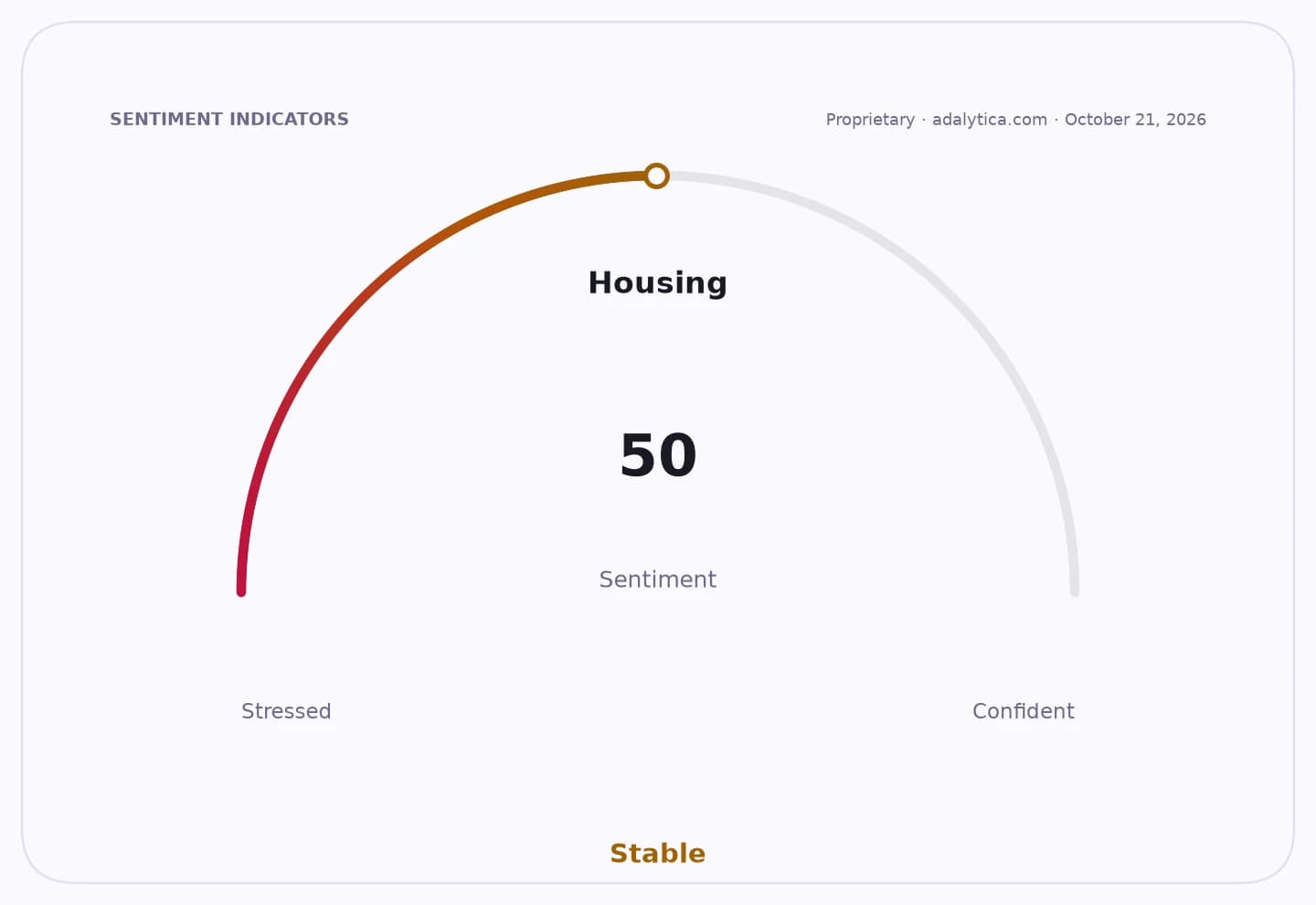
Sentiment IndicatorsⓘProprietary · adalytica.com · October 21, 2026
This is a snapshot — live sentiment, awareness and momentum for 130+ markets update continuously in the dashboard.Open AlphaPulse

The market is reflecting that divide. The SPDR S&P Homebuilders ETF, XHB, closed at 95.60 on Oct. 21, down from 110.77 in late January and below both its 50-day and 200-day moving averages, a sign that traders are still cautious on the group. The iShares U.S. Home Construction ETF, ITB, has followed a similar path, ending at 86.57 after a sharp drop from earlier this year and trading under both its 50-day and 200-day averages as well.
By contrast, the broader real-estate ETF, VNQ, has held up better, closing at 91.49 and sitting near its 200-day average. That suggests investors are differentiating between asset types rather than making a blanket bet against housing. Residential real estate remains supported by scarcity in some local markets, even as the national affordability backdrop remains restrictive.
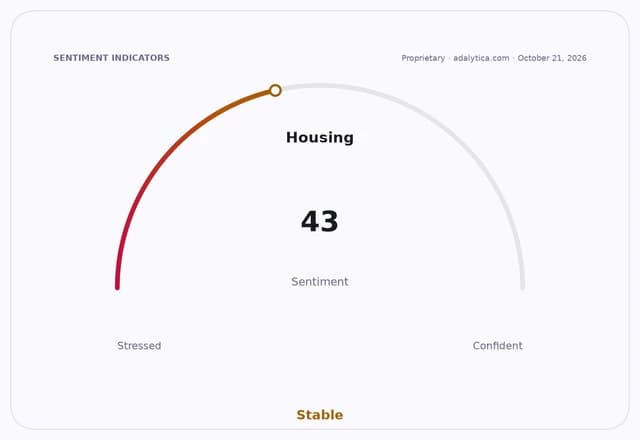
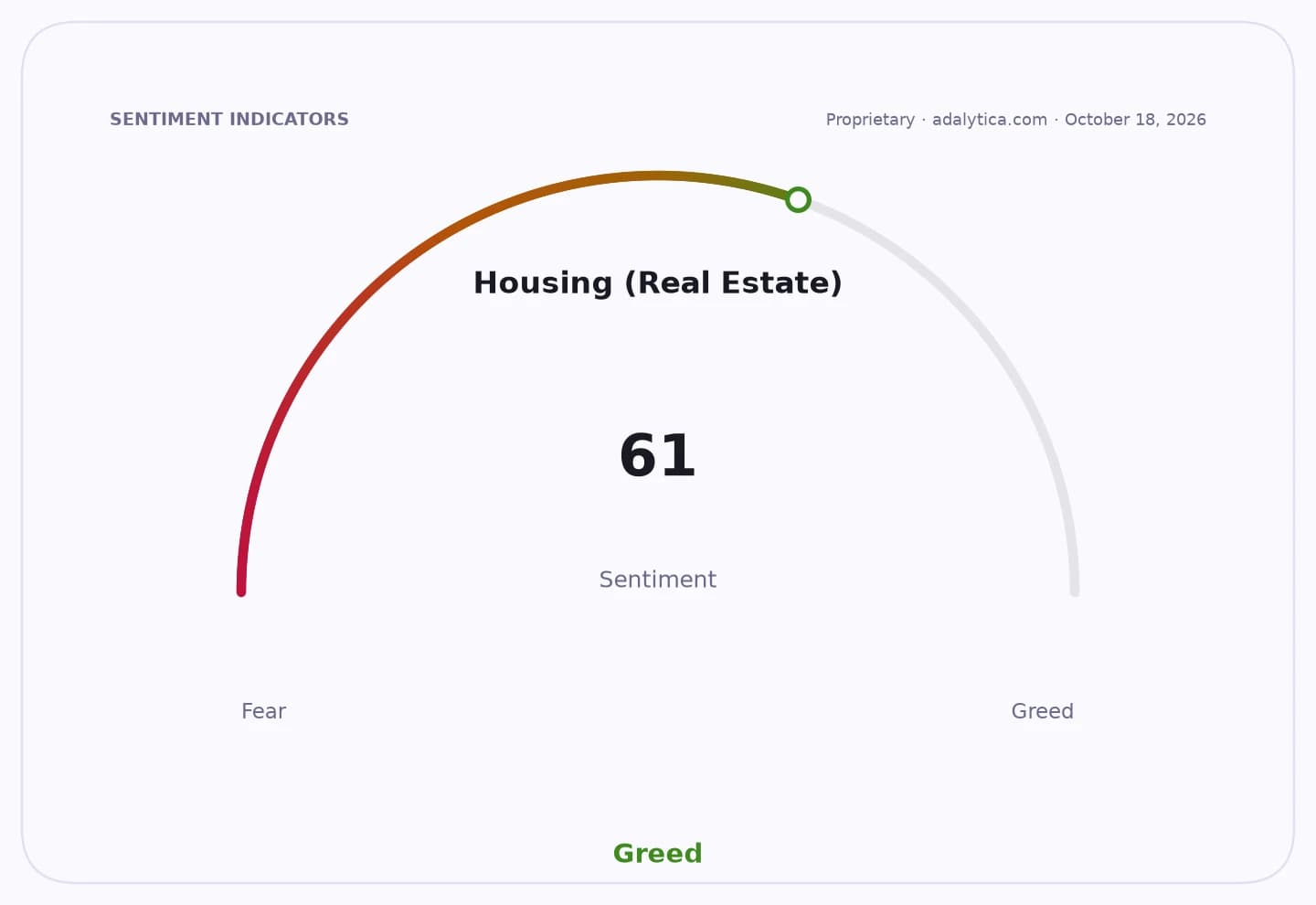
The latest readings from Adalytica’s Housing Fear & Greed Index show sentiment for XHB at 100, or “Extreme Greed,” while awareness is only 4, labeled “Extreme Fear.” In practice, that split reflects a market that is still chasing tactical upside in homebuilders, but with low conviction and elevated uncertainty around the durability of demand. The move in XHB has also become more volatile: the fund dropped to 94.13 on Oct. 19 before rebounding, while the 50-day average has slipped to 99.50, underscoring the fragility of the recent trade.
The housing narrative matters economically because construction, materials, financing and local development all feed into a large domestic supply chain. When builders can sell homes with efficiency or environmental features that reduce ongoing costs, they can better defend margins in a market where mortgage rates and elevated prices have kept many buyers on the sidelines. That is especially relevant in markets facing water stress, where conservation features are becoming part of the product rather than an afterthought.
For investors, the split between broad housing ETFs and property owners is the key takeaway. The bear case is that affordability, high inventory in some regions and still-tight financing conditions continue to cap volume growth. The bull case is that builders able to adapt to regional constraints — by designing homes differently, cutting utility costs or tailoring layouts to local demand — can outperform a weak housing tape and capture incremental pricing power.
The next catalyst is whether that product-level resilience shows up in order books and margins at the big builders. If it does, the trade may continue to favor companies and funds tied to differentiated new construction over broader housing exposure.
| Entity | Gains | Losses |
|---|---|---|
| Homebuilders with differentiated product | ▲Pricing power in tight markets | ▼Limited if affordability stays weak |
| Buyers of efficient new homes | ▲Lower utility and water costs | ▼Higher upfront prices |
| Broad housing ETF longs | ▲Tactical rebounds | ▼Weak trend if rates stay high |
| Existing-home sellers | ▲Less direct benefit | ▼Competition from new builds |