A small but fast-growing cohort of household buyers looking for homes near childcare and family support is helping reshape U.S. housing demand, even as affordability strains keep the broader market under pressure.
U.S. housing demand shifts toward family buyers
The shift matters because family formation is becoming a bigger driver of where and how Americans buy homes. In markets where daycare access is scarce or expensive, proximity to grandparents, schools and lower-cost neighborhoods is increasingly influencing purchase decisions. That is nudging builders toward products and locations that fit the needs of parents, not just first-time buyers chasing price discounts.
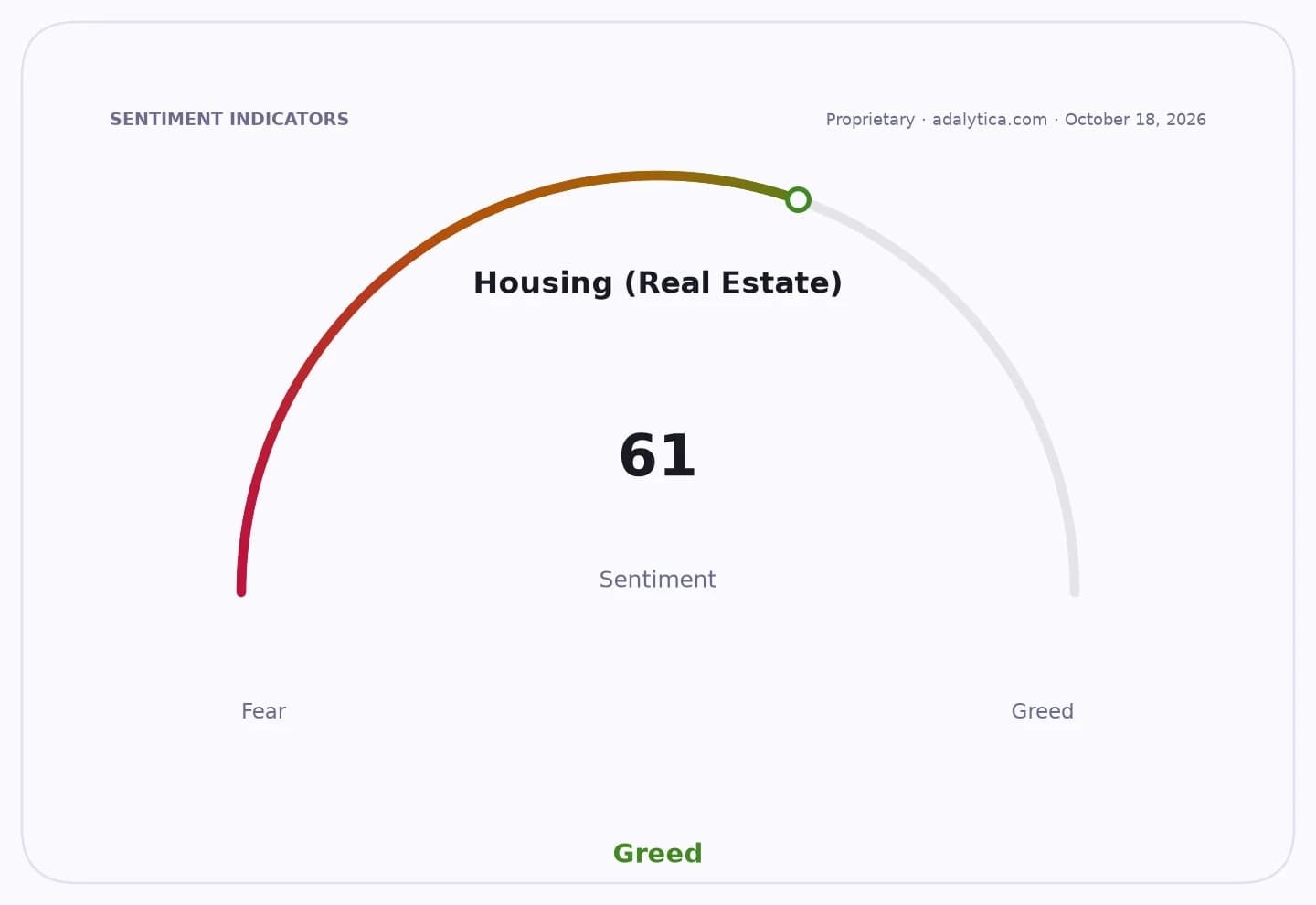
Sentiment IndicatorsⓘProprietary · adalytica.com · October 18, 2026
This is a snapshot — live sentiment, awareness and momentum for 130+ markets update continuously in the dashboard.Open AlphaPulse
The data show a housing market still struggling to regain momentum. U.S. housing starts were running at 1,275 in August 2026 after a sharp drop from 1,609 in May, while September’s forecast points to only a modest rebound to 1,278.5. Existing home prices, meanwhile, have kept climbing: the Case-Shiller national index rose to 337.306 in July from 325.566 a year earlier, underscoring how limited supply continues to support valuations even as demand softens.
That combination is forcing developers to compete more aggressively for the households that remain active. Lennar has said it expects fourth-quarter new orders of 19,500 to 20,500 homes and continues to emphasize affordability, while D.R. Horton has pointed to higher incentives, including mortgage-rate buydowns, to keep sales moving. The trade-off is visible in margins: DHI’s gross margin fell to 20.7% from 21.8% a year earlier as pricing and incentives increased.
For investors, the story cuts both ways. Builders that can tailor communities to family buyers — smaller, more affordable homes, amenity-rich suburbs, and access to schools and childcare — may protect volumes better than peers tied to higher-end demand. But the reliance on incentives also suggests profitability remains fragile, especially if mortgage rates stay elevated or labor-market conditions cool.
The exchange-traded funds tracking the sector reflect that tension. ITB has fallen to 86.4 from above 100 in midyear and sits below both its 50-day and 200-day moving averages, while XHB has also slipped under its long-term trend. A separate Adalytica Housing Fear & Greed snapshot still shows neutral sentiment but extreme fear in awareness, suggesting investors remain wary even as the family-housing theme gains traction.
The broader implication is that housing is becoming less about a uniform national cycle and more about niche demand pockets shaped by childcare costs, household logistics and regional affordability. Builders who understand that calculus may gain share; those that do not may be left discounting inventory in a market where the next buyer is increasingly a parent making a two-income, two-logistics decision.
| Entity | Gains | Losses |
|---|---|---|
| Family-focused homebuilders | ▲Better-targeted demand | ▼Broader-market softness |
| Buyers with children | ▲More suitable housing options | ▼Limited affordability |
| Existing homeowners | ▲Support from scarce supply | ▼Fewer move-up transactions |
| ITB/XHB investors | ▲Selective rebound potential | ▼Margin pressure and weak sentiment |