Germany’s left is reviving calls to expropriate large real estate groups, but the market evidence says that won’t create the apartments renters actually need. The real bottleneck is supply, and with financing costs still punitive and construction activity weak, a policy fight over ownership risks distracting from the much harder job of building homes.
Germany housing debate and supply constraints

That matters because housing is now a macro story, not just a political one. In a market where the 10-year German bund yield has climbed to around 5.3% in the supplied data, borrowing costs remain high enough to keep new development constrained. That is exactly the environment in which housing shortages persist: investors demand a risk premium, developers hesitate to start projects, and the pipeline of new units stays thin.
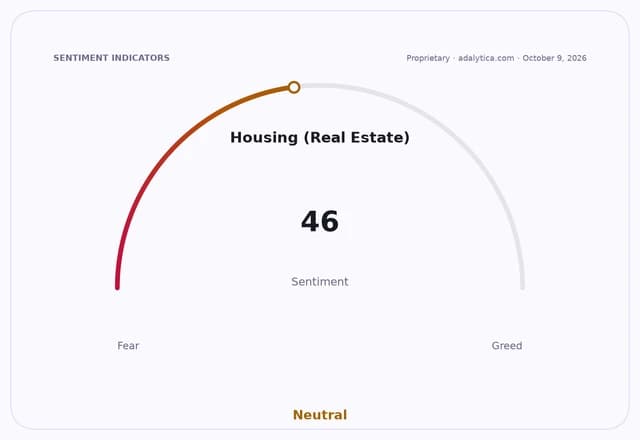
Sentiment IndicatorsⓘProprietary · adalytica.com · October 9, 2026
This is a snapshot — live sentiment, awareness and momentum for 130+ markets update continuously in the dashboard.Open AlphaPulse

The data point to a market that is still under strain despite occasional rebounds. U.S. housing-starts data in the context show renewed volatility, while real-estate and homebuilding ETFs have weakened sharply from earlier highs. VNQ, the broad U.S. real-estate fund, has slid to about $89.35 from a recent peak near $97.55, and its relative strength reading has dropped into oversold territory. XHB, the homebuilders ETF, has fallen to $95.68 from above $110 earlier in the year. I read that as a market pricing in slower activity, not an imminent fix for affordability.
That’s the key investment point: socializing big landlords may play well politically, but it does little to solve the economics of scarcity. If the goal is more affordable housing, the binding constraint is supply elasticity — zoning, permitting, labor, materials, and capital — not simply who owns existing stock. Taking over large portfolios does not add units; it mostly reshuffles control of units that are already there.
For investors, that means the opportunity is less in fighting the political noise and more in positioning for the companies that actually benefit when policymakers are forced back toward supply-side solutions. That includes homebuilders, construction materials, utilities connected to new development, and selected apartment owners with strong balance sheets if policy rhetoric keeps valuations depressed. The market underestimates how quickly sentiment can swing once rates stabilize and financing windows reopen.
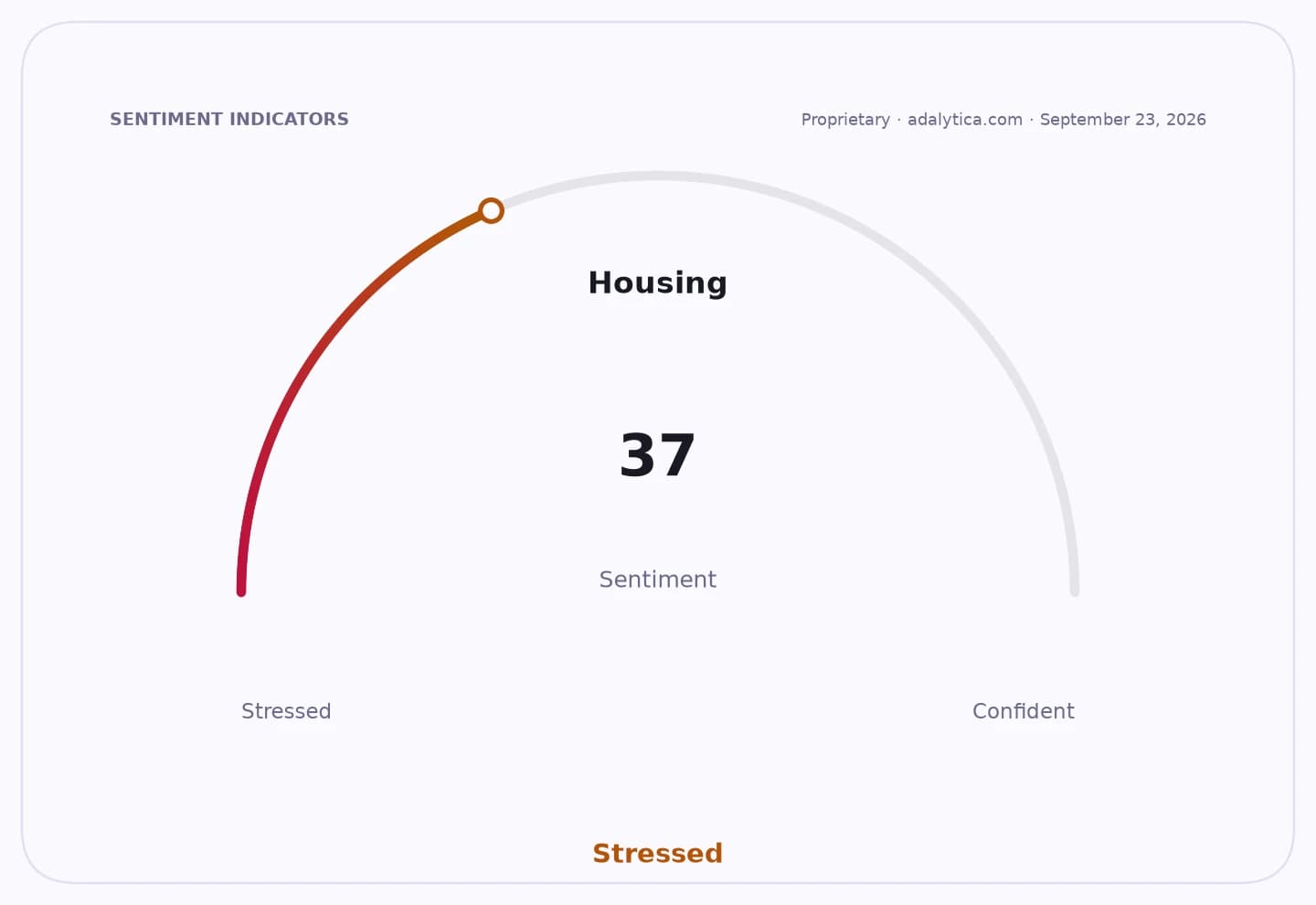
Adalytica’s Housing Fear & Greed Index shows the sector in “neutral” fear on the XHB snapshot, but awareness remains at “extreme fear,” which usually marks a market that has already discounted a lot of bad news. At the same time, the Housing and Rent Inflation Sentiment gauge is in “extreme greed,” underscoring the political urgency behind affordability. That gap between public anxiety and market pricing is where asymmetric opportunities tend to form.
My view is straightforward: the housing trade is being misframed as an ownership battle when it is really a capital-allocation battle. Until governments make it easier and cheaper to build, renters will not see meaningful relief. For investors, that argues for buying the supply chain, not the slogans.
| Entity | Gains | Losses |
|---|---|---|
| Homebuilders | ▲Eventual supply-side policy push | ▼Near-term rate pressure |
| Materials suppliers | ▲More construction demand | ▼Policy uncertainty |
| Large landlords | ▲Asset values from scarcity | ▼Expropriation risk |
| Renters | ▲Potential new supply over time | ▼No quick relief from ownership changes |