Housing is now the clear engine of real estate activity, and that matters because the mix of demand is shifting toward the part of the market that carries the most immediate economic spillover: homebuilding, materials, lending and household formation.
Housing Leads Real Estate Growth in Central Region

The latest data show real estate activity expanding over the first seven months, with housing leading the advance and the Central Region taking the biggest share of the gains. That is not just a sector headline. It is a sign that capital is still flowing into the most economically sensitive segment of the property cycle, where each new home has a multiplier effect on land sales, construction jobs, furnishings and mortgage demand.
Sentiment IndicatorsⓘProprietary · adalytica.com · September 19, 2026
This is a snapshot — live sentiment, awareness and momentum for 130+ markets update continuously in the dashboard.Open AlphaPulse
For investors, the implication is straightforward: the market is underestimating how much of the next leg in property demand will come from residential rather than commercial assets. The housing tape has already turned volatile — the XHB homebuilders ETF has slid to $96.39, far below its 50-day moving average of $105.27, while the broader homebuilding gauge ITB has dropped to $87.41 versus a 50-day average of $94.93. The weakness reflects caution, but it also creates an opportunity if the underlying activity trend continues to improve.
The Central Region’s outsized share matters because regional concentration often becomes a profit driver before it becomes obvious in the index data. Builders with land banks, distribution networks and supplier exposure in the strongest markets tend to capture margin first. Lennar’s filings show the Central region remains one of its most important operating engines, with 462 active communities and 5,218 new orders in the latest quarter, underscoring how demand is concentrating where affordability and household growth intersect.
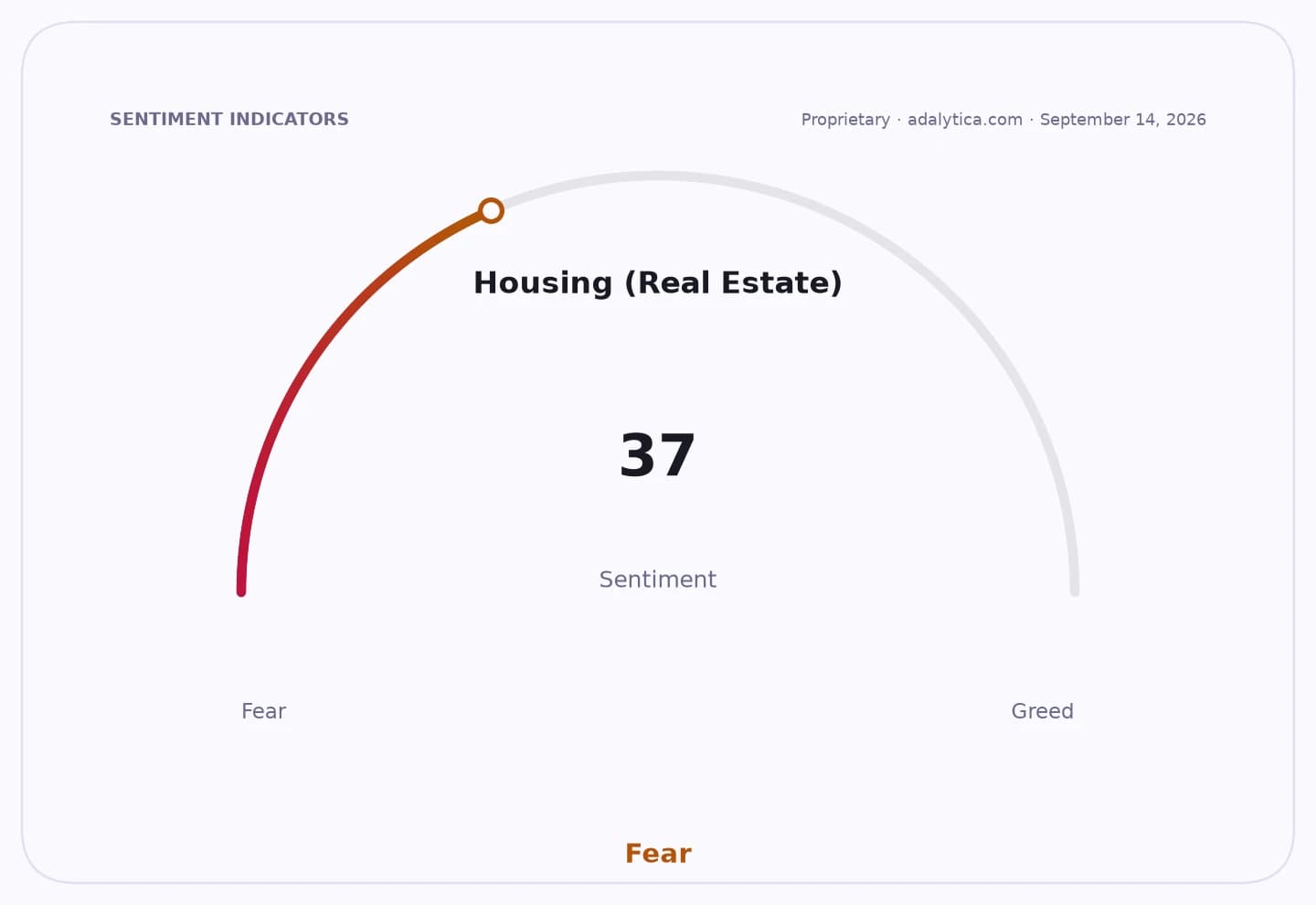
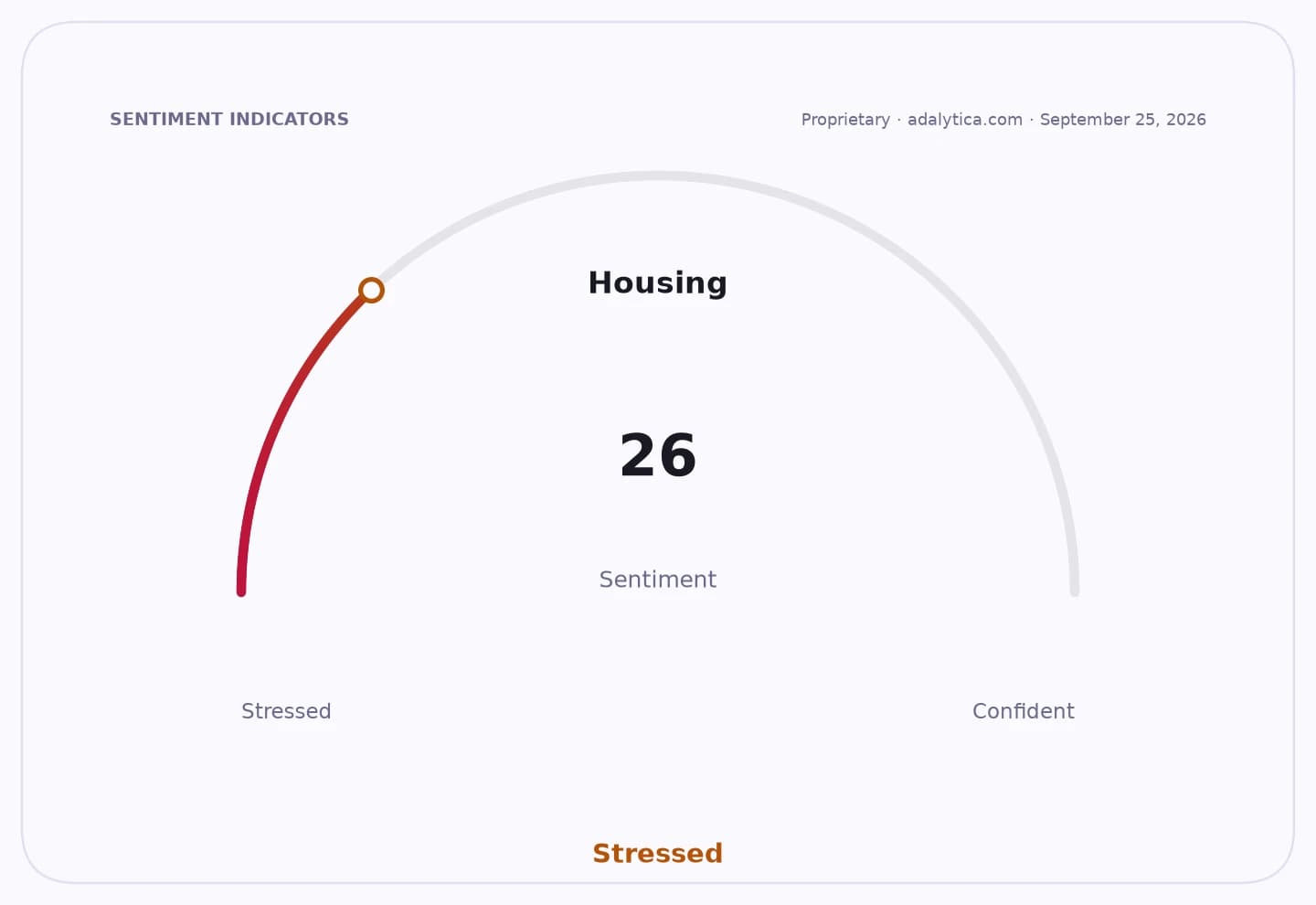
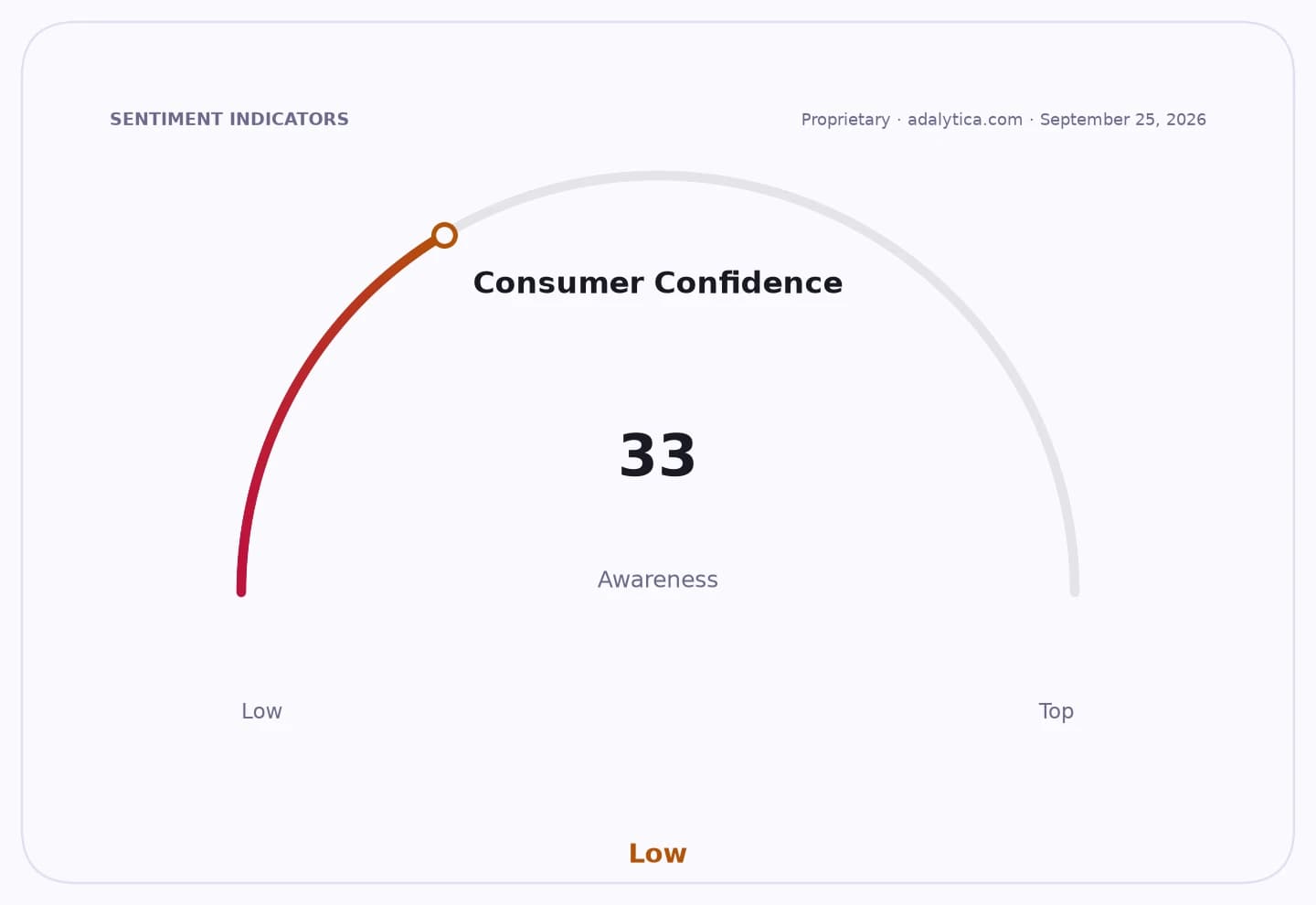
That is why the current setup favors the picks-and-shovels of housing more than the housing cycle itself. Mortgage rates remain a hurdle, with the 10-year Treasury around 4.98%, but the market is already discounting a lot of bad news. Adalytica’s Housing Fear & Greed Index for XHB sits at 19, in “Fear,” suggesting sentiment has become far more pessimistic than the activity data justify. On the rent side, Adalytica’s Housing and Rent Inflation Sentiment is even lower at 7, or “Extreme Fear,” which tells you investors are pricing in stagnation while the sector is still producing growth.
That gap between sentiment and fundamentals is where the asymmetric opportunity lives. If housing continues to lead real estate growth, the beneficiaries are likely to be builders, lot suppliers, building products makers and select REITs tied to residential demand. The losers are investors positioned for a broad property slowdown and anyone assuming commercial real estate weakness will dominate every part of the market.
The bigger story is that real estate is not improving evenly — it is being pulled forward by housing, and the Central Region is doing the heavy lifting. For investors, that argues for staying selective, not defensive: own the companies levered to residential volume and regional growth, and fade the idea that the entire property complex remains in retreat.
| Entity | Gains | Losses |
|---|---|---|
| Housing builders | ▲Higher orders and volumes | ▼Broad real estate pessimism |
| Central Region markets | ▲Largest share of growth | ▼Slower regions |
| Homebuilding ETFs (XHB, ITB) | ▲Rebound if activity keeps improving | ▼Fear-driven sellers |
| Mortgaged-linked lenders and suppliers | ▲More financing and materials demand | ▼Investors betting on sector contraction |