A home that felt like a paper millionaire maker in 2021 can now be worth less than the mortgage attached to it, and the latest U.S. housing data suggest that the squeeze is still not over for many owners.
U.S. Housing Data Show Slower Price Gains
The Case-Shiller national home price index rose to 337.306 in July, up from 326.764 in January and 308.055 in June 2022, underscoring that prices remain elevated by historical standards even after the pandemic-era surge has cooled. But the pace has clearly slowed, with the index up just 0.12% in July and forecast to edge to 339.9374 in August, a sign that appreciation is no longer rescuing overleveraged buyers.
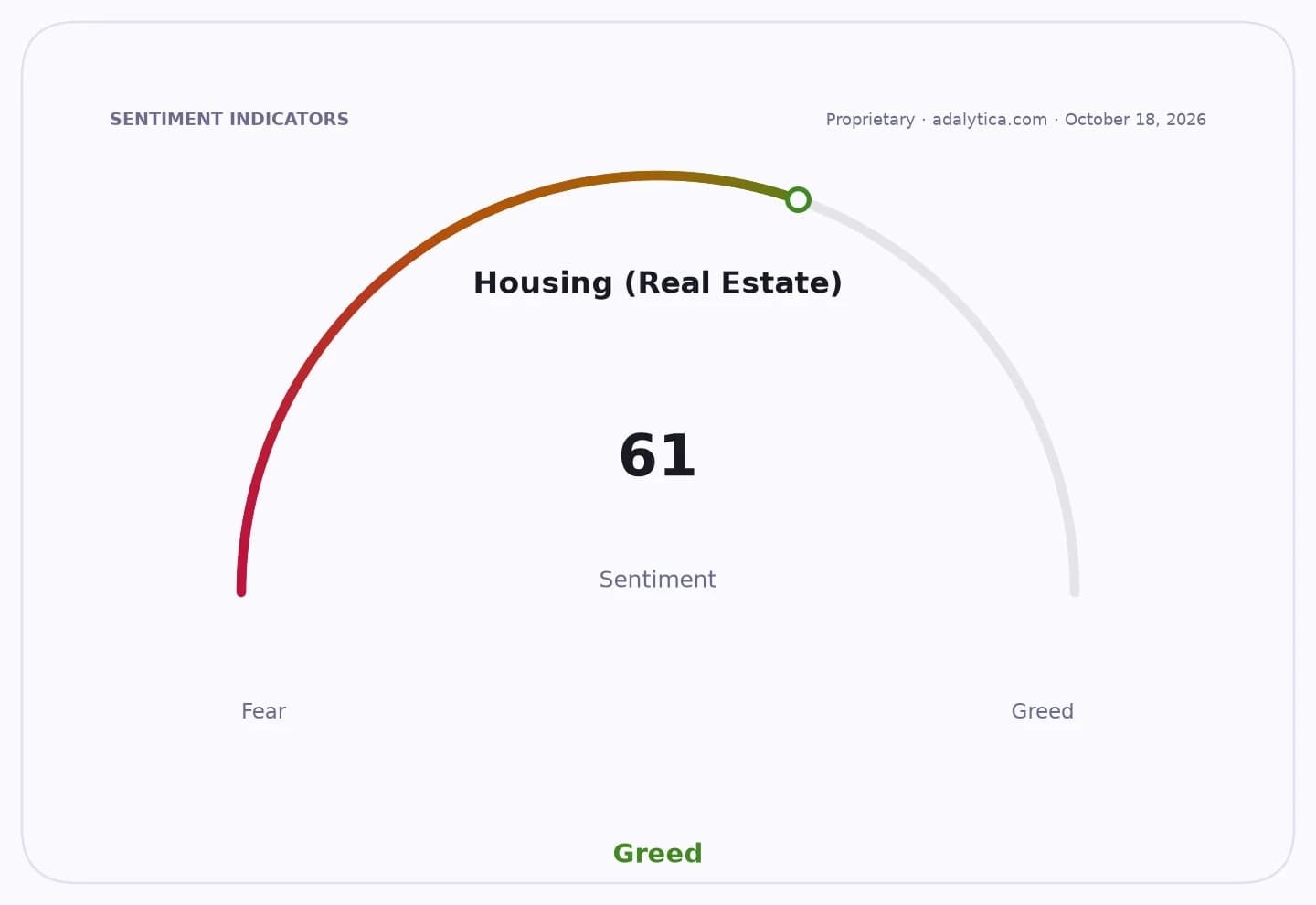
Sentiment IndicatorsⓘProprietary · adalytica.com · October 18, 2026
This is a snapshot — live sentiment, awareness and momentum for 130+ markets update continuously in the dashboard.Open AlphaPulse
That matters because mortgage rates are still punishingly high. The 10-year Treasury yield has held around 5.1% to 5.21%, keeping borrowing costs elevated and limiting affordability for new buyers while also making refinancing far less attractive. For homeowners who bought at peak prices with small down payments, the combination of stretched valuations and sticky debt can quickly create negative equity.
New-home construction is also not providing a clean escape hatch. U.S. housing starts fell to 1.275 million in August from 1.609 million in May, a drop that points to still-fragile supply conditions and a sector struggling to translate demand into enough new inventory to ease prices meaningfully. Forecasts call only for a slight rebound to 1.2785 million in September.
CSUSHPINSA vs HOUST — macro contextadalytica.com
Explore this data interactively — full history, time series and cross-market comparisons.Open AlphaPulse
The pressure is visible in mortgage-lender stocks. Rocket Companies has dropped to $10.78 from a recent high near $20.25 earlier this year, while United Wholesale Mortgage has slumped to $1.05 from $5.67 in January. Both remain exposed to the same equation: fewer refinancings, affordability-choked purchase demand and a housing market where price gains are no longer doing the heavy lifting.
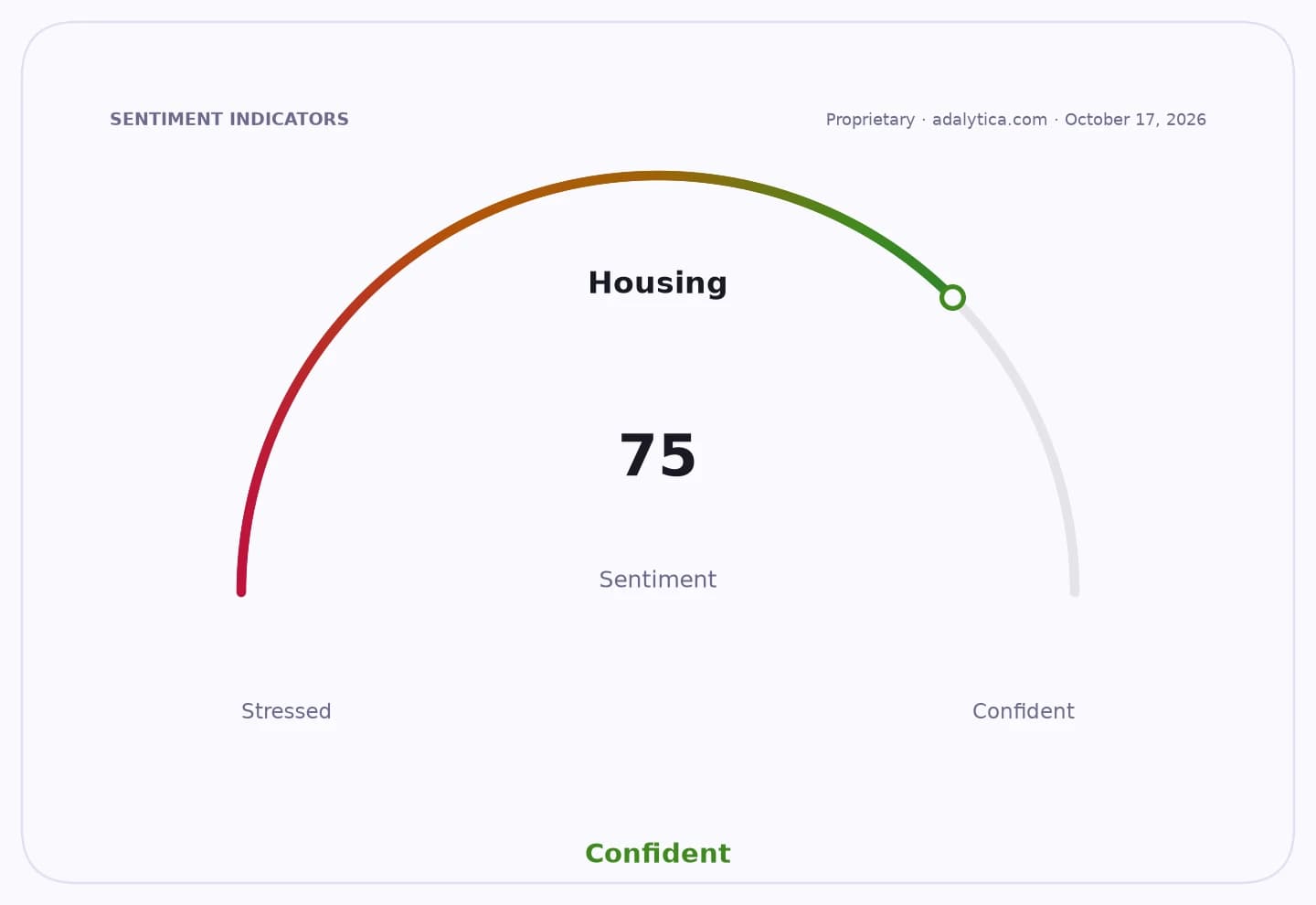
Adalytica’s Housing and Rent Inflation Sentiment gauge is flashing “Greed” at 75, but awareness is at just 4, a combination that suggests the public conversation is running hot even as the market reality remains uneven. For investors, the key risk is that a prolonged period of high rates and soft transaction volumes keeps housing as a drag on consumer balance sheets, bank credit quality and mortgage originators’ earnings.
The immediate catalyst is the next round of inflation and rate signals, which will determine whether mortgage costs ease enough to revive turnover — or whether more recent buyers stay stuck with homes worth less than what they owe.
| Entity | Gains | Losses |
|---|---|---|
| Existing cash buyers | ▲Relative bargaining power | ▼Highly leveraged recent buyers |
| Mortgage lenders | ▲Rate income on new loans | ▼Refinancing volumes |
| Homebuilders | ▲Inventory scarcity supports pricing | ▼Demand-sensitive buyers |
| Underwater homeowners | ▲Little near-term upside | ▼Equity, mobility, refinancing options |