Mortgage rates above 7% are making one of retirement’s most common moves — selling a big home and buying a smaller one — far more expensive than many households expect.
Mortgage rates above 7% make downsizing costlier
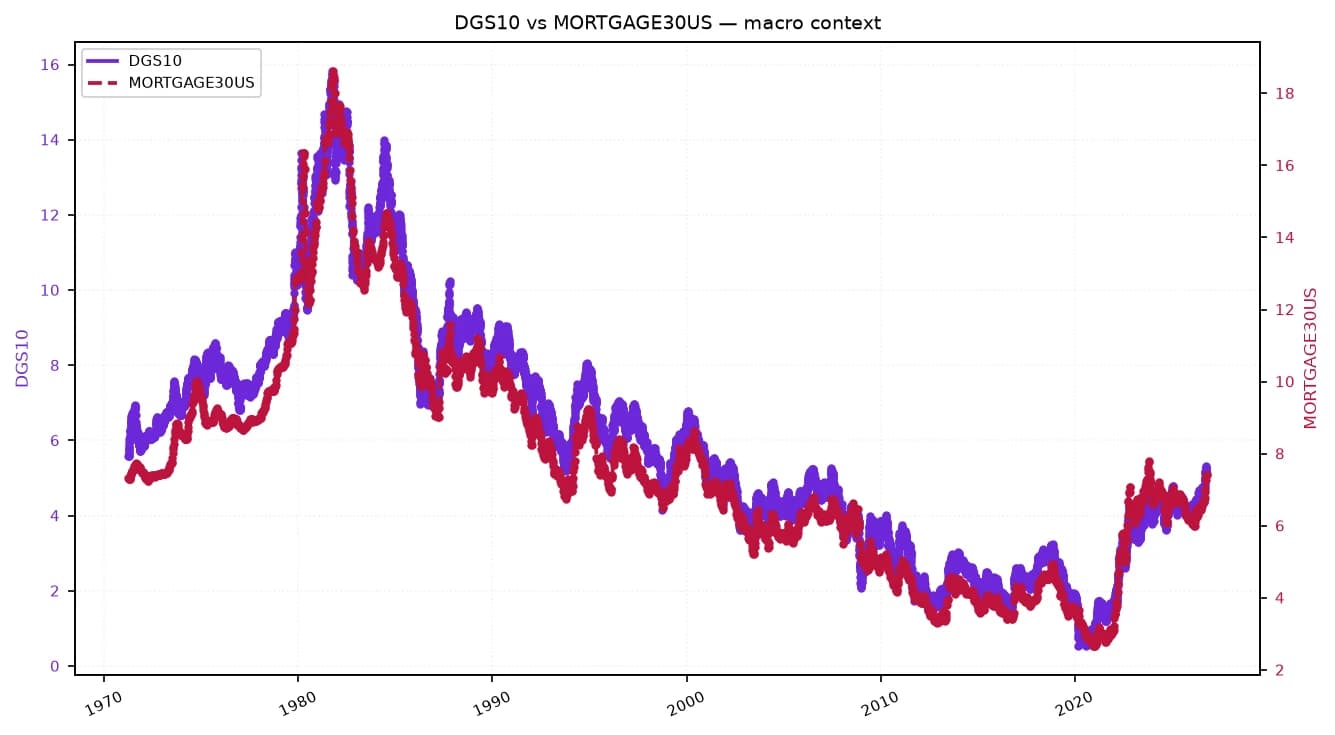
A 30-year fixed mortgage averaging 7.4% is the highest in nearly three years, according to Freddie Mac, and that matters because monthly payment math has started to overwhelm the savings from taking a smaller loan. In one simple example, a borrower who owed $300,000 at 3% would pay about $1,265 a month in principal and interest. Swap that for a $250,000 loan at 7.4%, and the payment rises to roughly $1,731 — about $466 more every month, or nearly $5,600 a year.
Sentiment IndicatorsⓘProprietary · adalytica.com · October 21, 2026
This is a snapshot — live sentiment, awareness and momentum for 130+ markets update continuously in the dashboard.Open AlphaPulse
For retirees, that is a big deal. Downsizing is supposed to free up cash, simplify life and lower housing costs. Instead, many owners are discovering that the interest rate on the new mortgage matters more than the size of the loan. In other words, a smaller house can still come with a bigger bill. That can strain fixed incomes, especially for households relying on Social Security checks that are rising too slowly to absorb a jump like that.
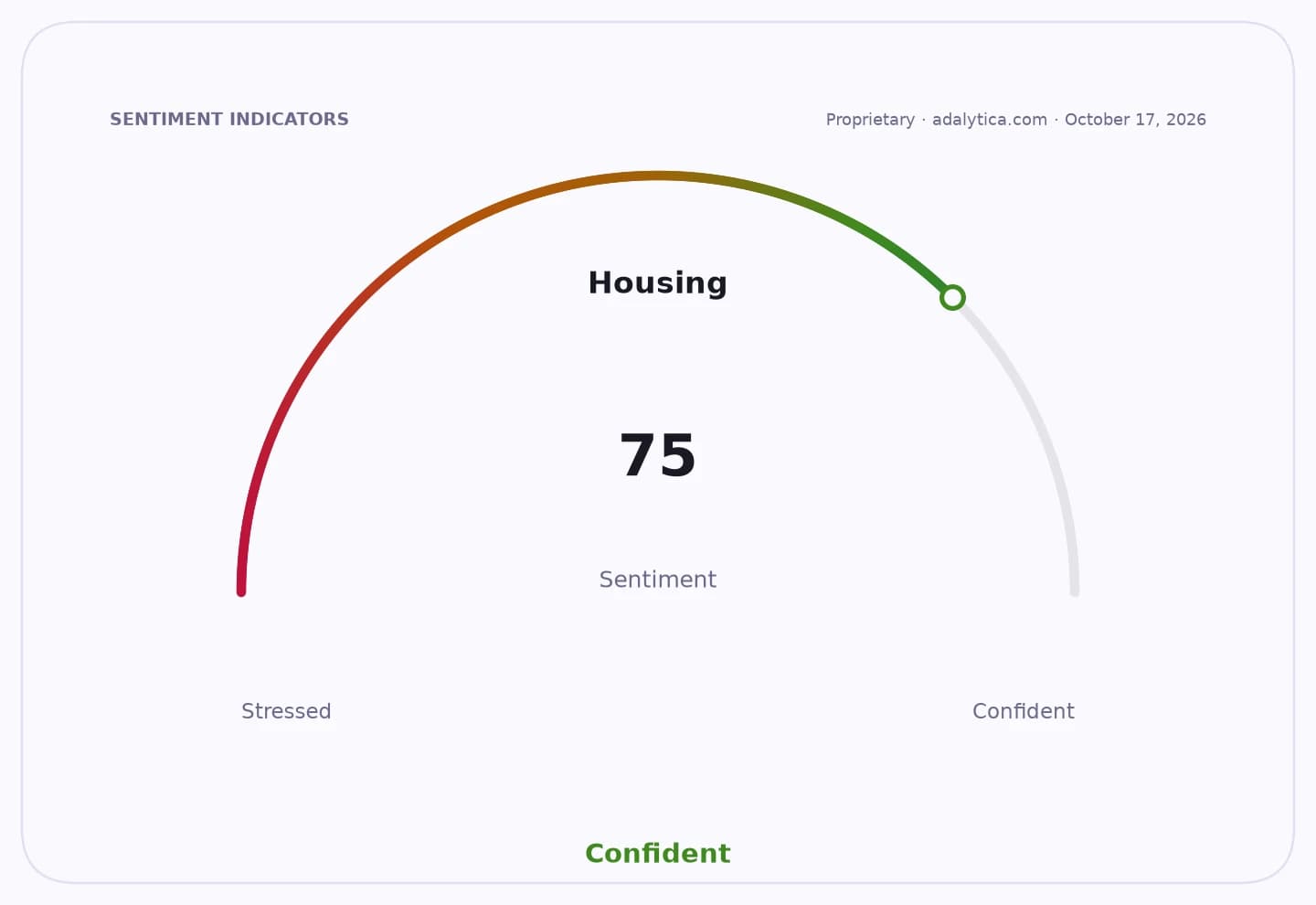
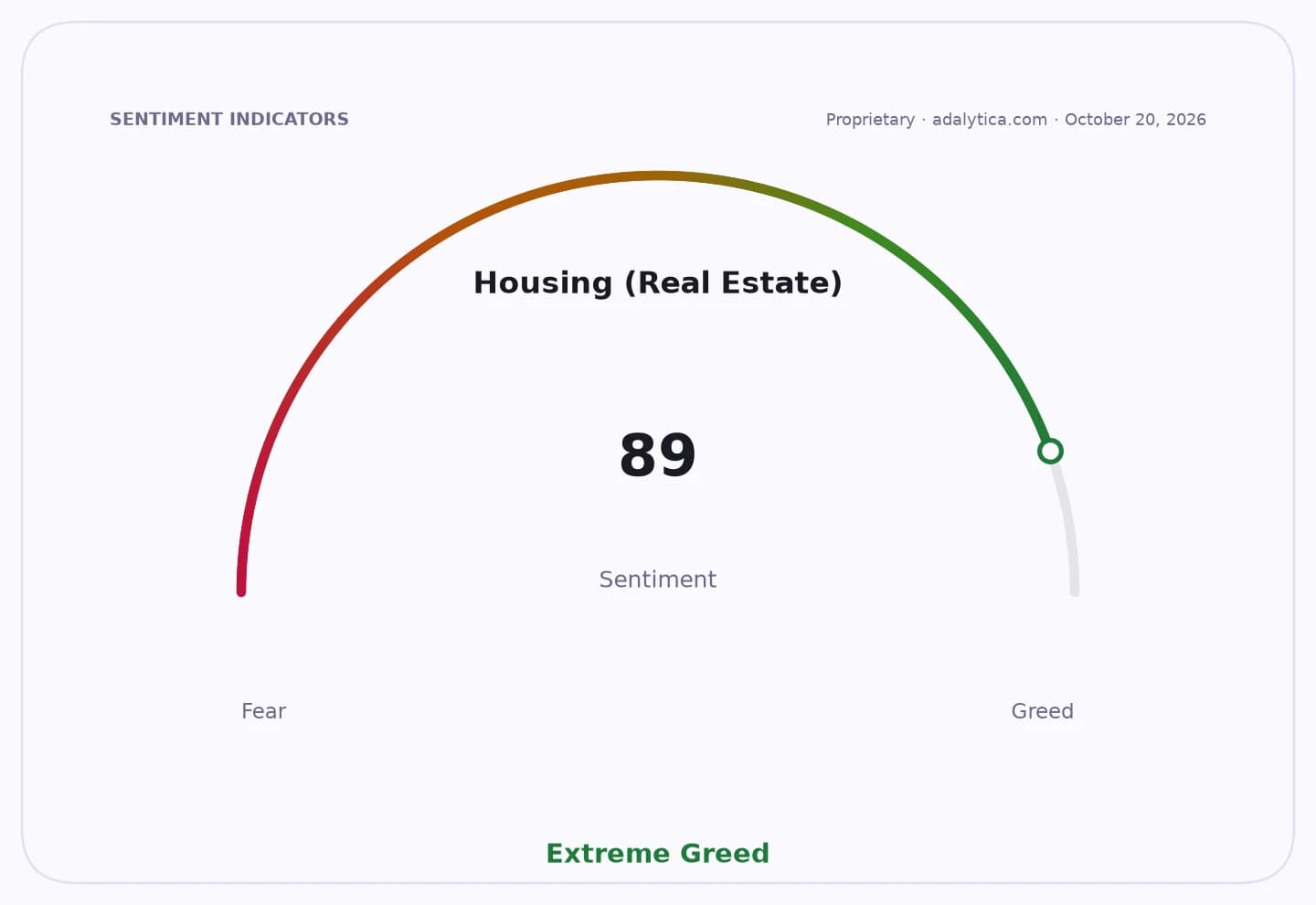
The broader economic message is straightforward: higher mortgage rates keep locking homeowners in place and suppressing housing turnover. When people with low-rate mortgages decide not to move, it reduces the supply of existing homes coming to market. That can keep housing inventory tight even as affordability worsens for would-be buyers. It also helps explain why housing-related sentiment remains cautious even as some investors have started to look for a turn in rates.
That tension is showing up in the market too. Rocket Companies, one of the best-known mortgage lenders, has seen its shares swing sharply as investors try to handicap whether the current rate backdrop will keep choking off refinancing and purchase activity. Homebuilders have also felt the pinch: the XHB homebuilder ETF has retreated below both its 50-day and 200-day moving averages, a sign that the sector is still trading under pressure as financing costs stay elevated.
For long-term investors, the takeaway is not just that mortgage rates are high. It is that high rates reshape behavior. They slow move-up buying, delay downsizing, and keep a lid on transaction volume across the housing chain. That can be painful for homeowners hoping to move, but it can also create opportunities for patient investors who understand that housing cycles last years, not weeks. Until borrowing costs ease materially, retirees thinking about a smaller home should run the numbers carefully before giving up a cheap fixed mortgage.
| Entity | Gains | Losses |
|---|---|---|
| Existing homeowners with 3% mortgages | ▲Rate lock-in, lower payment certainty | ▼Mobility and downsizing flexibility |
| Would-be homebuyers | ▲Possible future inventory if rates fall | ▼Fewer listings and tougher affordability |
| Mortgage lenders like Rocket Companies | ▲Higher purchase-loan activity if turnover holds up | ▼Refinancing volume stays weak |
| Homebuilders / XHB | ▲Potential demand if rates eventually ease | ▼Near-term buyer resistance and weaker sentiment |