Mortgage rates have pushed back above 7%, hitting 7.03% and delivering another hit to an already frozen U.S. housing market just as Treasury yields climb to nearly two-decade highs. The jump raises monthly payments, shrinks affordability and threatens to keep buyers sidelined through the fall selling season.
U.S. Mortgage Rates Rise Above 7% Again
The average 30-year fixed mortgage rate rose for a fifth straight week, up from 6.95% a week earlier, according to Freddie Mac. It is the first move above 7% since January 2025 and the highest level seen in either of Donald Trump’s presidential terms, underscoring how quickly borrowing costs have re-tightened after a brief dip earlier this year.
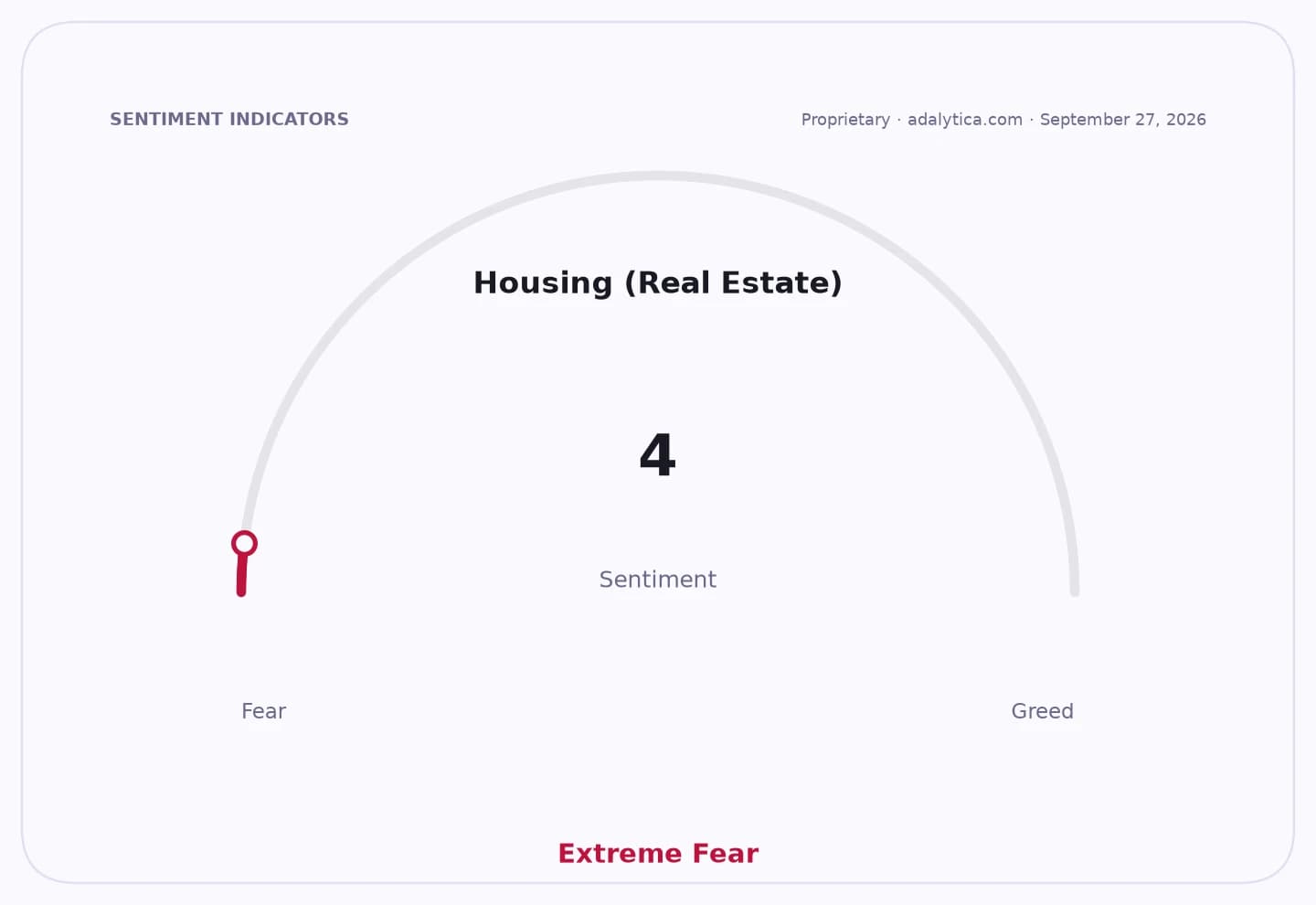
Sentiment IndicatorsⓘProprietary · adalytica.com · September 30, 2026
This is a snapshot — live sentiment, awareness and momentum for 130+ markets update continuously in the dashboard.Open AlphaPulse
For homebuyers, the economics are brutal. A borrower who locked in a rate near 5.98% in February faces a dramatically different monthly bill today, with economists saying the gap can amount to hundreds of thousands of dollars in extra interest over the life of a typical mortgage. Bright MLS chief economist Lisa Sturtevant called 7% a “psychological barrier” that could have a paralyzing effect on transactions.
The move is tied less to housing fundamentals than to bond markets. The 10-year Treasury yield, the key benchmark for mortgage pricing, has climbed to about 5.15% from roughly 4.15% at the start of the year after stronger U.S. data and renewed inflation concerns forced investors to reprice the path for interest rates.
DGS10 vs MORTGAGE30US — macro contextadalytica.com
Explore this data interactively — full history, time series and cross-market comparisons.Open AlphaPulse
That matters well beyond real estate. Higher yields raise borrowing costs across the economy, from autos and consumer loans to business credit, and they also pressure sectors most exposed to housing. Shares of Lennar, D.R. Horton and PulteGroup have fallen over the past month as investors bet that higher mortgage rates will curb sales and new construction.
The housing slowdown is showing up in the data. Pending home sales fell 4.7% in August from a year earlier, mortgage applications to buy a home dropped 11% from a year ago last week, and buyers are increasingly turning to riskier adjustable-rate mortgages. Nearly 10% of borrowers chose an ARM last week, a share that points to mounting strain on affordability.
Yet prices have not rolled over. The median existing-home price rose to $429,100 in August, the 38th straight year-over-year increase, suggesting supply remains too tight to produce a broad national correction even as demand weakens. That leaves the market stuck in a damaging mix of high prices, high rates and low turnover.
For investors, the next catalyst is whether yields keep rising or finally stabilize. If Treasury rates stay near current levels, mortgage costs are likely to remain above 7%, keeping pressure on homebuilders, mortgage lenders and housing-related ETFs such as ITB and XHB, while further delaying any rebound in transactions.
| Entity | Gains | Losses |
|---|---|---|
| Treasury yield sellers | ▲Higher carry returns | ▼Housing demand |
| Homebuyers | ▲None | ▼Monthly affordability |
| Homebuilders | ▲Pricing power on limited supply | ▼New orders and margins |
| Homebuilder ETFs (ITB, XHB) | ▲Short-term volatility traders | ▼Long positions on housing rebound |